
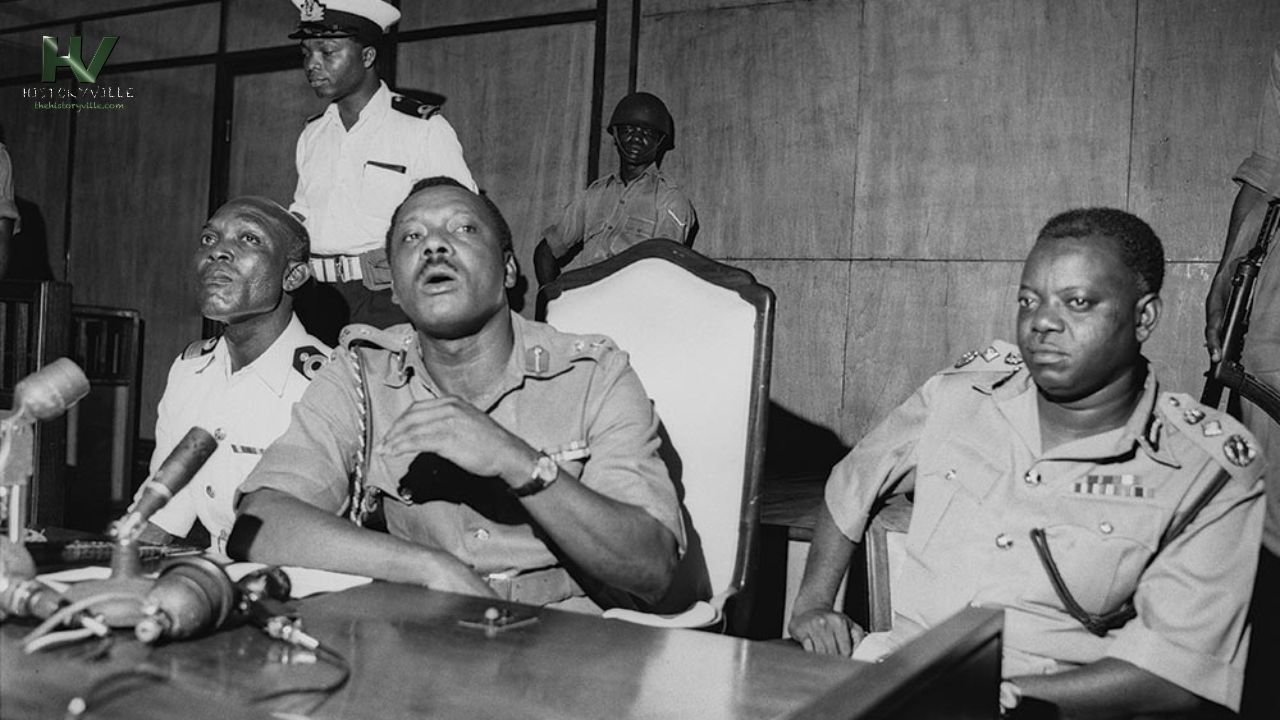

You must have been familiar with Nigeria’s first military coup of January 15, 1966, that was carried out by Major Patrick Chukwuma Kaduna Nzeogwu and his military colleagues.
However, within that coup, there was another coup – the Aguiyi-Ironsi coup of January 16, 1966.
This is the full story.
Aguiyi-Ironsi the GOC
In February 1965, Brigadier Johnson Aguiyi-Ironsi became Nigeria’s first indigenous General Officer Commanding (GOC) the Nigerian Army. As a result, he was promoted to the rank of major-general.
Interestingly, Aguiyi-Ironsi’s appointment as GOC was more of a demotion for him. As a Major-General, he was the first African to command the entire United Nations Force in the Congo in 1964. When he returned to Nigeria, he was reverted to the lower rank of Brigadier.
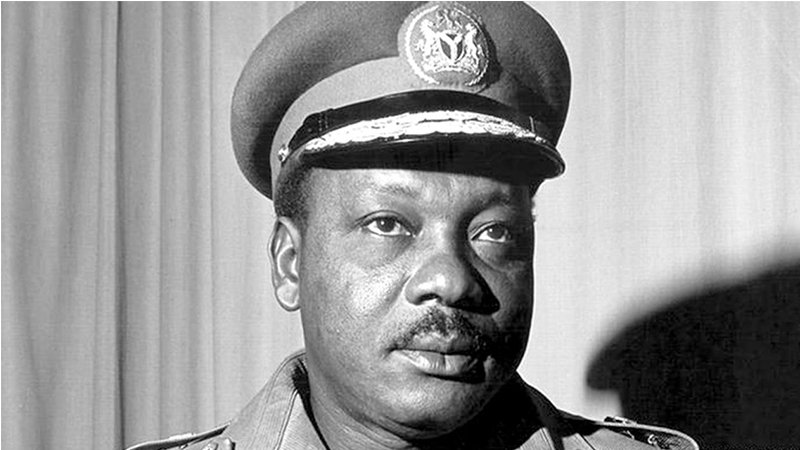
Nigeria’s First Military Head-of-State (January 16, 1966 – July 29, 1966).
Also, the outgoing British GOC, Major-General Christopher Welby-Everard, in his assessment of Aguiyi-Ironsi, dismissed his abilities, arguing that the Brigadier had spent much time abroad and had lost touch with the Army. Welby-Everard then recommended Brigadier Babafemi Ogundipe as the new GOC, as he was a fine officer who was apolitical and well respected within the military circles. However, Prime Minister Abubakar Tafawa Balewa rejected Welby-Everard’s recommendation, stuck to his guns (despite staunch opposition from the Sardauna of Sokoto, Sir Ahmadu Bello) and appointed Aguiyi-Ironsi.
However, less than a year later, Balewa would be dead in a bloody military coup. Bello himself, as Premier of the Northern Region, was assassinated with his wife, as did Ladoke Akintola and Festus Okotie-Eboh. All of the senior officers in the Nigerian Army’s top command were killed as well. Only General Aguiyi-Ironsi, the GOC, survived the onslaught. His assassins did not meet him at home. Some commentaries say he must have been tipped off by one of the coup plotters.
However, 35 hours after the last shot had been fired, Major-General Johnson Thomas Aguiyi-Ironsi took over as Head of State and Supreme Commander of the Nigerian Armed Forces. All of a sudden, the general was now in charge of the country, the civil service, the Army, the Navy, the Air Force, and the Police. The new Head of State based his emergence on a purported handover by the rump cabinet of the Tafawa-Balewa administration.
Was it really a handover or a coup?
First, how did the January coup happen?
How the January Coup Happened
In the early hours of January 15, 1966, in Kaduna, Major Kaduna Nzeogwu, just like every other night, led his soldiers on the “Exercise Damisa,” a few metres to the lodge of the Premier of the Northern Region, Sir Ahmadu Bello. The true aim of the exercise was to indeed carry out what would become Nigeria’s first military coup.
When they got close to the Premier’s lodge, Nzeogwu then made the true purpose of the exercise clear to the soldiers. They were to eliminate the premier. They then broke into the lodge by firing at it, but Bello could not be found.
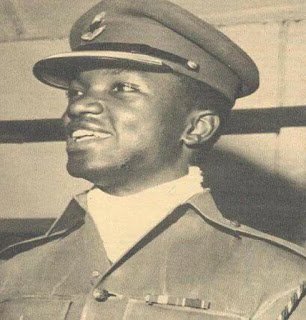
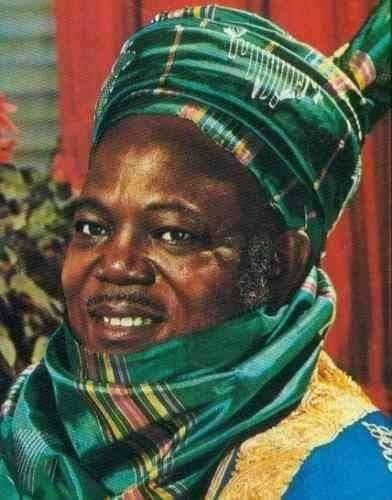
Enraged, Major Nzeogwu searched for the premier frantically until he eventually found him among his wives and the cries of little children. Without thinking twice, he shot him dead. The most powerful politician in the country had fallen. Other casualties in this exercise were one of Bello’s wives and a loyal bodyguard who both tried to shield the premier from gunfire.
In Lagos, Majors Emmanuel Ifeajuna, Humphrey Chukwuka, Don Okafor, and Adewale Ademoyega ran the show. Ifeajuna led the group of soldiers to Prime Minister Tafawa Balewa’s official residence, where he was arrested or abducted. Although it was not in their original plan to kill the Prime Minister, Tafawa Balewa was shot and killed when it became apparent that the coup had failed.
Ifeajuna also carried out the killing of Lieutenant-Colonel Abogo Largema, who was the commander of the fourth battalion in Ibadan. Largema had been a guest at a hotel in Ikoyi when he was lured out of his hotel room to the lobby, where the Major gunned him down.
Lieutenant-Colonel David Ejoor, the commanding officer of the first battalion in Enugu, had also been a guest at the party and a target for the coup plotters that night as well. But he narrowly escaped death by a last-minute change of hotel room from the one initially booked for him.
On the night of the coup, a party was being held in honour of Brigadier Maimalari. Some other senior officers in the army were in attendance. Lieutenant-Colonel James Yakubu Pam was abducted in the presence of his wife and children and killed shortly after by Major Chris Anuforo. Major Anuforo was also responsible for the deaths of Lieutenant-Colonel Arthur Chinyelu Unegbe, Colonel Kur Mohammed, and Minister of Finance, Chief Festus Okotie-Eboh.
The Premier of the Western Region, Chief Samuel Ladoke Akintola, had heard rumours of the coup before the day and tried to warn Sir Ahmadu Bello, but to no avail. He was at his home in Ibadan when the wife of his deputy Chief Fani-Kayode, who had already been arrested, called Akintola to warn him of the impending danger. Not long after, a group of soldiers led by Captain Emmanuel Nwobosi arrived at the premier’s lodge. Immediately, Chief Akintola opened fire and defended himself. Captain Nwobosi and his men eventually killed him.
By the time the coup plotters stopped firing, only one of the Army’s high command was still alive and well – Major-General Johnson Thomas Aguiyi-Ironsi.
Ifeajuna’s failure to eliminate General Aguiyi-Ironsi was a fatal blow to the coup. The general and other senior officers had been at the party organised by Brigadier Maimalari to show off his new teenage bride. After the party, by a fortuitous turn of events, Ironsi went on to attend another party while other officers returned to their homes and lodges.
When Major Don Okafor and his team of mutineers reached Aguiyi-Ironsi’s home, he was nowhere to be found. Hours later, the GOC came home only to be informed of the ongoing plot to overthrow the government. He had been contacted by Elizabeth Pam, the wife of James Pam, and from the residence of the prime minister. Major-General Aguiyi-Ironsi subdued the coup and became the only senior officer on the death list who survived the onslaught. When Nzeogwu discovered that the South had not been completely taken over by Ifeajuna, he made a radio broadcast declaring a state of martial law over the northern region of the country.
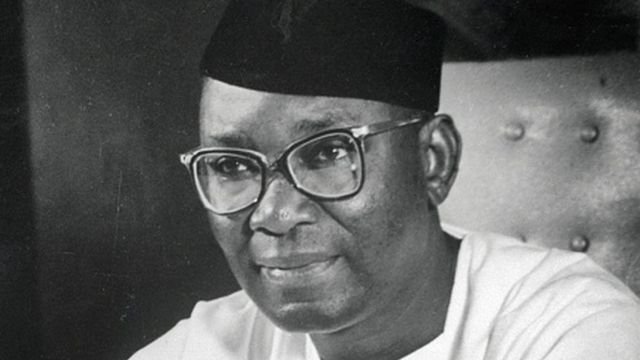
By the end of the coup, about 22 lives had been brutally claimed. The president, Nnamdi Azikiwe, was abroad on medical leave. Nwafor Orizu, the acting president while Azikwe was away, was also spared.
Shortly after the January coup failed in Lagos, the rump cabinet of Prime Minister Abubakar Tafawa Balewa tried to choose an acting prime minister in the person of Zanna Bukar Dipcharima, but Orizu did not give any approval despite having all the powers to swear in Dipcharima according to the Constitution. However, after a meeting with Aguiyi-Ironsi, Orizu announced at 11:00 p.m. on January 16, 1966, that the cabinet had handed over the reins of affairs to the military.
But the handover was not a smooth affair. The general’s emergence as Head of State was a coup within a coup – the Aguiyi-Ironsi coup of January 16, 1966.
The Aguiyi-Ironsi Coup of January 16, 1966
Retrospectively, General Aguiyi-Ironsi did not need to take over as Head of State. As a matter of fact, it was needless. The general discarded his British training in the Army as being subordinate to civilian authority. However, he pressed the cabinet that, for him to completely crush the coup, as one of the rebels, Major Nzeogwu was still in command in Kaduna, he needed to assume full powers.
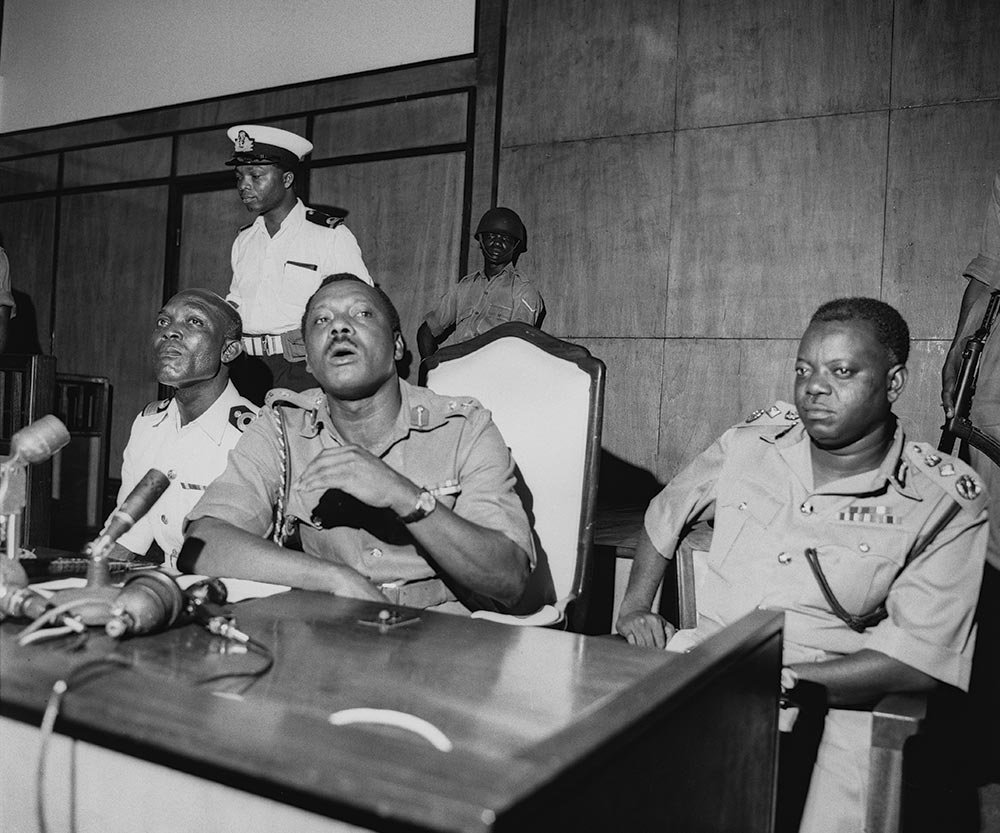
But what powers did the general need to crush the coup in the North? He already had the authority as the GOC and the most senior officer in the Nigerian Army.
In fact, as the only officer in the Army who could enter any barrack and issue orders to any soldier, Aguiyi-Ironsi had no business asking the Council of Ministers to hand over power to quell a rebellion that happened under his watch. A bloody carnage that officers carried out under his constituency – the Army.
The first battalion in Enugu, the fourth battalion in Ibadan, and the fifth battalion in Kano were secured and loyal to the government. Only Kaduna was under the control of Nzeogwu, who did not have the authority, resources and manpower of the 1 Brigade to fight Aguiyi-Ironsi, who had Colonels Hillary Njoku, Yakubu Gowon, and other surviving senior officers, and the firepower of the second battalion in Ikeja and the 2 Brigade in Apapa behind him. Even the British were ready to support the General with their troops.
Telling the cabinet to hand over before bringing down an internal rebellion carried out by your own officers is incredulous. That was why Major Olusegun Obasanjo, on hearing the news of the assassination of Ademulegun and the Sardauna in Kaduna, asked whether foreign soldiers carried out the murders.[1]
Also, the so-called handover was unconstitutional and illegal. In plain English, Aguiyi-Ironsi’s rise to power was a coup (albeit within a coup).
Aguiyi-Ironsi as Head of State
The next day, Monday, January 17, 1966, Major-General Johnson Thomas Aguiyi-Ironsi officially took over the leadership of the country. The First Republic was now dead and buried. The general established a Supreme Military Council and, thus, began the first military regime in Nigeria. Nzeogwu also surrendered after negotiations with Aguiyi-Ironsi, after the latter had sent some delegates on a peace talk to Nzeogwu to elicit willful surrender. Agreeing with the new head of state’s conditions, Nzeogwu surrendered and handed over the northern region three days after the coup to Major Hassan Usman Katsina, before he was arrested and detained contrary to the initial agreement.
Other co-conspirators of the coup were also arrested, but they never appeared before a military tribunal for six months, and this singular act was considered unjust by the northern section of the Nigerian Army.
Interestingly, the Supreme Commander was not well-prepared for leadership,[2] which led to numerous blunders and mistakes as head of state. However, one of these blunders was that to placate the North, Aguiyi-Ironsi promoted and surrounded himself with these Northern officers who would eventually kill him most embarrassingly just six months later on July 29, 1966. In fact, it was a bloodier coup that led to the emergence of the senior-most northern officer in the Army, Lieutenant-Colonel Yakubu Gowon.
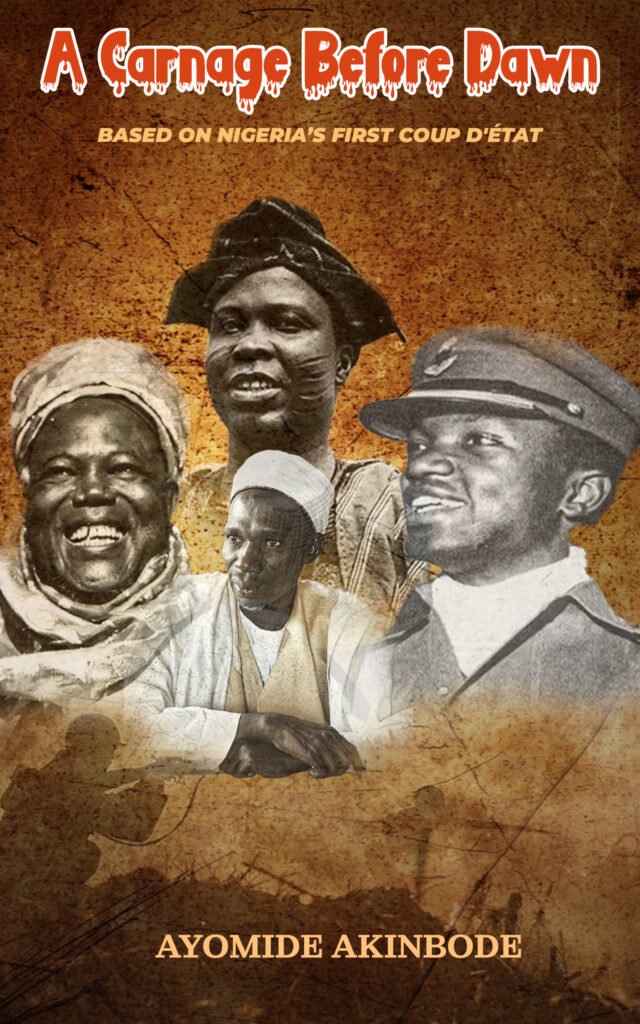
If you want to go beyond headlines and how the coup unfolded hour by hour, then you can get the book, A Carnage Before Dawn. It offers a carefully researched, vividly told account of January 15, 1966, through a storytelling style that will keep you glued to the book’s pages.
You can get the e-book here and the paperback here.