
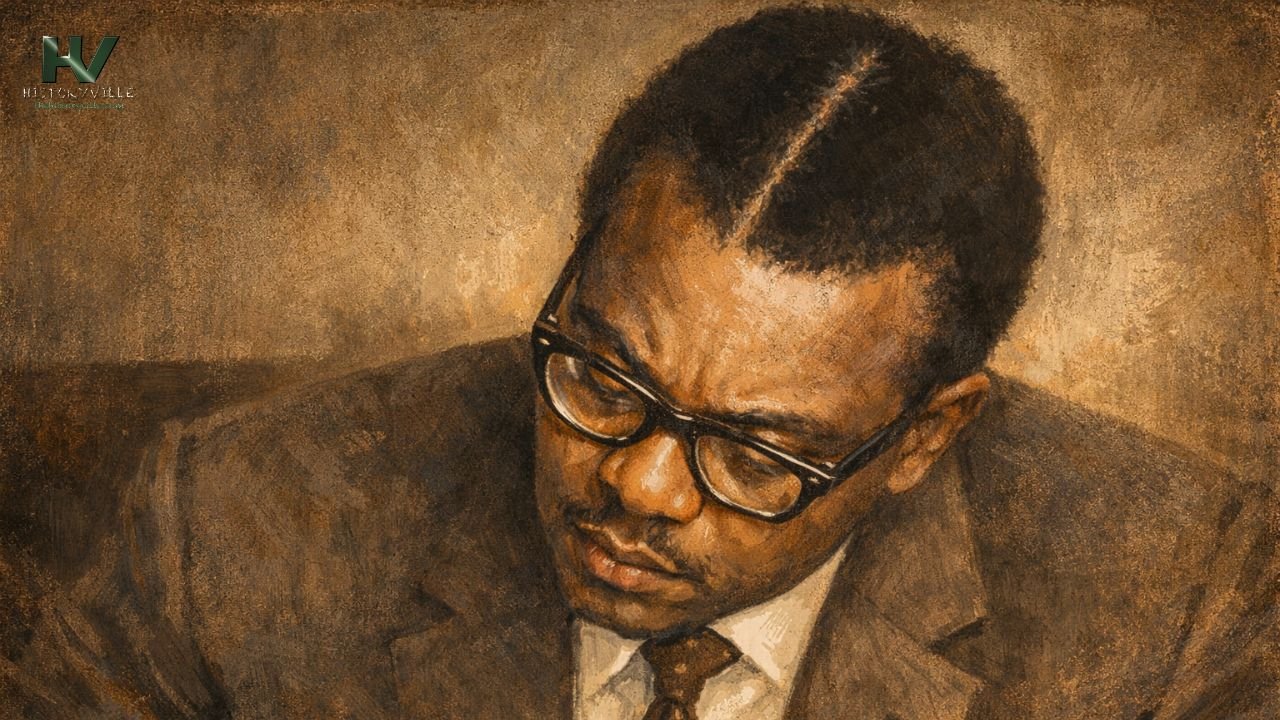

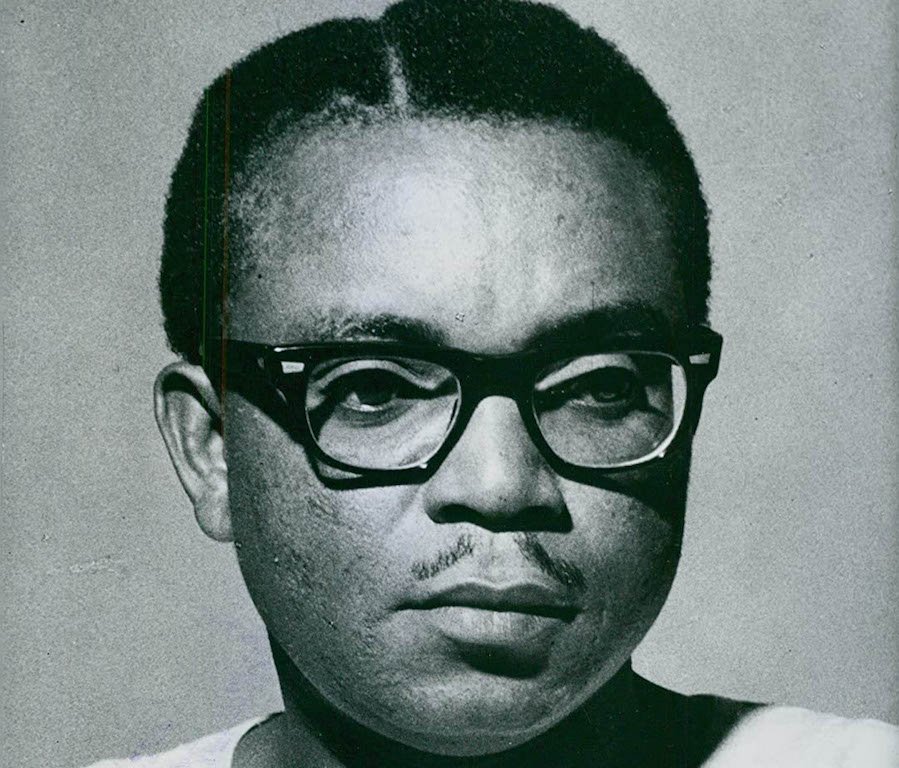
On March 31, 1953, 29-year-old Anthony Enahoro moved a motion for Nigeria’s independence from British colonial rule by 1956. However, the Northern politicians rejected Enahoro’s motion, and the reaction led to the May 1953 riots in the North, especially Kano, where many Southerners were killed.
A combination of political, social, and regional factors led to the rejection of Enahoro’s 1953 motion for Nigeria’s independence. Anthony Enahoro was a member of the Action Group (a political party largely representing the Western Region).
So, why did the North reject Enahoro’s motion? Let us go back to the beginning of the 1950s.
Background
Sir Ahmadu Bello, the Sardauna of Sokoto and leader of the Northern People’s Congress (NPC), and Chief Obafemi Awolowo, leader of the Action Group (AG), were once close friends. They visited each other often, and Sardauna was eager to adopt Awolowo’s policies, as long as Awolowo kept him informed beforehand.
When the NPC won the Northern regional elections in December 1951, it was the AG, which had just won the Western region elections two months earlier, that they congratulated and sought an alliance with at the Central House, set to open in February 1952. The North had little interest in working with Nnamdi Azikiwe, leader of the National Council of Nigeria and the Cameroons (NCNC), or the Igbo people he represented.
While Azikiwe and the Eastern region were embroiled in a political crisis over Professor Eyo Ita and the ‘sit-tight’ ministers, Awolowo and Bello continued to strengthen their alliance. The first AG branch outside the Western Region opened in Kano on October 4, 1952. Awolowo reassured Northern rulers that the expansion wasn’t a threat, giving several talks on federalism that avoided any criticism of Northern leadership. Upon arriving in Kaduna with Alhaji Gbadamosi and Alfred Rewane, he visited his new friend, the Sardauna.
Around this time, Waziri of Bornu, Mallam Ibrahim Imam, NPC’s General Secretary and Bornu’s representative, introduced a Decency Bill in the Northern House, aiming to make clothing mandatory in the region. When the British colonial civil secretary, also speaker of the House, dismissed the bill, Awolowo raised it as a motion of national importance at the Central House in Lagos.
The Daily Times reported on March 23, 1953, that Awolowo declared, “The British ought to be ashamed of themselves because people still go naked after 60 years of their rule.” From then on, Awolowo made a point of bringing trainloads of clothing from the South whenever he travelled North.
When Professor Ita, the embattled leader of the Eastern House whom Azikiwe sought to oust, arrived in Lagos for the Central House opening in 1953, he turned to Awolowo, who took him to see the Sardauna. Together, they condemned Azikiwe’s role in the Eastern crisis. When Ozumba Mbadiwe, NCNC House leader, rose to defend Azikiwe, most AG and NPC members walked out in solidarity, demonstrating the strength of the North-West alliance.
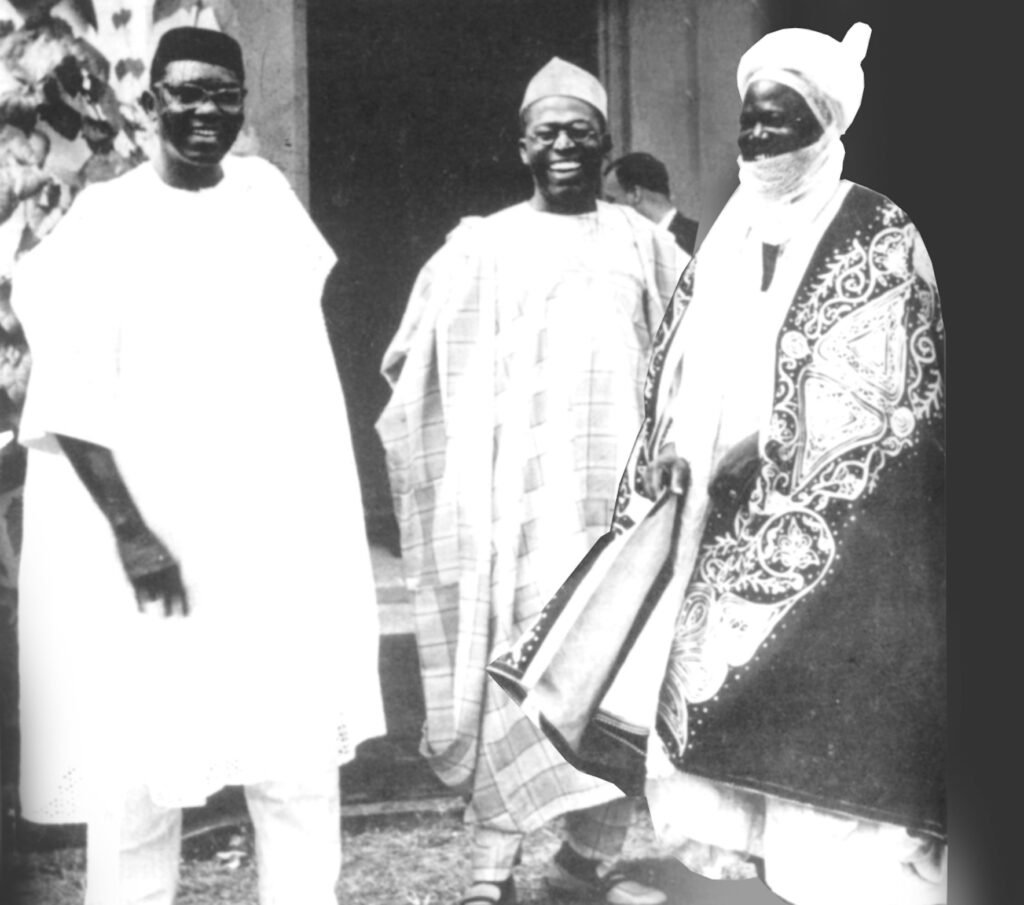
But tensions soon emerged. During Awolowo’s October 1952 visit to the North, Bello mentioned that his people felt embarrassed when they had to copy Western region policies they learned about through newspapers. He gave an example of the West’s scholarship scheme, which prompted demands for a similar program in the North.
Sardauna said that if Awolowo had informed him in advance, he could have either implemented the policies simultaneously in the North or supported them solely for the West if that was preferable. Awolowo was silent, unsure if he was witnessing political rivalry or a foundation for nation-building. Bello proposed establishing a system of regular consultations between the two parties.
At a previous Central House meeting, Sardauna famously remarked, “The North is like a horse; if you are gentle with it, it will carry you far.” However, Awolowo placed greater emphasis on dignity than on alliances. In response to Sardauna’s suggestion for collaboration, he stated that for any partnership to last, both parties needed to agree on core principles. He argued that British rule in Nigeria was “unnatural, unjust, and inherently incompetent” and should end by 1956.
Sardauna expressed concern that the North was unprepared for independence. Awolowo encouraged him, saying the North shouldn’t underestimate its abilities. When a proposal at the Constitutional Review Conference in Ibadan suggested that Nigerians, rather than the British, should hold central ministerial roles, the North initially opposed it, arguing that Nigerians were not yet competent.
But now, four ministers from the North were performing well, Awolowo pointed out. Sardauna explained that during meetings in Kaduna, Northern representatives didn’t always coordinate effectively, while British officials did, which sometimes made them seem more capable. Noticing the AG’s approach in Ibadan, Sardauna resolved to improve his team’s preparation.
After their walkout over Azikiwe’s treatment of Professor Ita, Awolowo took Sardauna into his confidence, sharing plans for a private bill on self-government before the House’s term ended. But after consulting the emirs, the Northern delegation rejected the idea, and Sardauna asked Awolowo to withdraw the motion. Awolowo refused, stating that to do so would be political suicide for the AG, as it would give the NCNC a chance to discredit them in the South. He also feared it would make the British take them less seriously.
Despite the opposition, the motion was introduced by 29-year-old Anthony Enahoro, and four AG central ministers resigned to debate it. The House erupted in chaos. Sardauna famously declared, “The mistake of 1914 has come to light.” Northern legislators were humiliated as they journeyed home, facing mobs at every stop. This radicalised the North, and they began to demand either secession or a very loose union with the South.
Rejecting Enahoro’s Motion
The leaders of the Northern Region felt that their region was not yet politically and economically prepared for independence. Compared with the Western and Eastern regions, the North had less exposure to Western education and modern political structures, placing it at a disadvantage in governance and administrative capacity.
Many Northern leaders believed that rushing into independence would leave the North behind in national affairs and result in Southern domination of the newly independent country. At the time, the Northern Region was concerned about the growing influence of the Western and Eastern regions, which were more economically and educationally advanced.
The South had a larger proportion of educated elites and a stronger presence in the civil service and political institutions. The North feared that immediate independence would entrench the South’s political and economic dominance, leaving the North marginalised in the new nation.
In fact, as of 1953, the entire northern region had only one University graduate, Dr Russel Aliyu Barau “R. A. B.” Dikko. Meanwhile, the Western and Eastern regions had thousands of graduates in engineering, medicine, administration, and the social sciences, with about 90 per cent of the public services manpower in the North composed of expatriates or Southern Nigerians.
Political Rivalry
There was significant political rivalry between the Northern People’s Congress (NPC), which represented the interests of the North, and the Southern-based political parties, particularly the Action Group (AG) and the National Council of Nigeria and the Cameroons (NCNC). The NPC saw Enahoro’s motion as being driven by Southern interests, particularly those of the Action Group, and believed that its acceptance could harm the North’s political standing. The North sought additional time to consolidate its position and to catch up with the South in political development.
The Northern leaders, particularly Sir Ahmadu Bello, advocated for a more gradual approach to constitutional development. The 1951 Macpherson Constitution introduced a measure of regional autonomy, and Northern leaders wanted more time to strengthen regional governance structures before embarking on full independence. They preferred a cautious, phased approach to constitutional change and believed that immediate independence could destabilise the country.
The Northern Region, which was predominantly Muslim and had a distinct cultural and historical experience under colonial rule, approached political matters differently from the South. The Northern elite, who had been more conservative and, in some cases, protective of their traditional political systems, viewed the push for independence as a Southern agenda, driven by a more Westernised, radical political culture that did not necessarily align with Northern values.
During the debate in 1953, the NPC countered Enahoro’s motion by proposing that independence be granted “as soon as practicable” rather than by the fixed date of 1956. This reflected their view that Nigeria needed more time to address its internal disparities and prepare all regions for self-rule. The Northern leaders felt that setting a specific date for independence would place unnecessary pressure on the country and lead to rushed decisions.
Consequences of Enahoro’s Rejection
The rejection of Enahoro’s 1953 motion for Nigeria’s independence had profound and far-reaching consequences, intensifying regional divisions and shaping the country’s political landscape in the years that followed. One of the immediate impacts was the deepening of political and ideological rifts between the Northern and Southern regions.
The Northern leaders’ opposition to a fixed date for independence further fuelled suspicions in the South that the North was deliberately stalling the independence process. Southerners, particularly those in the Action Group (AG) and the National Council of Nigeria and the Cameroons (NCNC), felt that the North’s reluctance threatened the progress they believed was necessary for national advancement.
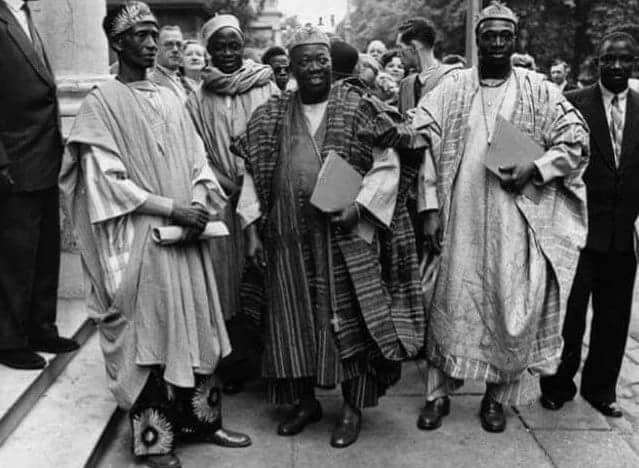
This heightened tension came to a head during a visit by Southern politicians to Kano later in 1953. The visit, intended to gain support for immediate independence, resulted instead in violent confrontations, culminating in what became known as the Kano Riots. These riots underscored the deep-rooted mistrust and ethnic divisions within Nigeria, with the Southerners being the major casualties. The violence reinforced the political and cultural differences between the North and South, intensifying calls for regional autonomy and feeding anxieties about national unity.
As a consequence, the British colonial administration took steps to address the heightened divisions through constitutional reform. This led to the creation of the 1954 Lyttleton Constitution, which introduced a federal system of governance. Under this new structure, regional autonomy was expanded, allowing each region to exercise greater control over its internal affairs. This move, while providing some stability, also institutionalised regional divisions, creating a system in which political power and resources were increasingly contested along regional and ethnic lines.
The fallout from the rejection of the 1953 motion also set a precedent for the regionalism that would come to define Nigerian politics in the years leading to independence. Political parties became more entrenched in serving regional interests, with the Action Group representing the Western Region, the NPC the Northern Region, and the NCNC the Eastern Region. This regional alignment of political parties fostered competition for dominance among the regions, as each sought to secure its own interests within the emerging federal structure.
Ultimately, the rejection of Enahoro’s motion illustrated Nigeria’s complex challenges as it moved towards independence. It exposed the deep-seated mistrust between the regions and highlighted the need for a governance model to accommodate Nigeria’s ethnic and cultural diversity. While Nigeria gained independence in 1960, the divisions that emerged in 1953 foreshadowed the political challenges and regional tensions that would continue to shape the country’s post-independence journey.
Although Anthony Enahoro became popular for moving the motion for Nigeria’s independence in 1953, he moved another motion in January of the same year concerning Nigerian women. This motion has now been buried in the annals of the nation’s history.
You can check out the full details of that motion in our next article.
Love history? Don’t stop here.
📚 Get deeper insights by purchasing our latest history books.
📢 Join our WhatsApp Channel for exclusive updates and historical facts.
📩 Subscribe to our Newsletter and receive fascinating stories from history (World and African history) directly in your inbox.
🎥 Subscribe to our YouTube channel for engaging documentaries and short history videos.
Stay connected with us on social media for daily history content:
🔵Follow us on Facebook.
📸 Follow us on Instagram.
🐦Follow us on Twitter.
💼 Follow us on LinkedIn.
🎵 Follow us on TikTok.
❤️ Support our work by donating to HistoryVille and help us continue preserving and sharing important historical stories.
📢 Advertise with HistoryVille to reach a growing audience passionate about history and culture.