
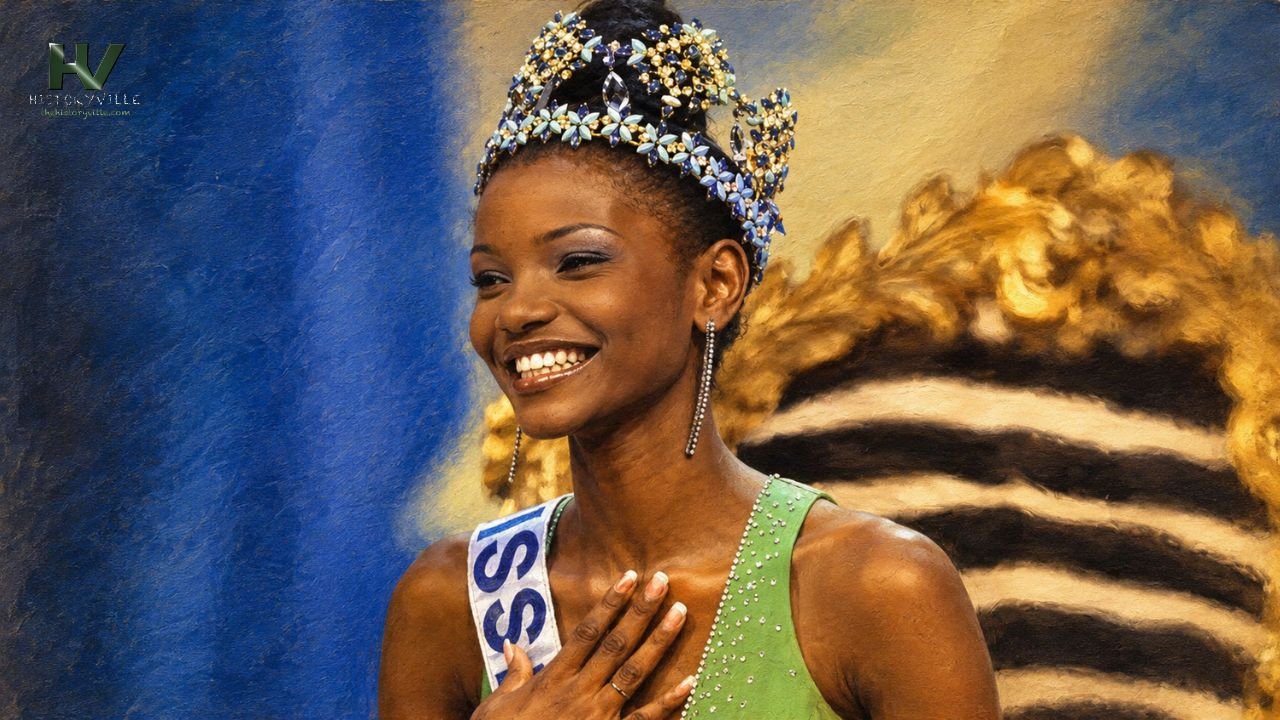

It has been 25 years since 18-year-old Agbani Darego walked onto a stage in Sun City, South Africa, and made history as the first Black African woman to win the Miss World contest on November 16, 2001. Darego had travelled from Nigeria to compete against 92 other young women for the Miss World crown, one of the most recognised titles in international beauty pageantry. It was a remarkable achievement for Nigeria, a country that had never won the title until that time.
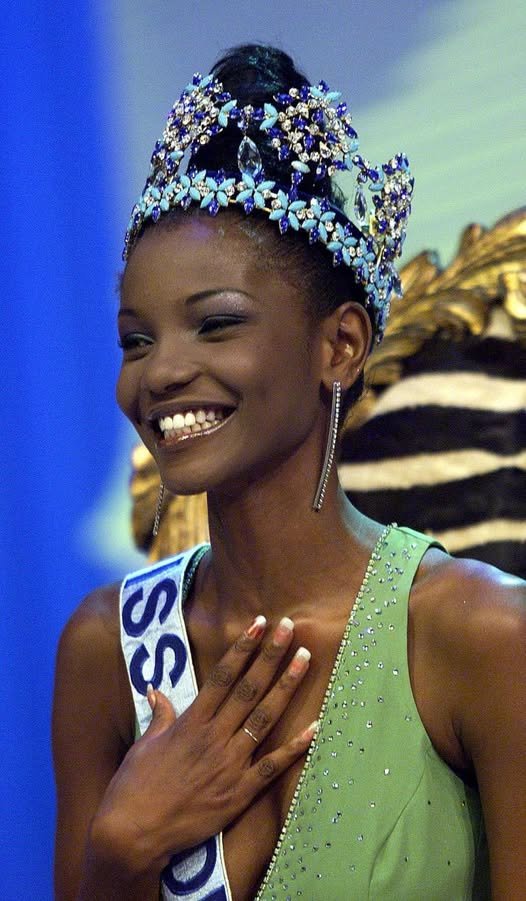
The competition was not an easy one. Among the contestants were women from Scotland, China, Aruba, Nicaragua, South Africa and dozens of other countries and territories. Scotland’s Juliet-Jane Horne and Aruba’s Zerelda Lee would eventually finish ahead of the other contestants, apart from Agbani, while China’s Bing Li also reached the final five. The Nigerian contestant had to progress through several stages of the competition before the judges finally selected her as the winner. Her victory was particularly significant because she had already represented Nigeria at Miss Universe earlier that year, where she had also reached the semi-finals.
But who was Agbani Darego before the international recognition? How did a young woman from Rivers State find herself competing against some of the world’s most celebrated beauty queens? What happened during the Miss World 2001 competition, and how did she overcome contestants from Scotland, China, Aruba and 90 other countries to claim the crown?
Who Was Agbani Darego?
Agbani Darego, whose full name is Ibiagbanidokibubo Asenite Darego, was born on December 22, 1982, in Lagos, Nigeria. Although born in Lagos, she came from a family with roots in Rivers State. Her family returned to Port Harcourt when she was still a young child, and the city became an important part of her upbringing. She would eventually become one of the most recognisable Nigerian women of her generation, although there was little indication in her early childhood that she would one day become an international beauty queen.
Her childhood was shaped by a difficult family experience. Her mother, who suffered from breast cancer, died when Agbani was about 12 years old. According to an account published by The Guardian Nigeria in December 2018, her parents had sent her to boarding school when she was around ten, partly to shield her from witnessing her mother’s suffering. Losing her mother at such a young age was a significant event in her childhood. She continued her education at Federal Government Girls’ College, Abuloma, in Rivers State.
Agbani was interested in modelling from an early age. She admired the fashion industry and hoped to build a career on international runways. However, entering the modelling business was not straightforward. She came from a relatively conservative family, and the idea of pursuing a career in fashion modelling was not necessarily an obvious choice. She reportedly auditioned for the M-Net Face of Africa modelling competition but did not make the final selection. That disappointment did not end her interest in the industry.
Her ambitions also extended beyond fashion. She was interested in computers and wanted to become a computer scientist. This combination of academic and modelling ambitions would become a recurring feature of her public identity. Even after winning Miss World, she spoke about continuing her education and pursuing a career in computer science alongside her modelling responsibilities.
The Road to Miss World: Most Beautiful Girl in Nigeria 2001
Agbani’s journey to international recognition began with the Most Beautiful Girl in Nigeria (MBGN) competition. Organised by Silverbird Productions, the competition had become one of Nigeria’s best-known beauty pageants. It offered Nigerian women an opportunity to compete for national recognition and, in some years, represent the country at major international competitions.
By 2001, the MBGN title had considerable importance in Nigeria’s entertainment and fashion industries. Winning it could open doors to modelling, television, advertising and international pageantry. For Agbani, it offered an opportunity to move beyond unsuccessful attempts to enter the modelling industry and establish herself on a larger platform.
She entered the 2001 competition and emerged as the winner, earning the title of Most Beautiful Girl in Nigeria. The victory allowed her to represent Nigeria at the Miss Universe and Miss World competitions that year. It also placed her among the country’s most visible young public figures.
The significance of the MBGN victory became clearer in the months that followed. Nigeria had participated in international beauty competitions before, but the country had not yet produced a Miss World winner. Agbani’s selection consequently carried expectations that extended beyond her personal ambitions. She was representing a country with a large population, considerable cultural diversity and an increasingly visible entertainment industry.
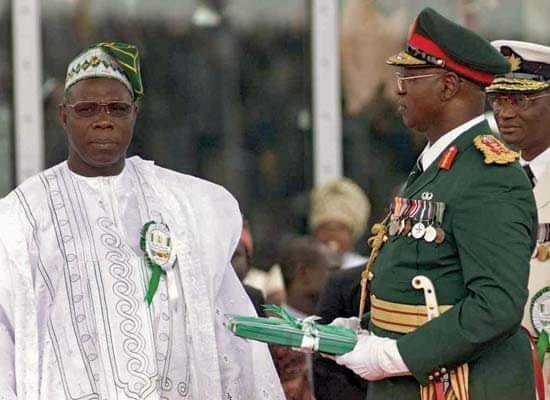
At the time, Nigeria was also experiencing a period of political transition. The country had returned to civilian government in May 1999 after years of military rule. Olusegun Obasanjo, himself a former military ruler, had become the country’s elected president. Although a beauty competition had little direct connection with the country’s political challenges, Agbani’s later victory would provide Nigerians with an occasion for national celebration.
For the young contestant, however, the immediate task was preparing for the international competitions ahead. She would first travel to Puerto Rico for Miss Universe before returning to the international pageant circuit for Miss World.
Before the Crown: Agbani Darego at Miss Universe 2001
Before competing at Miss World, Agbani represented Nigeria at Miss Universe 2001, held in Puerto Rico in May. The competition brought together contestants from different parts of the world, including some of the most prominent national beauty pageant winners. For Agbani, it was an opportunity to introduce herself to an international audience and gain experience competing on a global stage.
She performed impressively, advancing into the Top 10 semifinalists and eventually finishing seventh overall. Her performance was particularly notable because she became the first Nigerian contestant to reach the Top 10 at Miss Universe. Nigeria had now found a representative capable of progressing beyond the preliminary stages of a major international competition.
One detail that attracted attention was her choice of swimwear. During the swimsuit segment, Agbani wore a modest one-piece swimsuit, commonly described as a maillot, instead of the more revealing bikinis worn by several other contestants. Her decision attracted attention because she still managed to advance into the final stages of the competition. It demonstrated that contestants could present themselves differently without necessarily compromising their chances of success.
Her performance at Miss Universe also gave her valuable experience. She had to deal with the pressure of international media attention, interact with contestants from different cultural backgrounds and appear before judges who assessed various aspects of the competition. These experiences would prove useful when she travelled to South Africa for Miss World later in the year.
There was also a growing sense of possibility. Agbani had already demonstrated that she could compete successfully against women from countries with longer histories of participation in international pageantry. Her seventh-place finish at Miss Universe did not guarantee another victory, but it showed that she was a serious international contestant.
By November 2001, she was preparing for another opportunity. This time, she would compete for a title that had existed for more than half a century.
Miss World 2001: The Competition Begins in South Africa
The 51st edition of Miss World took place on November 16, 2001, at the Sun City Entertainment Centre in Sun City, South Africa. The venue, known for its luxurious hotels, entertainment facilities and tourism attractions, had previously hosted the competition in 1992. Returning to Sun City in 2001 allowed the organisers to stage the event in one of Africa’s most recognisable resort destinations.
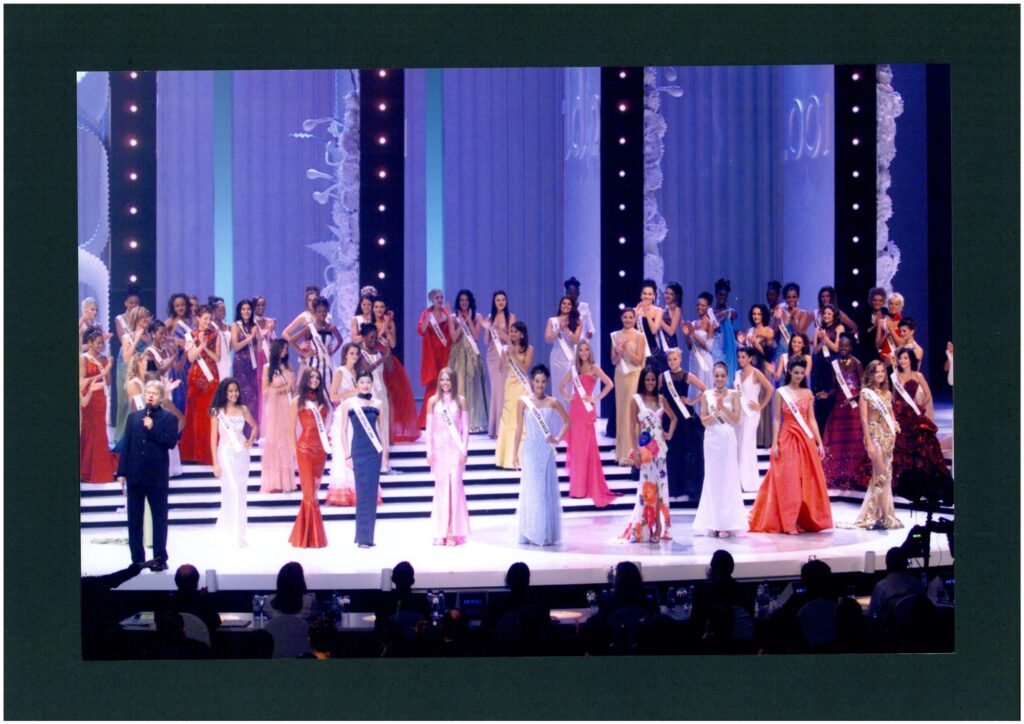
A total of 93 contestants participated in the competition, making it the largest Miss World contest up to that point, according to contemporary reporting. They represented countries and territories from Africa, Europe, Asia, the Americas, the Caribbean and Oceania. Nigeria was among the participating countries, with Agbani Darego carrying the national colours.
The competition was presented by American television personality Jerry Springer and Claire Smith. Julia Morley, the chairwoman of the Miss World organisation, led the event. The entertainment programme included performances by Umoja, Lebo Mathosa, Loyiso, the Holy Jerusalem Choir and Hip Hop Pantsula. The opening performance by Umoja featured African dance and music, setting the atmosphere for an event held on African soil.
The international circumstances surrounding the competition also deserve attention. The September 11 terrorist attacks in the United States had taken place just two months earlier. International travel and public events were operating in an atmosphere of heightened security concerns. Some countries that had initially expected to participate did not eventually send contestants. Nevertheless, the competition went ahead with 93 representatives.
One of the most interesting developments in 2001 was the increased use of technology in the voting process. The organisers introduced telephone voting through the Miss World website’s You Decide programme. For the first time, viewers could participate in the process by submitting votes, which were added to the judges’ scores. This introduced a new element of audience participation into the competition and created additional uncertainty as the contestants progressed through the evening.
Agbani was now competing against 92 other women. She had the experience of Miss Universe behind her, but the Miss World crown remained uncertain. Every contestant had arrived with the ambition of winning, and only a small number would reach the final stages.
The Contestants Who Stood Between Agbani and the Crown
The Miss World 2001 competition featured several contestants who attracted attention during the preliminary stages. Among them were representatives from Scotland, China, Aruba, Nicaragua and South Africa. Each had progressed through her respective national selection process and arrived in Sun City hoping to win the international title.
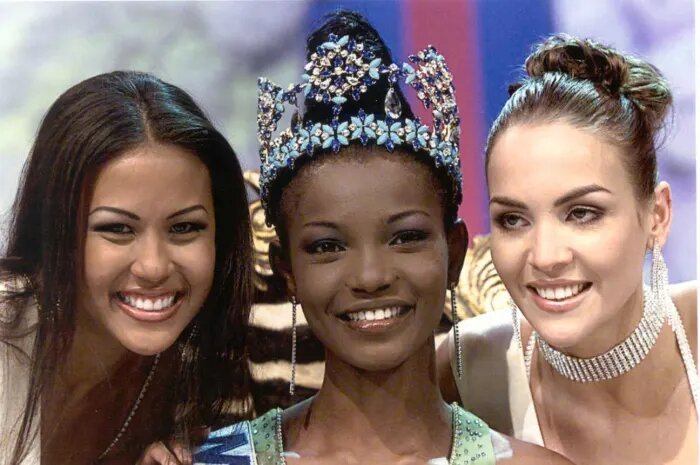
Scotland’s Juliet-Jane Horne emerged as one of Agbani’s strongest competitors. She performed well throughout the competition and eventually finished as the second runner-up. Her result placed Scotland among the three highest-ranking contestants of the night. Aruba’s Zerelda Lee, also known as Zizi Lee, performed even better, finishing as the first runner-up. Her performance meant that the final announcement would come down to the winner and two runners-up.
China’s Bing Li also made history for her country by reaching the final five. Her participation was particularly significant because China was represented in the competition for the first time. Her presence attracted attention as Miss World expanded its geographical reach into a country with a large population and growing international influence.
Nicaragua’s Ligia Argüello Roa also reached the final five, while South Africa’s Jo-Ann Strauss advanced into the Top 10. Strauss had the additional advantage of representing the host country, although this did not automatically translate into victory. Other contestants who reached the Top 10 included Russia’s Irina Kovalenko, Spain’s Macarena García Naranjo, Ukraine’s Oleksandra Nikolayenko and Yugoslavia’s Tijana Stajšić.
The official results are particularly useful in understanding the competition. The final five consisted of Nigeria, Aruba, Scotland, Nicaragua and China. The Top 10 also included the representatives of Russia, South Africa, Spain, Ukraine and Yugoslavia. These results demonstrate that Agbani had to progress through a genuinely international field before reaching the final decision.
The presence of Scotland and China in the final five would later become especially important in telling the story of her victory. Both contestants had performed strongly, but the Nigerian representative ultimately finished ahead of them. Scotland’s Juliet-Jane Horne secured third place, while China’s Bing Li finished fourth in the final ranking.
The Final Night: How Agbani Darego Won Miss World
November 16, 2001, was the night everything came together. The contestants gathered at the Sun City Entertainment Centre for the final event, where the winner of the 51st Miss World competition would be announced. Millions of viewers were expected to follow the broadcast, while the audience inside the venue waited to discover which country would produce the next Miss World.
The evening began with the introduction of the contestants and an entertainment programme celebrating African music and dance. The presence of 93 contestants made the event particularly competitive. Each woman had spent weeks preparing for the final, attending activities and participating in the preliminary assessments that would determine who advanced to the decisive stages.
As the programme progressed, Jerry Springer announced the 10 semifinalists. Nigeria was among the countries called, and Agbani Darego’s name appeared alongside those of China, Nicaragua, Spain, Yugoslavia, Scotland, Aruba, Russia, South Africa and Ukraine. For Nigeria, reaching the Top 10 was already a significant achievement. Agbani, however, had a much bigger prize in view.
The 10 semifinalists participated in an interview segment in which the judges assessed their ability to communicate and respond to questions. This part of the competition was important because Miss World was not judged exclusively on physical appearance. Contestants were expected to demonstrate confidence, intelligence, composure and the ability to represent the organisation internationally.
The interview segment also contained an unusual feature. Contestants who did not speak English could have their chaperones assist with translation on stage. This reflected the international character of the competition and the different languages represented among the finalists.
After the interviews, the field was reduced to five contestants. Agbani Darego of Nigeria, Zerelda Lee of Aruba, Juliet-Jane Horne of Scotland, Ligia Argüello Roa of Nicaragua and Bing Li of China remained in contention. These were the five women who would compete for the crown.
The final five were then given questions submitted by followers of the competition through the Miss World website. This was part of the organisers’ attempt to involve viewers directly in the event. The questions required the contestants to express themselves in front of the judges and an international audience. Their responses, alongside the earlier assessments and audience voting, contributed to the final decision.
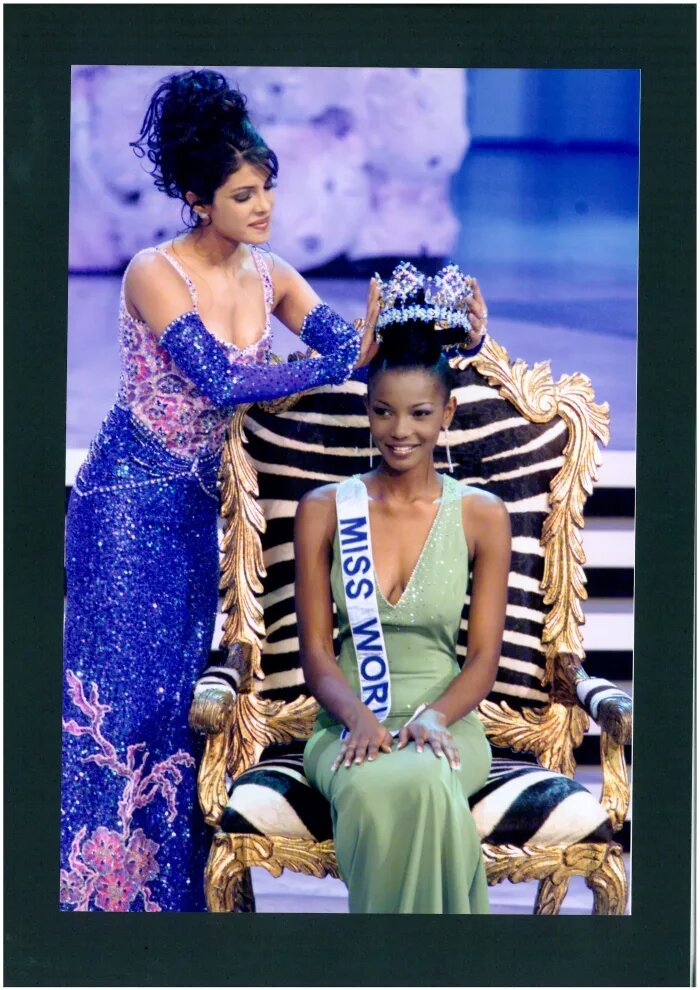
While the judges considered the responses and the scores were tabulated, the audience watched the entertainment programme. The outgoing Miss World, Priyanka Chopra of India, also made her farewell appearance. She had won the title in 2000 and was preparing to hand over the crown to her successor.
Then came the announcement.
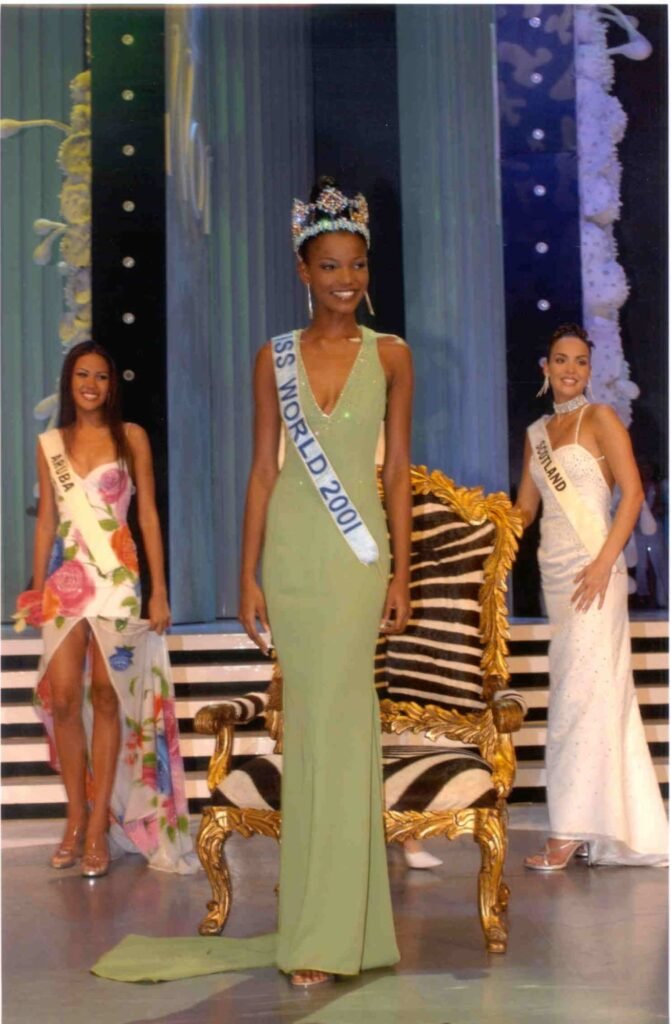
Julia Morley announced the final three in reverse order. Scotland’s Juliet-Jane Horne was named second runner-up. Aruba’s Zerelda Lee followed as first runner-up. That left Nigeria’s Agbani Darego as the winner.
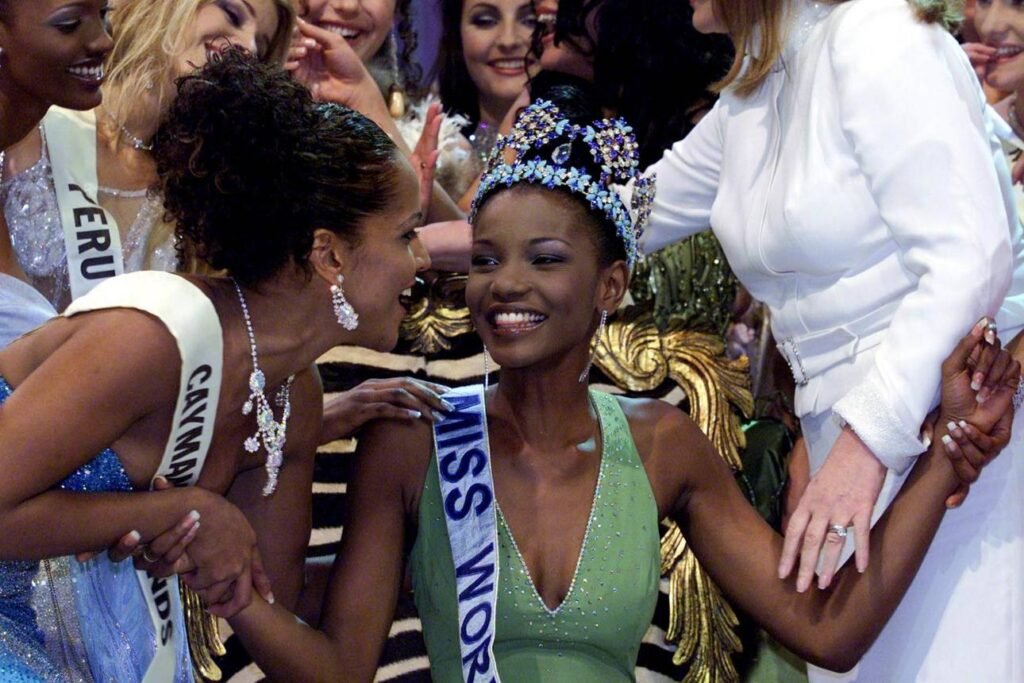
The announcement was historic. At just 18 years old, Agbani had become Miss World 2001. She was crowned by Priyanka Chopra as the audience celebrated her victory. Wearing a lime-green evening gown, she took her ceremonial walk before the cheering crowd.
The moment was particularly meaningful because she had defeated contestants who had performed strongly throughout the competition. Scotland had secured third place, Aruba second, while China and Nicaragua finished fourth and fifth, respectively. Nigeria had taken the crown.
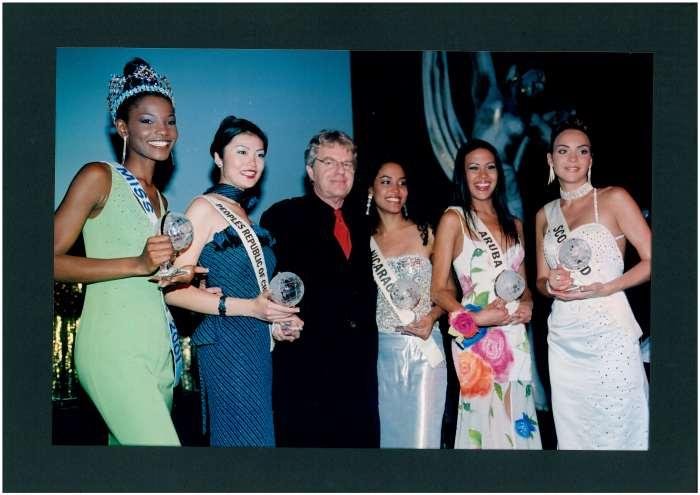
Contemporary reports described the atmosphere as celebratory, with Agbani expressing happiness at the achievement and acknowledging the Nigerians who had supported her from home. In a statement reported by Reuters on November 17, 2001, she said: “I’ve made history.”
It was a short statement, but it captured the significance of the occasion.
Making History: The First Black African Miss World
Agbani Darego’s victory was significant beyond Nigeria’s participation in an international beauty competition. She became the first Black African woman to win the Miss World title in the pageant’s 51-year history. This was an important distinction because African countries had participated in the competition for decades, but no Black African contestant had previously taken the crown.
Before 2001, Africa had produced Miss World winners, but the earlier African victories came from South Africa. Penelope Anne Coelen won the title in 1958, while Anneline Kriel became Miss World in 1974. Both were white South African women. Agbani’s achievement consequently marked a different chapter in the representation of African women in international beauty pageantry.
Her victory also challenged the limited representation of Black African women in a competition that had traditionally been dominated by contestants from Europe and other regions. For many Africans, seeing a Nigerian woman crowned Miss World was a source of pride. It showed that a contestant from sub-Saharan Africa could compete successfully on the same international platform and win its highest title.
The significance of her victory was also connected to the international image of Nigeria. At the beginning of the twenty-first century, Nigeria was frequently in international headlines for reasons that had little to do with entertainment or cultural achievement. The country had experienced years of military government, political instability and economic difficulties. Although it had returned to democratic government in 1999, its international reputation remained complicated.
Agbani’s success offered a different story. For once, Nigeria was being celebrated internationally for the achievement of one of its young citizens. Newspapers and television stations around the world reported her victory, describing her as the first Black African to win the competition. The story attracted attention well beyond the beauty pageant industry.
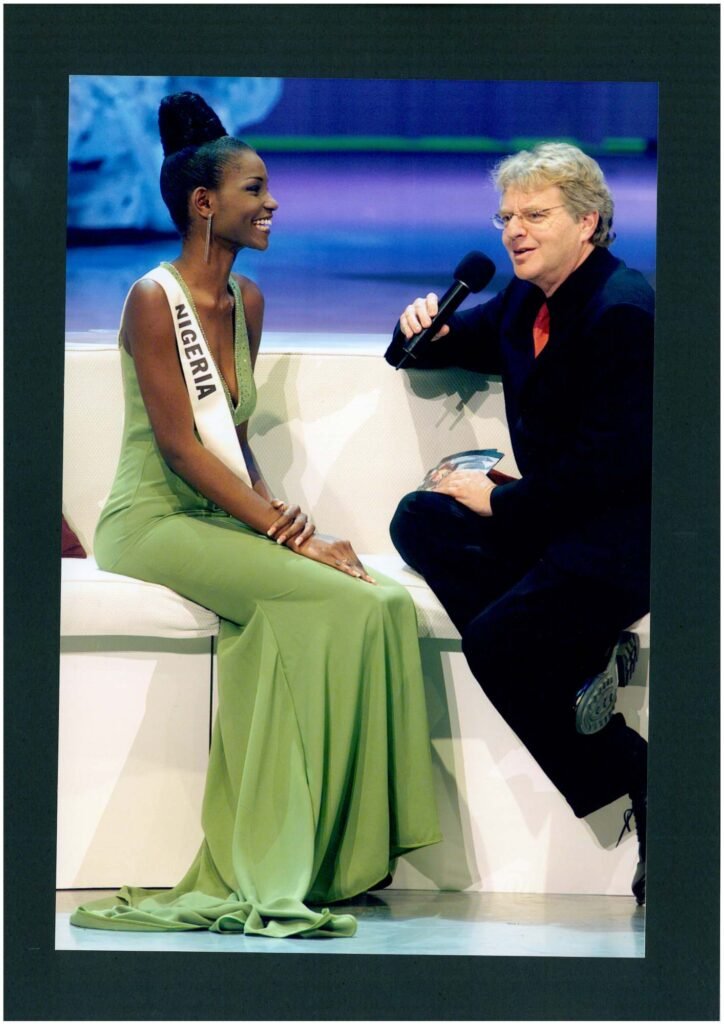
Her achievement also became an important reference point for aspiring African models. It demonstrated that international modelling and pageantry were not exclusive territories for women from Europe, North America or other traditionally prominent fashion markets. A Nigerian woman could reach the highest level of the competition and emerge victorious.
It is worth distinguishing between being the first African Miss World and the first Black African Miss World. The former would overlook the earlier South African winners. Agbani’s historical distinction lies specifically in becoming the first Black African woman to win the crown.
That distinction remains central to understanding why the Miss World 2001 competition occupies such an important place in Nigerian popular history.
Nigeria Celebrates Its New Miss World
News of Agbani’s victory travelled quickly to Nigeria. Newspapers, television stations and radio programmes reported the achievement, while Nigerians celebrated the emergence of their first Miss World winner. It was a moment of national pride, particularly because she had won against representatives from 92 other countries and territories.
For many Nigerians, the victory was more than a personal achievement. It was an opportunity to see the country represented positively before a worldwide audience. Agbani had carried the Nigerian flag into an international competition and returned with its highest award. Her success gave the country an unusual reason to celebrate on the international stage.
The significance of the victory was particularly evident in Rivers State, where Agbani’s family had its roots. Although she was born in Lagos, she had grown up in Port Harcourt and attended school in the state. Her success consequently attracted considerable interest from people who regarded her as one of their own.
The Nigerian government and public figures also recognised the achievement. Her victory was widely presented as a source of pride for the country.
There was also a commercial dimension to the achievement. International modelling agencies and fashion brands became interested in Agbani, whose new status gave her access to opportunities that would have been difficult to secure before the competition. The Miss World title had transformed her from a relatively unknown Nigerian contestant into an internationally recognised public figure.
The attention she received was not limited to Nigeria. International newspapers covered the event, and the victory became a subject of discussion in African and international media. A Reuters report published on November 17, 2001, quoted Agbani expressing happiness that Nigerians had watched the competition and that she had made them proud.
Her achievement also provided a moment of cultural representation at a time when African fashion, music and entertainment were increasingly attracting international interest. Agbani became one of the faces associated with that growing visibility.
For a country of Nigeria’s size, winning Miss World was a new experience. It was the sort of achievement that could be celebrated across ethnic, religious and regional differences. People who had never followed beauty pageants suddenly had a reason to take an interest in the competition.
Life After Miss World: Agbani Darego’s International Career
Winning Miss World opened a new chapter in Agbani Darego’s life. She had entered the competition as a young Nigerian model with ambitions of working internationally. She left it as a global beauty queen whose name was recognised in fashion and entertainment circles. The title brought professional opportunities, international travel and access to some of the world’s most prominent fashion platforms.
One of the most significant developments was her entry into international modelling. She worked with major fashion publications and appeared in magazines including Vogue, Elle, Allure and Cosmopolitan. These publications were influential in the international fashion industry, and appearing in them gave Agbani greater visibility beyond the Miss World organisation.
She also worked with established designers and fashion houses. Her modelling career included appearances associated with designers such as Ralph Lauren and Oscar de la Renta. These opportunities demonstrated that her career could extend beyond beauty pageantry into the wider fashion industry.
Her association with L’Oréal was another important milestone. She became one of the Black models to work with the international cosmetics company, an achievement that reflected the growing recognition of African models in the global beauty industry. Her career helped bring a Nigerian face into an industry where international campaigns had historically offered limited representation to Black African women.
However, Agbani did not abandon her academic ambitions. She had spoken about her interest in computer science before winning Miss World, and education remained part of her plans. She later studied at New York University, graduating with a degree in Psychology in 2012. Her academic journey demonstrated that the demands of an international modelling career did not entirely displace her interest in education.
Agbani also explored entrepreneurship and television. In 2010, she became associated with Stylogenic, a fashion reality television programme that focused on style and fashion. In 2013, she launched her denim clothing line, AD by Agbani Darego, extending her involvement in the fashion industry beyond modelling.
These developments showed a gradual change in her professional identity. She was no longer simply the Nigerian teenager who had won an international beauty competition. She was becoming a model, entrepreneur and public figure with interests across different parts of the fashion and entertainment industries.
Her personal life also attracted public interest. In 2017, she married Ishaya Danjuma, the son of Nigerian businessman and retired general Theophilus Danjuma. The couple have maintained a relatively private family life.
Despite her international career, Agbani remains closely associated with the Miss World title. More than two decades after her victory, her name continues to appear in discussions about Nigeria’s achievements in international beauty pageantry.
The Nigerian Who Conquered the World: The Legacy of Agbani Darego
More than two decades after her victory, Agbani Darego remains one of the most recognisable Nigerian women to have emerged from the international entertainment industry. Her achievement in 2001 was unusual because it placed Nigeria at the centre of a global competition that had existed for more than half a century. She was only 18 when she won, yet her name became part of the history of international beauty pageantry.

Her victory also changed the way many Nigerians viewed international beauty competitions. Before 2001, Nigeria had participated in major pageants without winning the Miss World crown. Agbani demonstrated that a Nigerian contestant could progress through the various stages of the competition and emerge ahead of representatives from countries with longer histories of participation.
Her achievement had particular significance for young African women who aspired to careers in modelling and fashion. The international fashion industry had often given limited visibility to Black African models. Agbani’s success provided a prominent example of an African woman reaching the highest level of an internationally recognised beauty competition. Her subsequent modelling career strengthened that visibility.
It is also worth remembering that her victory came at a relatively young age. At a time when she was still completing her education and considering a career in computer science, she had to adjust to international recognition and the responsibilities of holding a global title. She managed to build a career beyond the competition, appearing in international fashion publications, working with major designers and exploring entrepreneurship.
For Nigeria, November 16, 2001, was a moment when a young Nigerian woman became the centre of international attention for an achievement that had never before been accomplished by a Black African contestant. Her success was celebrated across the country and remembered as one of the most prominent moments in Nigeria’s international beauty pageant history.
Today, Agbani Darego’s name remains inseparable from Miss World 2001. Scotland’s Juliet-Jane Horne finished third, China’s Bing Li reached the final five, and Aruba’s Zerelda Lee became first runner-up. But the crown went to Nigeria. On that November evening in South Africa, an 18-year-old from Rivers State made history, and the name the world remembered was Agbani Darego.
Want to understand what really happened during Nigeria’s first military coup? Read A Carnage Before Dawn. It offers a carefully researched, vividly told account of January 15, 1966, through a storytelling style that will keep you glued to the book’s pages.
You can get the e-book here and the paperback here.
Love history? Don’t stop here.
📚 Get deeper insights by purchasing our latest history books.
📢 Join our WhatsApp Channel for exclusive updates and historical facts.
📩 Subscribe to our Newsletter and receive fascinating stories from history (World and African history) directly in your inbox.
🎥 Subscribe to our YouTube channel for engaging documentaries and short history videos.
Stay connected with us on social media for daily history content:
🔵Follow us on Facebook.
📸 Follow us on Instagram.
🐦Follow us on Twitter.
💼 Follow us on LinkedIn.
🎵 Follow us on TikTok.
❤️ Support our work by donating to HistoryVille and help us continue preserving and sharing important historical stories. 📢Advertise with HistoryVille to reach a growing audience passionate about history and culture.