
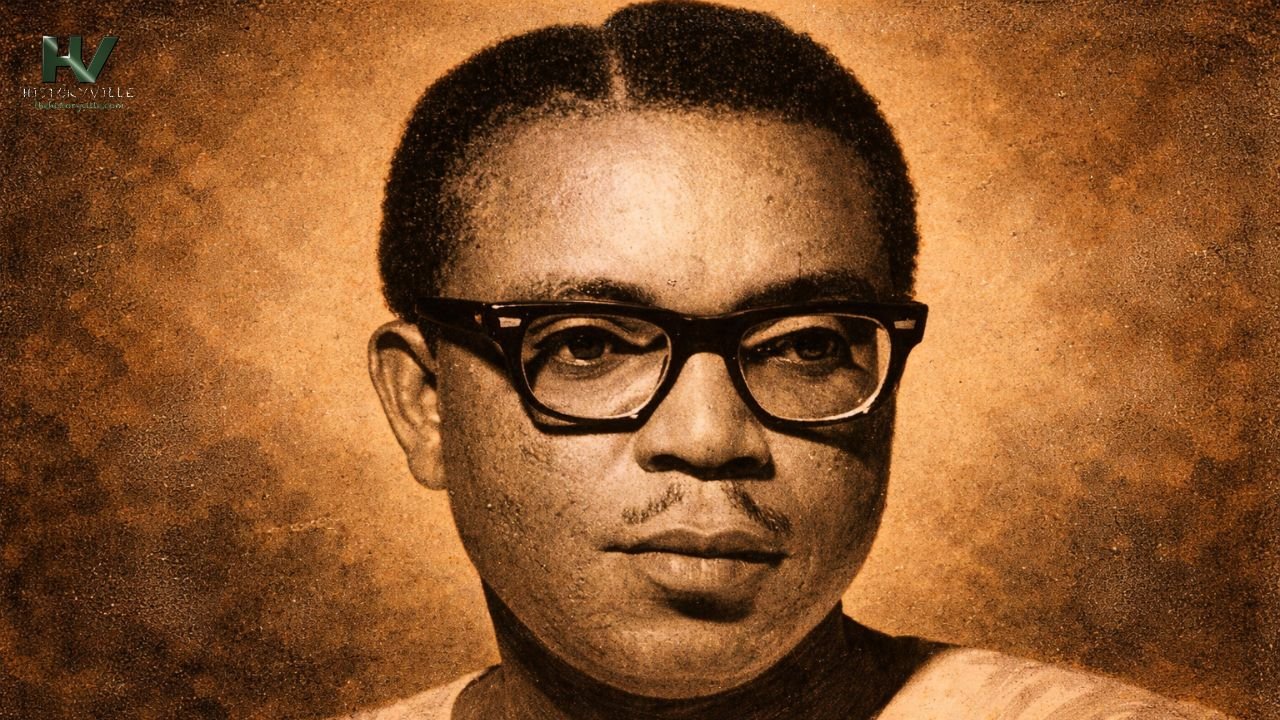

Chief Anthony Enahoro is best remembered for his March 1953 motion calling for Nigeria’s independence in 1956. This piece of history remained with him throughout his life.
However, Enahoro should also be recognised for another equally important contribution to Nigerian history. His fight for women’s political rights in pre-independence colonial Nigeria.
First, who was Anthony Enahoro?
Who was Anthony Enahoro?
Chief Anthony Enahoro was a prominent Nigerian nationalist, journalist, and politician, best known for his early advocacy for Nigeria’s independence from British colonial rule. Born on July 22, 1923, in Uromi, in present-day Edo State, he became one of Nigeria’s most influential political figures in the 20th century.
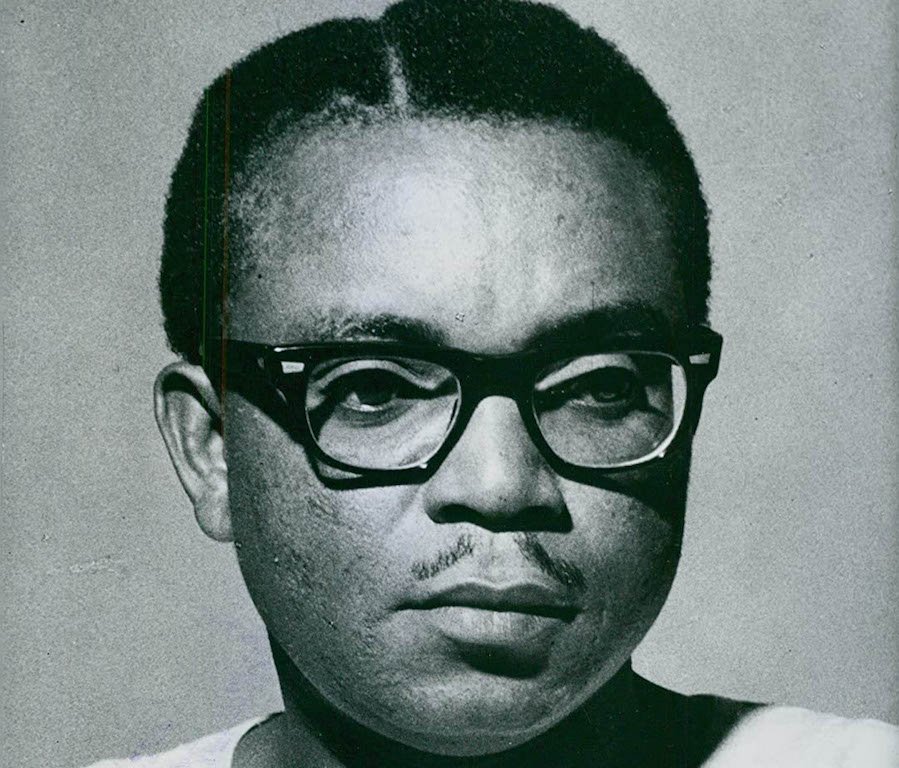
Anthony Enahoro began his career in journalism at a young age. At just 21, he became the editor of the Southern Nigerian Defender, making him the youngest newspaper editor in Nigeria’s history. He later worked for several other newspapers, using his platform to criticise colonial policies and support the nationalist movement.
In 1953, Anthony Enahoro moved a motion in the Federal House of Representatives calling for Nigeria’s independence in 1956, making him one of the most significant advocates for self-governance. Although the motion failed, it set in motion a series of events that ultimately led to Nigeria gaining independence in 1960. This bold action earned Enahoro a place in history as a key figure in the struggle for Nigeria’s freedom.
Beyond his nationalist activities, Anthony Enahoro was deeply involved in Nigerian politics. He was a member of the Action Group, led by Chief Obafemi Awolowo, and later the Unity Party of Nigeria. He held various political positions, including Minister of Information, Labour, and later Transport. Despite his political prominence, Enahoro faced persecution and imprisonment during periods of Nigeria’s political turmoil.
After independence, Anthony Enahoro continued to advocate for democracy and was a critic of military regimes, playing a key role in movements opposing dictatorship in Nigeria. He remained a significant figure in Nigerian politics until his death in 2010 at the age of 87. His legacy as a nationalist leader, advocate for democracy, and champion of press freedom remains deeply influential in Nigeria’s political history.
So, back to the story. How did Anthony Enahoro fight for women’s political rights in Colonial Nigeria?
Anthony Enahoro’s Motion
On January 20, 1953, Anthony Enahoro, a member of the Action Group in the Ishan (Esan) Division, then part of the old Western Region, sponsored a motion where he expressed regret that there were no women Members in the House. He urged the Lieutenant Governor to recognise women as one of the special interests not adequately represented and to exercise his powers under Section 34 of the Nigeria (Constitution) Order in Council, 1951, to appoint at least one woman member to the House.
Anthony Enahoro did not stop there. He remarked that, due to the slow development of the womenfolk in the country and the discriminatory nature of the electoral laws, not a single woman had secured a place in the House. He suggested that the government might soon consider adopting the Indian system of reserving seats for women.
He further stated that, if the motion were accepted, three key factors should be taken into consideration: firstly, that the appointments should be representative; secondly, that women of moral integrity should be appointed; and thirdly, that women of intelligence should be selected.
Anthony Enahoro’s motion came at a critical time for women, who, up until that year, had only occupied seats in local government councils. In 1949, four women – Funmilayo Ransome-Kuti, Amelia Osimosu, Victoria Adetutu Soleye, and Nusiratu Oduola – had won elections to the Egba Central Council. Additionally, Oyinkan Abayomi, who had been nominated in 1944, and Henrietta Lawson, elected in 1950, had held seats in the Lagos Town Council.
However, women were absent from Nigeria’s regional and central legislative institutions and had no voice in major issues that affected their lives.
The Plight of Nigerian Women
In December 1949, when the “Widows and Orphans Pension of African Officers Bill” was debated on the floor of the Western House of Assembly, it was roundly rejected. The Nigerian Tribune of December 18, 1950, reported on the debate among the unofficial members.
According to the newspaper, “Chief W. E. Mowarin from Warri Province said he had consulted many workers, and they all agreed with him that if adopted, the law would bring endless trouble during and after the lifetime of the contributor. He advised that the scheme should only benefit orphans because if the children of a woman were provided for, the woman herself was also provided for.”
The report further stated that members, such as the then Ooni of Ife, Sir Adesoji Aderemi, Chief Timothy Odutola from Ijebu-Ode Province, and several others, supported Chief Mowarin’s view of the Bill. Although the Honourable Members A. Soetan, the Aro of Kemta (Abeokuta), and Mr P. A. Oladapo from Ondo Province, supported the Bill, they were in the minority, and ultimately, the Bill failed to pass.
It is worth noting that throughout the duration of the Second World War, press notices announcing “The government’s regret at the casualties sustained by Units of the Nigerian Regiment serving overseas” were published.
For example, in August 1941, the Comet published the names of fallen Nigerian soldiers under various categories such as “Killed in action; died of wounds received in active service; died on active service; missing believed killed on active service; accidentally killed on active service; wounded and missing on active service; and wounded in action on active service.” The widows and orphans left behind necessitated the drafting of the Bill in the first place.
Getting Support for the Motion
With the 1951 Macpherson Constitution, the old-timer nominees in the House of Assembly were swept away and replaced by an elected crop of young and fiery nationalists, such as the 29-year-old Enahoro.
Alhaji Adegoke Adelabu, the Peculiar Penkelemesi, of the National Council of Nigeria and the Cameroons (NCNC), who sat on the opposition bench, gave the motion his full commendation that “If past performance were taken into consideration in appointing a woman, there would undoubtedly be no difficulty in finding one who would sit on the NCNC bench.”
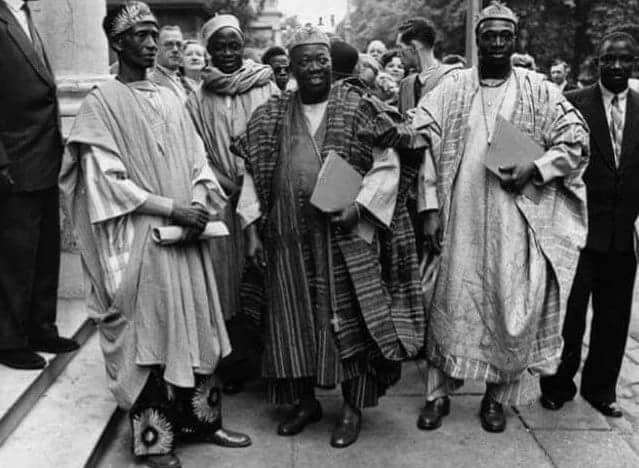
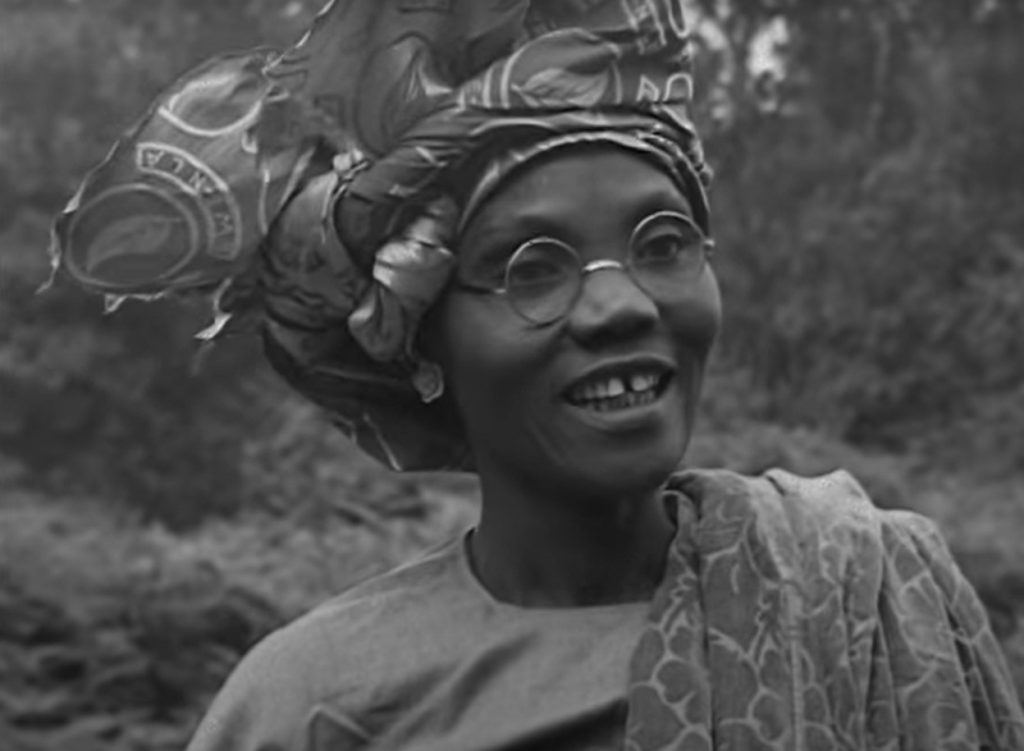
An avid reader of Nigerian history would know that Adelabu was talking about Funmilayo Ransome-Kuti, leader of NCNC Women in the Western Region. She had also been a member of the Party’s seven-person delegation that sailed to England in 1947 to discuss the Richards Constitution with the Secretary of State for the Colonies, Arthur Creech-Jones.
Support for the motion came from Chief Joseph Odunjo, the renowned Yoruba poet from the Egba Division, who advised that “It was incumbent on the menfolk to encourage women to march forward with them in politics as well as in the field of education. When women have seats in the House of Legislature, they would be encouraged to come forward with their justifiable income tax.”
Unfortunately, not everyone agreed to Anthony Enahoro’s motion. Prince Adedoyin Adeleke, a lawyer and a future speaker of the Assembly, objected to the idea on the grounds of its “unconstitutionality.” He said that such a decision and discretion lay with the Lieutenant Governor, Mr Hugo Frank Marshall. As we know, the latter had the power to nominate and re-nominate special members of the legislature. He did this from ranks involved in mining, banking, shipping, and so on, which in those years were exclusively male domains.
Another staunch opponent of the motion was Chief Dennis Osadebay from the Asaba Division. A legal practitioner, he is best remembered for holding several political posts, including Leader of the NCNC Opposition in the Western House of Assembly and President of the Senate. The transcripts recorded Osadebay saying: “The Order in Council provided seats for interests not otherwise represented, and don’t husbands, uncles, and nephews of women in the House adequately represent the women’s interests?”
Interestingly, Osadebey’s view still holds some credence in Nigeria today.
The motion was saved by the Legal Secretary in the House, who said the Lieutenant Governor would be within his rights to appoint women. This seemed to convince those opposed to the idea to change their minds. When subsequently put to the vote, the motion was unanimously accepted.
First Woman Legislator in Nigeria
The underrepresentation of women in the House, which was partly linked to this corrupt electoral system, nevertheless seemed by that time so indefensible that the members themselves (who were all men in the 1950s) asked the British lieutenant governor to give women one of the three seats reserved for special members. This taking of a position in favour of women also reveals the members’ wish to choose women who agreed with them.
However, Governor Marshall appointed Mrs Remilekun Iseoluwa Aiyedun, an Egba teacher from Abeokuta, who became the first woman in Nigeria and, indeed, West Africa, to take a seat in the regional legislature.
Interestingly, this appointment was criticised by Mrs Elizabeth Adekogbe, who said that Aiyedun was chosen not because of her political struggles in the interests of women but due to her religiousness, as she was very active in the Anglican Church and was the wife of Reverend W. O. Aiyedun, who presided over the St. Paul’s Anglican Church, Igbore, in Abeokuta.
Aiyedun was also the president of the Christian Ladies’ Progress Union and secretary of the Diocesan Women’s Guild since the 1940s. Adekogbe argued that Mrs Aiyedun appeared to have been appointed because she was a respected figure in the Christian community. The Ijebu feminist also believed the ruling Action Group party had a hand in the appointment, as Aiyedun’s husband was a cousin of the ruling Alake, Oba Samuel Ladapo Ademola II, who was close to the Action Group and had sympathies for it.
But Aiyedun was not a rookie in politics, as she had defeated Mrs Funmilayo Ransome-Kuti to win a seat on the Egba Alake Section of the Egba Central Council in 1952. Nevertheless, as the first woman legislator in Nigeria, Aiyedun’s appointment made the front pages of the newspapers such as the Daily Service and the Nigerian Tribune.
Anthony Enahoro’s historical motion for Nigerian women to have a seat in the legislative houses in the country will always be remembered, as two years later, Lady Oyinkan Abayomi replaced Mrs Aiyedun, and in 1959, Mrs Margaret Ekpo and Janet Nwadiogo Mokelu were appointed as Special Members in the Eastern House of Chiefs.
However, in the Northern Region, no woman was nominated.[1]
Want to understand what really happened during Nigeria’s first military coup? Read A Carnage Before Dawn. It offers a carefully researched, vividly told account of January 15, 1966, through a storytelling style that will keep you glued to the book’s pages.
You can get the e-book here and the paperback here.
Love history? Don’t stop here.
📚 Get deeper insights by purchasing our latest history books.
📢 Join our WhatsApp Channel for exclusive updates and historical facts.
📩 Subscribe to our Newsletter and receive fascinating stories from history (World and African history) directly in your inbox.
🎥 Subscribe to our YouTube channel for engaging documentaries and short history videos.
Stay connected with us on social media for daily history content:
🔵Follow us on Facebook.
📸 Follow us on Instagram.
🐦Follow us on Twitter.
💼 Follow us on LinkedIn.
🎵 Follow us on TikTok.
❤️ Support our work by donating to HistoryVille and help us continue preserving and sharing important historical stories. 📢Advertise with HistoryVille to reach a growing audience passionate about history and culture.
Reference
- [1] Agunbiade, T. (2022, July 8). Anthony Enahoro, women and the Western House of Assembly. Premium Times. https://www.premiumtimesng.com/opinion/541568-anthony-enahoro-women-and-the-western-house-of-assembly-by-tayo-agunbiade.html