
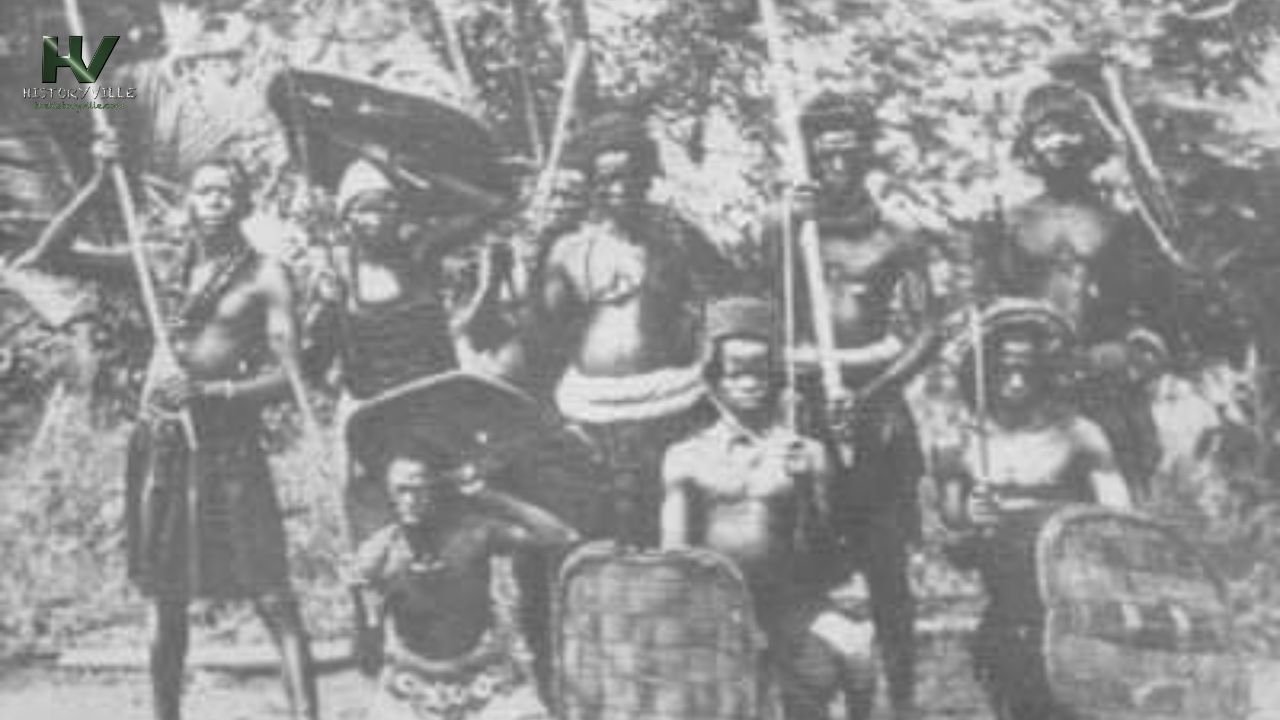

The decentralised governance system that shaped non-centralised states in pre-colonial Nigeria differed from the centralised one and influenced their social and political organisation as well as their reactions to British colonialism.
The Igbo, being one of the largest ethnic groups in Nigeria, are characterised by a distinctive and robust history embedded in a decentralisation of power amongst co-existing states. While several states in Western and Northern pre-colonial Nigeria operated under central governments and ruling systems which made up renowned empires and kingdoms, the non-centralised Igbo community, in contrast, had sovereign states with ruling autonomy in their jurisdictions.

For a people used to governing their own people in their own corner, one can understand why they would vehemently resist a ruling centralisation, more so one instituted by foreigners.
What are Non-Centralised States?
The line that partitions states into either being centralised or non-centralised is primarily characterised by the system of governance in such regions. In plain terms, non-centralised states are regions where groups of inhabitants constitute segmented states, where each state operates under independent governance.
It is worth noting that the term “state” does not refer to the conventional definition known today, which speaks of political units under a federal government. Rather, what is implied is a group of inhabitants in a segmented location linked together by family ties and associations. This understanding will form the basis of this narration as the history of Igbo states and their peculiarities are further discussed.
The non-centralised states of Nigeria were mainly among the Igbos, who upheld strong communities and associations and thrived in the pre-colonial era in neighbouring worlds of their own, so to speak.
So, what are the unique features of Nigeria’s non-centralised states?
Features of Non-Centralised States in Nigeria
Non-centralised states in Nigeria were characterised by a decentralised political structure in which power was dispersed among various groups and individuals rather than being concentrated in a single authority. Societies such as the Igbo, Tiv, and Ibibio exemplified these non-centralised systems.
A major feature of non-centralised states was the absence of a central ruler. Instead of a king or supreme leader, governance was carried out through councils of elders, age-grade associations, and family heads. In Igbo society, for example, decision-making was collective, with village assemblies playing a crucial role in administration.
Another key characteristic was the egalitarian nature of these societies. Leadership was often based on merit, wisdom, and seniority rather than hereditary succession. Among the Tiv, the concept of ‘gerontocracy’ was prevalent, where elders wielded authority due to their experience and knowledge.
Non-centralised states also exhibited a flexible political system that allowed for autonomy among different groups. This decentralised nature enabled local communities to manage their affairs independently while still maintaining social cohesion through shared customs and traditions.

Social organisations such as age-grade systems and secret societies played significant roles in governance and maintaining law and order. The Ekpe society among the Ibibio and Efik, for example, functioned as both a judicial and enforcement body, ensuring that societal norms and traditions were upheld.
Unlike centralised states, military organisation was generally less formalised. Defence and security were often managed at the community level, with groups mobilising only when necessary to repel external threats.
Economically, non-centralised states were heavily reliant on agriculture, trade, and craftsmanship. While they engaged in trade with neighbouring societies, their economic systems were generally localised, with barter playing a significant role in transactions.
Religiously and culturally, non-centralised states maintained traditional belief systems that reinforced communal living. Ancestral worship, divination, and oracles were integral to decision-making processes and conflict resolution.
These characteristics of non-centralised states contributed to their resilience and adaptability, allowing them to function effectively without the need for a rigid political hierarchy.
Non-Centralised States: Connections and Common Grounds
Indeed, the non-centralised states of Nigeria existed and operated independently as segmentary units. However, there were some connections and common grounds among them. These connections represented activities and engagements which brought them together and fostered social interactions between them.
Although the states were separate, these connections usually brought them together and for the period they lasted, it would seem as though the states involved were merged into one. One such connection which brought the Igbo states together was marriage. Since members of a state could be traced to a single lineage, it was only right for a man to marry women from other states. Thus, inter-state marriages were common, and as marriages were worthy of celebration, one could trust both states involved to try to outdo each other in the celebrations.
Another thing which brought the different states together was interstate business trade. The economy of the states prospered as they engaged in the trading of produce, wares and crafts with one another. In addition, market locations were rotated between the states, and thus, inter-state interactions were bound to occur among the states.
Finally, one more thing that linked the non-centralised states together was the worship of the gods. All the Igbo villages had shrines for the different deities they believed in, and as such, people went from state to state to either make enquiries from the oracles or to have them appeased.
The Dominance of the Aro Confederacy in the Non-Centralised States before British Colonisation
Before the British Colonisation came into play, the people of Aro dominated many of the non-centralised states of Nigeria and other non-Igbo states in several regards, assuming the place of an elder state amidst the rest. The reason for this was not far-fetched, as they possessed certain traits and exhibited some sort of advantage amongst the surrounding states. Let’s take a look at a number of the reasons for their dominance.
First and foremost, the great Oracle of Arochukwu, called Ibini Ukpabi, was in the hands of none other than the people of Aro. Across Igboland, the Arochukwu Oracle was greatly revered and many from across the non-centralised states often visited the Oracle to seek guidance. This put the Aro people on a much-respected pedestal amongst the Igbo tribes. The use of the Oracle morphed from being just a religious shrine to a general seat of judgement amongst the non-centralised states in an unspoken form of centralisation in a highly decentralised setting.
Another edge the Aro people had over others, which fostered their dominance before the British colonisation, was their control of the major trading routes in the non-centralised states. They not only controlled the central routes, but they were also skilled traders themselves in several goods exported from the states. They further extended trading networks and business influence in several regions across Nigeria and prospered immensely in economic growth.
The Aro Confederacy was not without military power, as they had allies from most of the non-centralised states of Nigeria, which provided them with the much-needed military support to maintain order in the regions and also control the trading routes effectively. Their military strength greatly strengthened their influence on the other states and allowed them the privilege of right of way without confrontation. Despite this, they were wise in their dealings with people to not deploy force when unnecessary. They had a strong sense of cultural integration and relationship with both Igbo and non-Igbo lands, which facilitated their acceptance by those they engaged in dealings with.
Finally, they maintained respect among the non-centralised states as they resisted British colonisation vehemently, becoming the last state to succumb to British dominance. This was following the Aro Invasion carried out by the British troops in 1901-1902, which succeeded in vanquishing the Aro dominance and ushered in British Colonisation in its full strength on the non-centralised states of Nigeria.
The Impact of British Colonisation on the Non-Centralised States of Nigeria
The arrival of the British in the non-centralised states had profound effects on the social and governance structures of the Igbo groups. The impact of colonialism was deeply felt, as by the time the British departed, these states had been significantly weakened, particularly in terms of political independence, structural organisation, and social activities.
So, how did British colonialism play a central role in disrupting the autonomy and isolation of the non-centralised states of Nigeria?
Imposition of Warrant Chiefs
The first major disruption to the decentralised Igbo communities was the imposition of Warrant Chiefs, introduced to facilitate a system of indirect rule. This measure was fundamentally at odds with the traditional system of governance, as the local people and the Ama-ala lost their right to make decisions on matters directly affecting them.
The Warrant Chiefs, who assumed the role of decision-makers, were often accused of corruption and cruelty towards their people. Consequently, tensions escalated, leading to conflicts and resistance against the British system.
One such notable event was the Aba Women’s Protest of 1929, in which the women of Aba remonstrated against the unjust imposition of heavy taxes by the Warrant Chiefs. This uprising paved the way for further acts of resistance against British colonisation in the subsequent years.
Dismantling of Local Governance Hierarchy
In addition to appointing Warrant Chiefs, British colonialism systematically stripped village elders and age-grade leaders of their administrative authority, replacing them with foreign policies and structures. A new political order was established, causing divisions and strife between the local people and the British administration.
Furthermore, colonial courts were introduced to resolve disputes, disregarding the traditional system of conflict resolution. This resulted in significant cultural clashes and a growing imbalance between the Igbo people’s indigenous beliefs and those of the colonial rulers. Consequently, British colonialism led to a substantial decline in social cohesion and unity among the non-centralised states.
Exploitation of Resources
A primary objective of British colonialism was the exploitation of resources within the non-centralised states, generating substantial profits for the Crown while integrating the Igbo economy into the global market. The British took control of trade between communities, leading to the disruption of local economic structures and social networks.
Moreover, economic exploitation was primarily focused on cash crops such as cocoa and palm oil, which drastically altered traditional trading systems. This shift negatively impacted subsistence farming, reducing agricultural output and contributing to widespread food insecurity.
Introduction of Western Education and Christianity
The introduction of Western education gradually influenced local perceptions of cultural heritage, with many beginning to view their traditions as primitive and outdated. School curricula included themes that undermined indigenous traditions and cultural practices. Meanwhile, the introduction of Christianity progressively eroded belief in traditional deities, leading to significant changes in religious and social dynamics.
Urbanisation and Increased Migration
British colonialism also facilitated rapid urbanisation and infrastructural development across both centralised and non-centralised regions. The construction of roads, railways, and other infrastructure improved the quality of life for many, prompting significant migration towards urban centres. This mass movement resulted in a decline in the population of non-centralised states, weakening traditional social structures and severing many from their cultural roots. The erosion of communal organisation and traditional social ties further contributed to the transformation of Igbo society under British rule.
Overall, British colonialism had a lasting impact on the non-centralised states, fundamentally altering their political, economic, and social frameworks, the consequences of which continue to be felt today.
Conclusion
Aside from the Igbos, other ethnic groups of Nigeria’s non-centralised states before British colonisation are the Tiv, the Idoma, the Ebira, the Ibibio, and the Anaang. The people of these non-centralised states thrived in an autonomous, egalitarian and active social organisation.
The advent of British colonialism inadvertently led to the crumbling of the system of governance and social structure of the non-centralised states, but not before the Aro Confederacy had established a period of dominance and resisted the foreign European intruders for many years.
Your support can make a world of difference in helping us continue to bring Nigeria’s rich history to life! By donating to HistoryVille, you’re directly contributing to the research, production, and storytelling that uncover the incredible stories of our past. Every donation fuels our mission to educate, inspire, and preserve our heritage for future generations.
Please stay connected with us through our social media handles and make sure you are subscribed to our YouTube Channel. Together, let’s keep the stories of Nigeria’s past alive.