
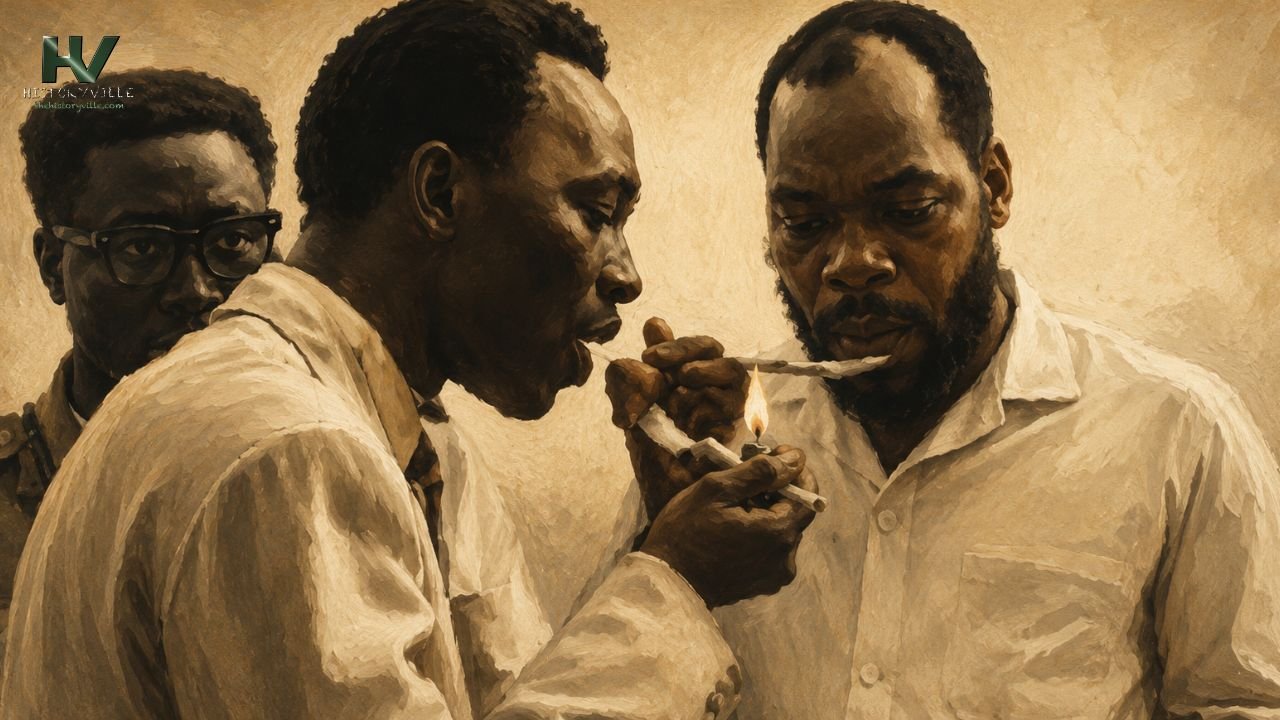

What did Ojukwu really want in Aburi, Ghana, in January 1967? Was he a secessionist in waiting, already determined to break Nigeria apart, or a reluctant nationalist pushed beyond endurance by fear and betrayal? Nearly 60 years later, the Aburi Accord remains one of the most contested moments in Nigerian history.
Aburi did not emerge out of nowhere. The meeting arose from a Nigeria that had just gone through coups, counter-coups, and genocidal killings. Aburi was necessary for a country in which trust had collapsed, and survival had become a regional concern rather than a national guarantee.

Ojukwu did not come to Aburi waving the banner of independence, even if the signs were there. No doubt, the Aburi Accord showed promise, but it failed. This would eventually degenerate into a civil war in which both sides would shift the blame to each other. The consequences that still echo today.
So, what did Ojukwu really want in Aburi?
The Road to Aburi
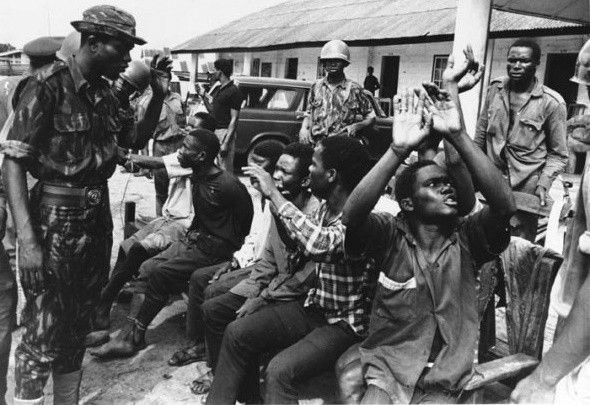
By the end of 1966, Nigeria existed more in name than in spirit. The twin coups of that year had shattered the illusion of a shared national destiny, replacing it with suspicion etched along ethnic and regional lines. The January coup had removed the old political elite, while the July countercoup drenched the military in blood and transformed barracks into killing fields. For Easterners, particularly the Igbo, the massacres that followed in Northern Nigeria were unfortunate, to say the least. Trains and lorries arrived in the East packed with refugees whose stories spoke of abandonment by the government that claimed to protect them.
It was against this backdrop that the Aburi Accord was conceived.
Ghana, under General Joseph Ankrah, offered neutral ground where Nigeria’s military leaders could meet away from the pressure of public posturing. Aburi, a hill town known for its calm, became the setting for what was effectively Nigeria’s last attempt to argue its way out of collapse. For Lt. Colonel Chukwuemeka Odumegwu Ojukwu, the Military Governor of the Eastern Region, the journey to Aburi was undertaken with deep doubts, yet also with a sense of obligation. He could not easily dismiss a meeting that promised, at least in theory, to address the fears of his people.
Ojukwu arrived at Aburi for a serious meeting. Gowon, on the other hand, saw the gathering as a reunion of friends, especially as Ojukwu had boycotted every meeting the Supreme Military Council held in Nigeria.
Ojukwu had said he was not sure of his safety. The killings of 1966 had convinced him that the Nigerian state, as constituted, was either unwilling or unable to protect Easterners. This belief hardened into a guiding principle: security must be structural, not rhetorical.
The Aburi Accord appealed to Ojukwu precisely because it promised structure. He was deeply suspicious of unilateral authority, particularly within a military system where decrees could be issued overnight. In his view, Nigeria’s tragedy stemmed from excessive central power concentrated in too few hands. Aburi, therefore, was an opportunity to redesign the state in a way that made abuse difficult, if not impossible.
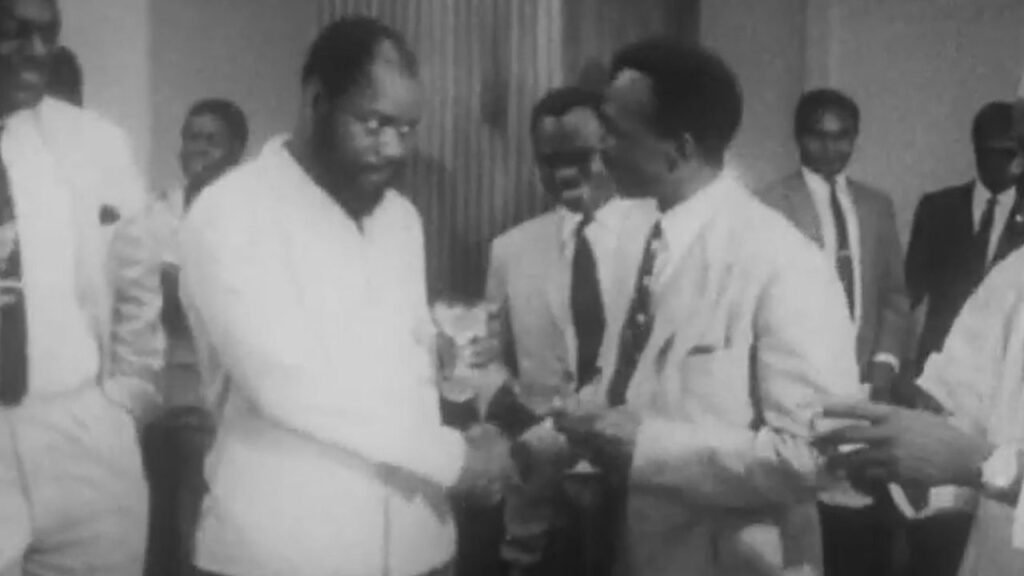
His legalistic approach at Aburi often frustrated his colleagues, but it reflected a deliberate strategy. Every clause mattered because every ambiguity could later be exploited. Ojukwu understood that once the conference ended, interpretation would become power. The Aburi Accord, as he saw it, had to be precise enough to survive a return to Nigeria.
The Meaning of the Aburi Accord
At its core, the Aburi Accord was about redefining authority. The agreements reached in Ghana emphasised collective leadership through the Supreme Military Council and rejected the notion of absolute power vested in a single Head of State. For Ojukwu, this was the most important achievement of Aburi. Decisions of national consequence were to be made collectively, not imposed.
This interpretation of the Aburi Accord effectively dismantled the unitary tendencies that had crept into Nigeria’s military governance. It restored the regions as meaningful centres of power and recognised their right to control their internal security. Ojukwu believed Nigeria would function best when its diversity was balanced by autonomy.
The Aburi Accord also represented an attempt to civilise military rule. By embedding consultation and consensus into governance, it sought to replace the culture of orders with a culture of agreement. In this sense, Aburi was revolutionary. It acknowledged that Nigeria’s survival depended not on stronger command, but on mutual restraint.
For Ojukwu, as long as Lagos retained the ability to deploy force as it willed, unity would remain fragile. The Eastern Region’s insistence on regional control of troops was therefore a demand for safety. Aburi sought to ensure that the instruments of violence could no longer be turned against a region without its consent.

This vision clashed sharply with federal anxieties about disintegration. To leaders in Lagos, the Aburi Accord appeared to weaken the centre at a time when firmness seemed necessary. What Ojukwu saw as balance, others saw as paralysis. The tension between these perspectives lay dormant at Aburi but would soon erupt with devastating consequences.
From Aburi to Biafra
It did not take long before the Aburi Accord failed. Upon returning to Nigeria, the Federal Military Government issued Decree 8, which, in Ojukwu’s view, contradicted both the spirit and the letter of what had been agreed. To Ojukwu, this confirmed his deepest fears: that Aburi had been a tactical pause rather than a genuine commitment.
Trust, once broken, proved impossible to restore. The decree deepened the sense of betrayal in the East and reinforced the belief that agreements could be undone at will. The Aburi Accord, instead of stabilising Nigeria, became a symbol of duplicity. What had been hailed as a breakthrough now appeared as evidence that the federal system was incapable of honouring its own compromises.
This collapse of trust was fatal. Without trust, federalism became meaningless, and unity turned into coercion. Aburi had failed not because its ideas were unworkable, but because its implementation required a level of good faith that no longer existed.
On May 30, 1967, Ojukwu eventually declared the Eastern Region an independent Republic of Biafra. The failure of the Aburi Accord convinced him that Nigeria could not be restructured peacefully in a way that guaranteed the safety of the Easterners.
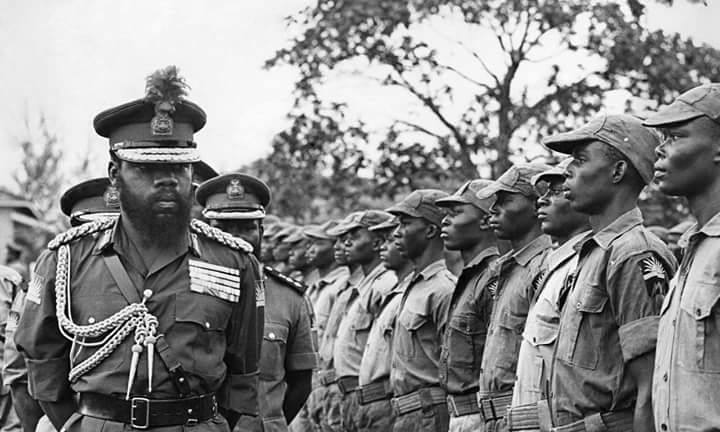
In this sense, Biafra was the child of Aburi’s collapse. The declaration of secession represented a rejection of coercive unity, not of unity itself. Ojukwu framed Biafra as a moral necessity born out of betrayal and fear. Whether history judges that decision as inevitable or tragic, it cannot be understood without reference to Aburi.
The civil war that followed consumed over a million lives and damaged Nigeria permanently.
The Legacy of the Aburi Accord
Nearly 60 years on, the Aburi Accord remains a ghost in Nigeria’s political imagination. It is invoked whenever debates about restructuring, federalism, and decentralisation resurface. What Ojukwu really wanted at Aburi was a Nigeria governed by balance and mutual respect. He wanted a state strong enough to endure, but limited enough not to terrorise its own citizens.
The tragedy of the Aburi Accord is that it revealed Nigeria’s problems with painful clarity and offered solutions that were never fully embraced. No doubt, Aburi failed, but there are still questions to be answered. How should power be shared in a diverse state? How can unity be preserved without coercion? And how many times can agreements be broken before separation becomes inevitable?
In answering these questions, the Aburi Accord remains less a closed chapter than an unfinished argument, one that continues to shape Nigeria’s history and its future.
Want to understand what really happened during Nigeria’s first military coup? Read A Carnage Before Dawn. It offers a carefully researched, vividly told account of January 15, 1966, through a storytelling style that will keep you glued to the book’s pages.
You can get the e-book here and the paperback here.
Love history? Don’t stop here.
📚 Get deeper insights by purchasing our latest history books.
📢 Join our WhatsApp Channel for exclusive updates and historical facts.
📩 Subscribe to our Newsletter and receive fascinating stories from history (World and African history) directly in your inbox.
🎥 Subscribe to our YouTube channel for engaging documentaries and short history videos.
Stay connected with us on social media for daily history content:
🔵Follow us on Facebook.
📸 Follow us on Instagram.
🐦Follow us on Twitter.
💼 Follow us on LinkedIn.
🎵 Follow us on TikTok.
❤️ Support our work by donating to HistoryVille and help us continue preserving and sharing important historical stories. 📢Advertise with HistoryVille to reach a growing audience passionate about history and culture.