
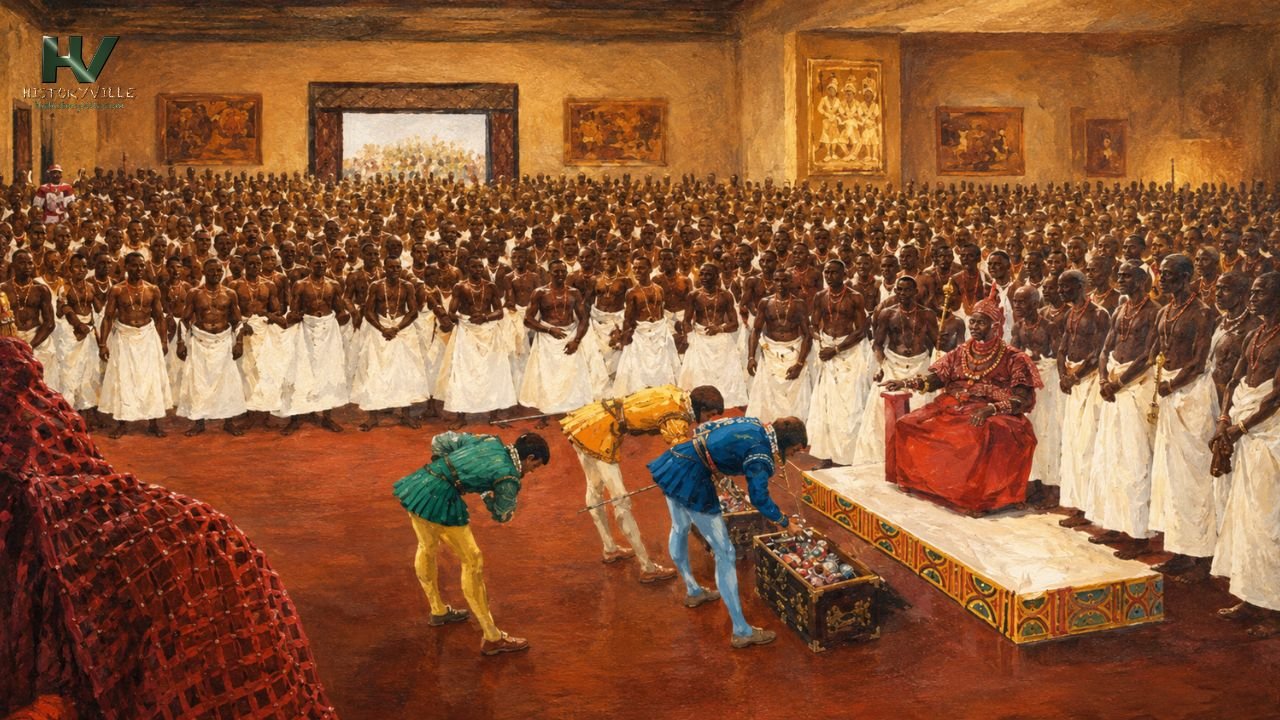

Portugal reached the coast of what is now Nigeria centuries before Britain established colonial rule there. By the late 15th century, Portuguese sailors were already trading along the Bight of Benin and had established diplomatic relations with the Benin Kingdom. Portuguese merchants, missionaries and envoys became familiar figures in the region. Benin’s rulers, in turn, were sufficiently interested in Portugal to exchange diplomatic missions with the Portuguese Crown.
However, Portugal never colonised Nigeria.
By the beginning of the 20th century, Britain had conquered or negotiated control over most of the territory that would become Nigeria. In 1914, the British amalgamated the Northern and Southern Protectorates with Lagos Colony to create the Colony and Protectorate of Nigeria.
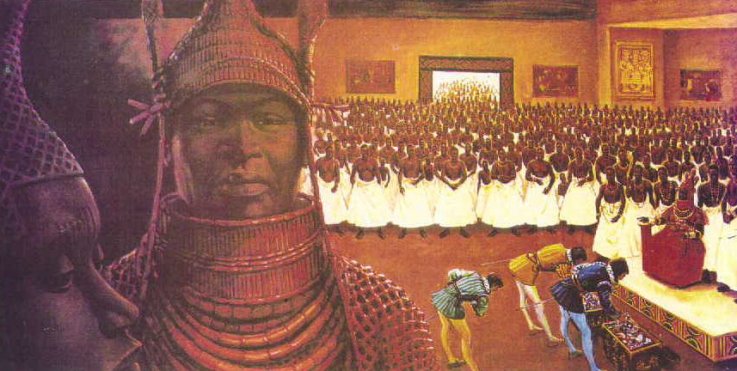
Now, the question is: why did the European power that arrived first fail to establish a colony, while the power that arrived much later succeeded?
Portugal’s First Contact with the Nigerian Coast
Portugal’s expansion into West Africa began during the 15th century. Portuguese navigators gradually sailed southwards along the Atlantic coast, searching for gold, commercial opportunities and a maritime route towards Asia. By the 1470s, Portuguese ships had reached the Bight of Benin. Around 1485, João Afonso de Aveiro established contact with the Kingdom of Benin during the reign of Oba Ozolua.
This was not an encounter between a European power and a politically empty territory. Benin was one of the most powerful states in the region. Its capital, Benin City, was the centre of a sophisticated political system ruled by the Oba. The kingdom possessed a substantial military establishment, an elaborate court and extensive commercial connections. The Portuguese, therefore, entered an already functioning African political and economic world.
The relationship that developed between Portugal and Benin was initially based largely on trade and diplomacy. The Portuguese obtained access to commodities and markets, while Benin’s rulers gained access to European goods and new diplomatic connections. A. F. C. Ryder’s Benin and the Europeans, 1485–1897 remains one of the principal studies of this relationship. Ryder’s work demonstrates that Portuguese contact with Benin developed over more than a century and cannot be reduced to a simple story of European intrusion followed by African submission.
The Portuguese had arrived, but they had not conquered Benin. That distinction would become crucial.
Portugal Wanted Trade More Than Territory
The Portuguese Empire of the 15th and 16th centuries was fundamentally maritime. Portugal’s strength lay in ships, navigation, fortified ports and commercial networks. The Portuguese Crown did not initially need to occupy every territory from which it obtained valuable commodities. It could establish a trading relationship with an African ruler and allow local political institutions to continue functioning.
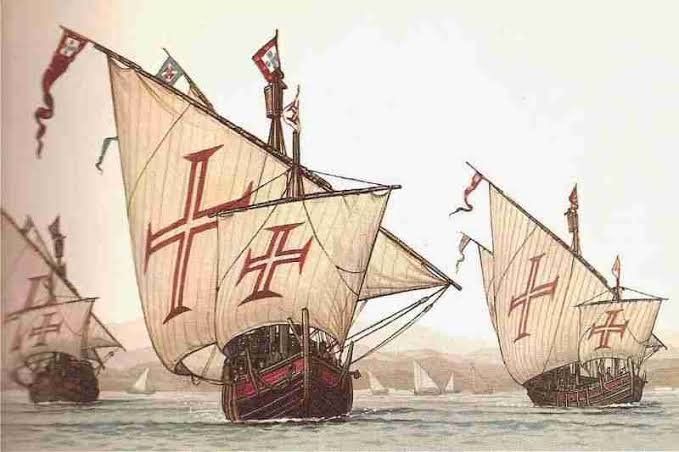
A trading post required fewer soldiers than a territorial colony. A diplomatic relationship was cheaper than an occupation. If local rulers were willing to facilitate trade, Portugal had little economic reason to replace them with Portuguese administrators. The Portuguese established a trading station at Ughoton (Gwato), the port through which goods from Benin reached the coast. But the existence of a Portuguese trading station did not mean that the surrounding kingdom had become Portuguese territory.
The difference between commercial influence and territorial sovereignty is essential to understanding why Portugal never colonised Nigeria. Portugal could profit from Benin without ruling Benin. For much of the early period, that arrangement suited both sides.
Benin’s Rulers Had Their Own Interests
Portugal’s relationship with Benin also reveals the importance of African political agency. The Oba was not simply reacting to European initiatives. Benin’s rulers actively decided how they would engage with the newcomers. European goods could be useful to the royal court. Diplomatic relations with Portugal could strengthen Benin’s position in the wider regional political system. Christianity could be explored without necessarily being accepted as a replacement for existing religious institutions. The Portuguese, in other words, had to negotiate.
Under Oba Esigie, who ruled in the early 16th century, relations between Benin and Portugal became particularly significant. Benin sent an embassy to Portugal around 1540, demonstrating that diplomatic exchange was not simply a one-way process in which Europeans travelled to Africa.
This is an important corrective to the traditional image of European explorers arriving in Africa and immediately exercising dominance. In the 15th and 16th centuries, the balance of power on the West African coast was considerably more complicated. European merchants possessed maritime advantages, but African rulers controlled territory, labour, markets and access to inland trade. The Portuguese could sail into the Bight of Benin. They could not simply command it.
Christianity Did Not Produce Portuguese Rule
Religion might have provided Portugal with another route to political influence. Portugal’s overseas expansion was closely associated with Catholic missionary activity. Portuguese rulers and missionaries hoped to spread Christianity in Africa, and conversion could potentially create stronger political and cultural connections with African rulers. Missionaries, therefore, entered Benin.
But Christianity never transformed Benin into a Portuguese client state. There were periods of royal interest in Christianity, and Portuguese missionaries achieved some influence at court. Nevertheless, the religious and political institutions of Benin remained fundamentally under African control.
The failure to establish a lasting Christian political order meant that Portuguese religious influence never developed into the kind of institutional relationship that might have facilitated territorial domination. Trade remained more important than conquest.
Portugal Had Limited Resources
Portugal’s remarkable maritime achievements can obscure an important fact: it was a relatively small European kingdom. Its empire eventually stretched across enormous distances. Portuguese possessions and interests extended from West Africa to Brazil, India and Southeast Asia. Maintaining this network required ships, soldiers, administrators and money.
Portugal could establish trading stations across the African coast, but occupying large territories was a different proposition. This helps explain the contrast between Portugal’s presence in the Bight of Benin and its eventual expansion in Angola. Portugal did pursue territorial conquest in Angola, beginning a much more sustained process of military expansion in the 16th century. Even there, Portuguese authority developed gradually and depended heavily on alliances, warfare and African political circumstances.
Portugal, therefore, had the capacity to conquer territory, but it did not automatically pursue that strategy everywhere. The Bight of Benin did not initially offer sufficient incentive to justify the enormous costs of territorial occupation.
The Portuguese Lost Their Early Advantage
Portugal’s early arrival also did not guarantee a permanent commercial monopoly. Other European powers soon entered West African commerce. Dutch, English and French merchants challenged Portuguese predominance, particularly from the 17th century onwards. West African coastal commerce became increasingly competitive, and Portuguese influence diminished.
Lagos illustrates this transformation.
Long before the British annexed Lagos in 1861, the area was connected to extensive African commercial networks. European merchants became involved in trade through the lagoons and coastal waterways, but European participation remained dependent on African political structures.
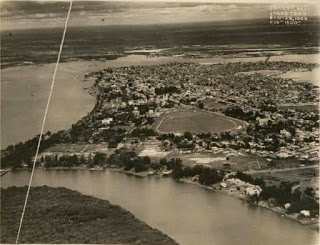
Portugal had, therefore, opened important commercial routes, but it had not converted its early presence into exclusive territorial control. Being first was proving to be less important than maintaining power.
Britain Entered a Different West Africa
When Britain became a dominant force in West Africa, the world had changed dramatically. Britain’s expansion took place during the 19th century, an age of industrialisation, steam navigation, large-scale commercial capitalism and intensified European imperial rivalry. Britain possessed advantages that Portugal had not enjoyed to the same degree.
Its navy could project military power along the West African coast and rivers. British merchants had accumulated substantial commercial interests in the region. Missionary societies established networks across West Africa. British officials increasingly intervened in African politics in the name of commerce, diplomacy, anti-slavery policy and imperial security.
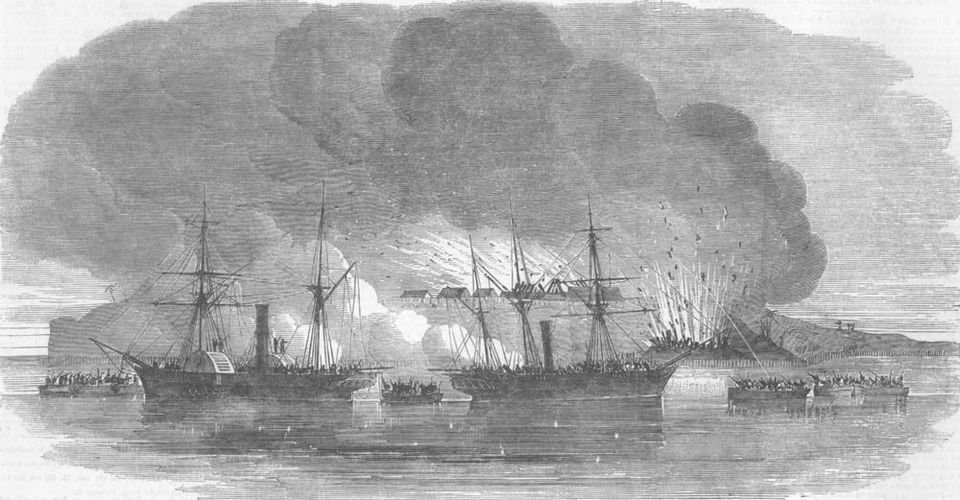
The British approach also became increasingly territorial. Britain intervened militarily in Lagos in 1851 and helped remove Oba Kosoko. It subsequently established a consular administration and eventually annexed Lagos in 1861.
The British annexation was part of a much broader transformation in British policy. Commercial interests, missionary activity, the suppression of the slave trade, political instability and rivalry with other European powers all contributed to British intervention. Robert Smith’s research on the Lagos Consulate demonstrates how these different interests combined to produce British political control.
The British were no longer merely interested in trading with Lagos. They wanted to control it.
The 19th Century Changed the Meaning of Empire
The greatest difference between Portuguese expansion in the 15th century and British expansion in the 19th century was technology and economics. Portugal’s early expansion was conducted in the age of sailing ships. Britain expanded during the age of steam. Steamships made it easier for Europeans to navigate West African rivers and coastal waters. Improved firearms increased European military capabilities. Industrial production supplied European armies and navies with weapons on a scale that earlier empires could not match. Quinine reduced the devastating impact of malaria on European personnel, although West Africa remained an extremely dangerous environment for Europeans.
These developments made sustained territorial expansion more practical.
The economic foundations of empire had also changed. Industrial Britain required access to markets, raw materials, investment opportunities and strategic routes. Commercial interests and imperial politics increasingly reinforced one another. European powers were no longer content simply to establish coastal trading stations. They wanted territory.
The Scramble for Africa Raised the Stakes
The European Scramble for Africa accelerated during the final decades of the 19th century. The Berlin Conference of 1884/1885 did not literally divide Africa into colonies on a map, as the popular version of the event often suggests. Nevertheless, the conference established important rules governing European claims to African territories.
The General Act included provisions concerning trade and navigation on the Niger and Congo rivers. Articles 34 and 35 established principles associated with “effective occupation”, making it increasingly necessary for European powers to demonstrate actual authority over territories they claimed.
Portugal’s early presence in West Africa could no longer provide much protection against European competitors. It was not enough to have arrived centuries earlier. A European power increasingly needed treaties, officials, military forces and administrative structures capable of enforcing its claims. Britain possessed the resources to do this. Portugal did not possess them on the same scale.
Britain Turned Commercial Influence into Territorial Power
The conquest of Nigeria was not accomplished overnight. Britain expanded gradually through a mixture of diplomacy, commercial pressure, treaties, military campaigns and administrative arrangements. The Royal Niger Company played an important role in the British advance into the Niger basin. British officials negotiated treaties with African rulers, while British military expeditions were used when diplomacy failed.
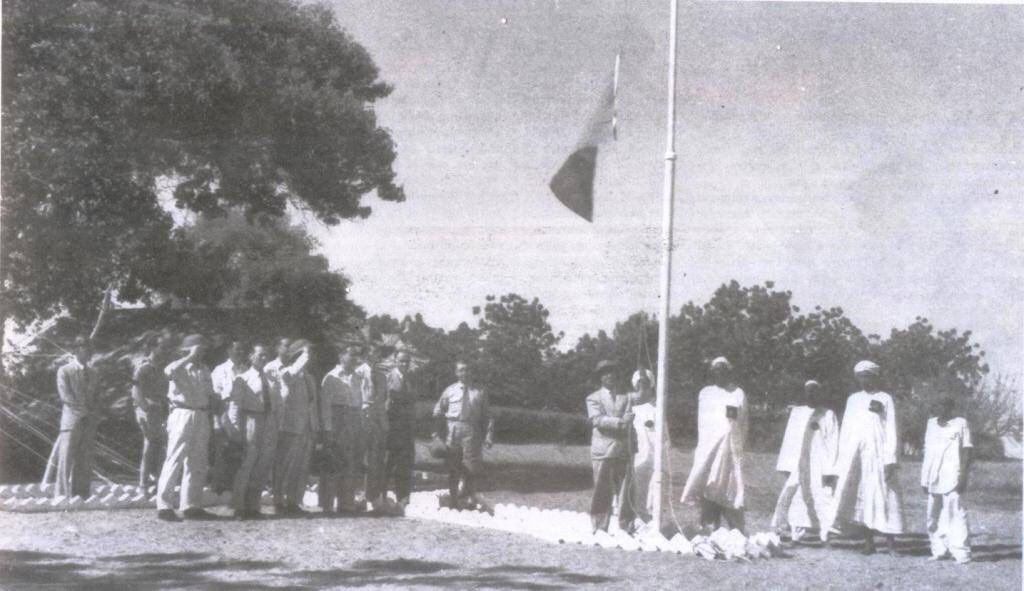
The Royal Niger Company played an important role in the British advance into the Niger basin.
By 1900, Britain had established the Protectorates of Northern and Southern Nigeria, while Lagos had already been incorporated into the British imperial system. The British conquest was, therefore, fundamentally different from the earlier Portuguese presence.
Portugal had developed commercial relationships with African states. Britain increasingly used commercial relationships as a foundation for political control. Portugal wanted access to African markets. Britain increasingly wanted sovereignty over the territories containing those markets.
Why Did Portugal Not Claim the Niger River?
The Niger River was central to the later British project. It provided an important route into the interior and connected coastal commerce with the vast territories of the Niger and Benue basins. However, Portugal had never established the kind of political and military infrastructure required to dominate the Niger basin.
The Portuguese had known the West African coast for centuries, but knowledge was not the same thing as possession. By the time the European scramble intensified, Britain was in a much stronger position. British merchants were already deeply involved in Niger commerce, British officials had established influence in Lagos and the Niger Delta, and British military and naval power could support further expansion.
Therefore, Britain could build outward from existing positions. Portugal would have had to build almost from scratch. That was an enormous disadvantage for the latter.
Portugal Did Not Actually “Lose” Nigeria
There is an important distinction here. Portugal did not colonise Nigeria and then lose it to Britain. There was never a Portuguese colony called Nigeria. Nigeria itself did not exist as a unified political entity until 1914, when Britain amalgamated the Northern and Southern Protectorates with Lagos Colony.
What Portugal failed to do was transform its centuries-old commercial and diplomatic presence in the region into a territorial empire. That is a much more revealing way to understand the story.
Portugal was the first European power to establish sustained relations with several states in the region that would eventually become Nigeria. But early contact did not create permanent sovereignty. Britain arrived later, under completely different circumstances, and exploited the possibilities created by 19th-century technology, finance, diplomacy and military power.
The Portuguese Were First. Britain Had the Advantage That Mattered
Portugal’s failure to colonise Nigeria was not the result of a single decision or a single defeat. It was the product of a long historical process.
In the 15th and 16th centuries, Portugal’s maritime empire could prosper without conquering the entire West African interior. African states such as Benin remained powerful political actors, capable of controlling the terms of European engagement. Portugal’s limited manpower and financial resources also encouraged a commercial rather than territorial strategy.
Over the following centuries, Portugal’s early advantage weakened as Dutch, English and French merchants entered West African commerce.
Interestingly, the 19th century transformed the balance.
Britain possessed an industrial economy, a powerful navy, extensive commercial networks and a growing willingness to translate economic interests into political sovereignty. The Scramble for Africa created a new imperial environment in which territorial occupation became increasingly important. By then, Portugal’s centuries-old presence was no longer enough.
The irony is that Portugal had achieved something remarkable: it had reached the Bight of Benin at the beginning of Europe’s sustained maritime engagement with West Africa. But it had not built a territorial empire there. Britain arrived much later and did.
Portugal’s empire was built around the sea, commerce and strategic coastal positions. Britain’s 19th-century empire increasingly depended upon territory, administration and military occupation.
Portugal had the head start. Britain had the industrial and imperial machinery to turn influence into conquest.
And when the race for the African continent began in earnest, the Portuguese being the first no longer mattered. It was the British who occupied, administered and defended what they claimed.
That is why Portugal reached Nigeria first, but Britain ended up colonising the country.
Want to understand what really happened during Nigeria’s first military coup? Read A Carnage Before Dawn. It offers a carefully researched, vividly told account of January 15, 1966, through a storytelling style that will keep you glued to the book’s pages.
You can get the e-book here and the paperback here.
Love history? Don’t stop here.
📚 Get deeper insights by purchasing our latest history books.
📢 Join our WhatsApp Channel for exclusive updates and historical facts.
📩 Subscribe to our Newsletter and receive fascinating stories from history (World and African history) directly in your inbox.
🎥 Subscribe to our YouTube channel for engaging documentaries and short history videos.
Stay connected with us on social media for daily history content:
🔵Follow us on Facebook.
📸 Follow us on Instagram.
🐦Follow us on Twitter.
💼 Follow us on LinkedIn.
🎵 Follow us on TikTok.
❤️ Support our work by donating to HistoryVille and help us continue preserving and sharing important historical stories. 📢Advertise with HistoryVille to reach a growing audience passionate about history and culture.