


It’s been 23 years since the death of former Nigerian military ruler General Sani Abacha on June 8, 1998. The Kano-born general died while at the presidential villa in Abuja. He was buried on the same day, according to Islamic tradition, without an official autopsy.
This action has indeed generated different theories as to what really led to General Sani Abacha’s death. Some say he was killed by an apple laced with poison while in the company of sex workers, while another school of thought believe he was executed extrajudicially by way of being poisoned by, this time, his political rivals.
So, what really caused General Sani Abacha’s death on June 8, 1998?
Diverse Reports on General Sani Abacha’s Death
An active participant in Nigerian government coups in the 1980s and 1990s, Sani Abacha ruled Nigeria as head of state from Wednesday, November 17, 1993, to Monday, June 8, 1998, when he died suddenly.

After Abacha’s death, rumours soon circulated that the head of state had been given apple juice spiked with poison by female sex workers, notably from India.
The New York Times on July 11, 1998, advanced these rumours when it reported that intelligence analysts in the United States said there was evidence that General Sani Abacha was poisoned while in the company of three prostitutes.[1] The media house didn’t give any nationality.
On July 15, 1998, the Irish Times, quoting the Nigerian government, reported that Abacha died of a heart attack on June 8.[2] But it went further to include the rumour that the deceased Nigerian dictator was poisoned with spiked apple juice while with prostitutes. It did not mention any nationality.
However, The Associated Press (AP) reported on June 8, 1998, that General Sani Abacha died of a heart attack,[3] leaving the leadership of Africa’s most populous nation in limbo. It did not mention any poisoning by sex workers.
The news outlet went further to report that heavily armed soldiers sealed off Abacha’s home and office in the capital, Abuja, after his death.[4] Only the country’s top army officers were allowed to enter the premises.
Even Abacha’s family did not state the cause of his death; it only announced that in keeping with Muslim practice, a funeral would be held within the next 24 hours. Within those hours, the government did not make any official announcement relating to the real cause of Abacha’s death.
Reactions to Abacha’s Death
As soon as news filtered into other parts of the country in the evening, jubilant Nigerians, especially in Lagos, broke into cheers. Many saw an opportunity for a return to democracy – even though the military was not prepared to yield power.
1986 Nobel Prize Winner in Literature, Wole Soyinka, who was in exile in Jerusalem at the time, said if Abacha’s death was natural, then it was a very graceful exit.[5] Soyinka also said the death was an opportunity for Nigerian civil society, the Nigerian military, and the international community to return to civilian rule.
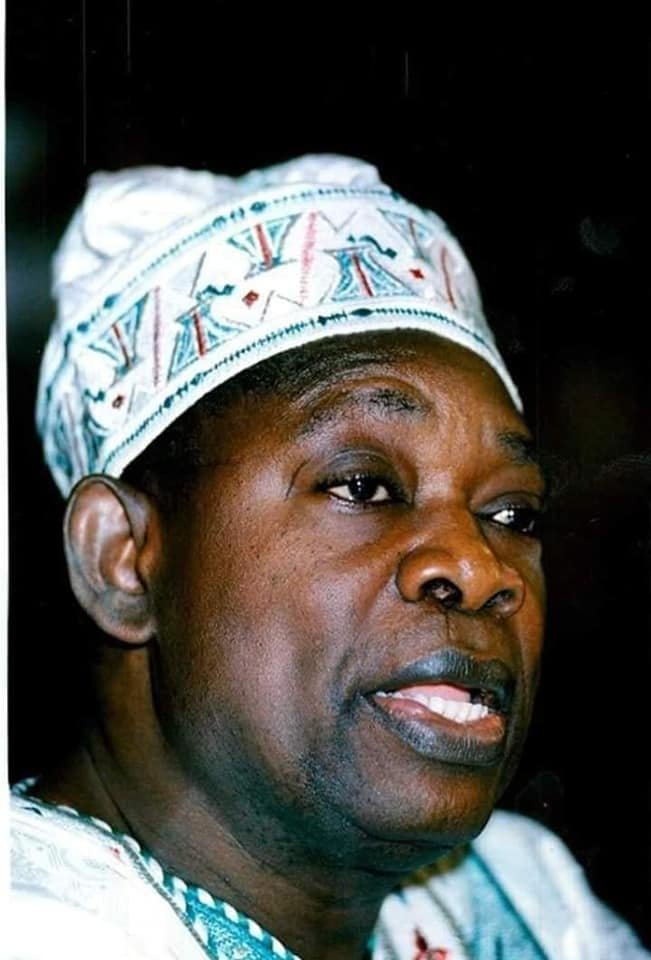
Gani Fawehinmi, who was a human rights lawyer and head of the Joint Action Committee of Nigeria, described Abacha as an evil man[6] and repeated his organisation’s call for the military to permit Chief M.K.O Abiola, who was still alive at the time, to head a “government of national unity” that would organise the writing of a new constitution and arrange for new elections.
Al-Mustapha’s Testimony on Abacha’s Death
Perhaps, one of the most reliable pieces of information concerning Abacha’s death would be from his chief security officer, Major Hamza Al-Mustapha. Al-Mustapha indeed has dismissed claims that Abacha died after eating an apple from sex workers. The retired major was convinced Abacha was poisoned by Israeli operatives in the company of Yasser Arafat.
The former CSO said contrary to insinuations that Abacha had been sick, the sudden collapse of the general’s health system started on Sunday, June 7, 1998, right from the Nnamdi Azikiwe International Airport, Abuja, immediately after one of the security operatives, who accompanied President Yasser Arafat of the Palestinian National Authority, shook hands with Abacha.
According to Al-Mustapha, shortly after the handshake, there was a change in the countenance of the late Commander-in-Chief.[7] Abacha’s Aide-de-Camp, Lieutenant-Colonel Abdallah, was tasked to keep a close watch on the Head of State.

Around 6 p.m. on June 7, 1998, Abacha’s doctor, Sadiq Suleiman Wali, came around and administered an injection to stabilise him. The head of state was then advised to take a short rest.
Now, Abacha rarely slept at night. In fact, as of the morning of his death, he was still in his work clothes.
At about 5 a.m. on Monday, June 8, 1998, Major Hamza Al-Mustapha was informed that the head of state was very unstable. By the time he got to Abacha, he (Abacha) was already gasping. Immediately, Al-Mustapha put a call through to Dr Wali, who was driven to the villa via a secret route only Abacha used. Wali sensed something was wrong. At once, the doctor injected Abacha twice – in the heart and close to his neck.
Alas, there was no response. The head of state had turned very cold and was foaming at the mouth. Quickly, Dr Wali took the general’s blood, urine, and hair samples in order to ascertain the cause of his death. This action by Wali gave faint proof that Abacha’s death was not natural.
Thus, the rumour that Abacha died in the company of sex workers after eating poisoned apples can be said to be unfounded because Wali corroborated Al-Mustapha’s testimony in an interview with the BBC that was released on July 7, 2015.[8]
Dr Suleiman Wali’s Testimony on Abacha’s Death
Wali, in the interview, said Abacha’s health was in good condition before his death. The doctor also dismissed the notion that the ex-military ruler ate a poisoned apple served by some sex workers, as he said he met no woman at the time he arrived at the villa.[9]
Wali had received a call from Al-Mustapha to attend to the dying Abacha, and when he arrived, he met another doctor trying to resuscitate the general.
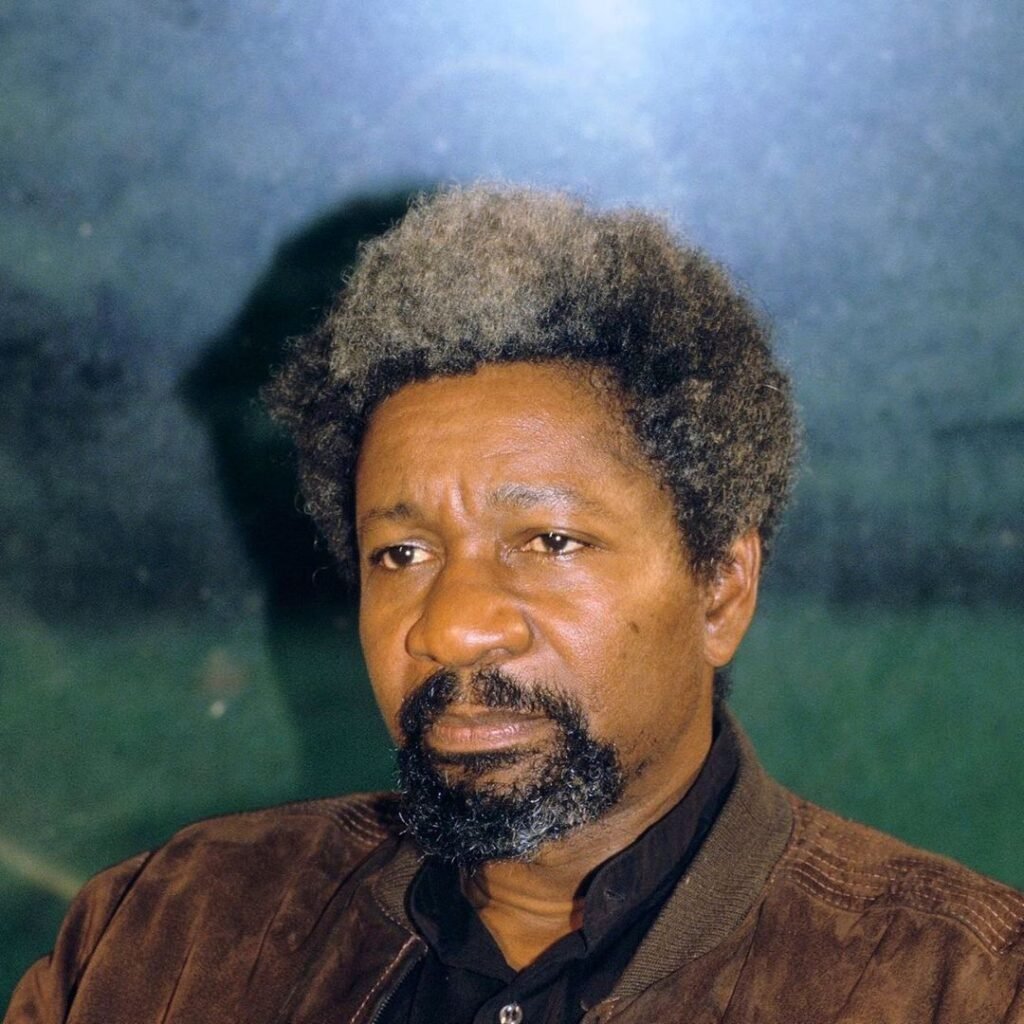
The doctors did all they could to resuscitate Abacha. But he was already foaming, and it was at that moment that they realised that the military ruler was dead.
Wali was determined to find out the cause of General Sani Abacha’s death and proposed an autopsy. However, the Abacha family declined, preferring a quick burial in line with Islamic rites. Thus, what really caused Abacha’s death would remain a mystery. Since no official autopsy was done, we cannot conclude whether Abacha’s death was from a heart attack or poison.
Aftermath of Abacha’s Death
General Sani Abacha was buried that same day in Kano, North-West Nigeria. The late Nigerian dictator was 54 years old at the time of his death. Abacha was born on a Monday in 1943 and also died on a Monday nearly 55 years later.
General Sani Abacha was married to Maryam Abacha and had seven sons and three daughters. As of 2018, he had 33 grandchildren.
After Abacha’s death, Major-General Abdulsalami Abubakar, Nigeria’s Chief of Defence Staff, was sworn in as the country’s 11th head of state. The swearing-in ceremony was rather brief as General Abubakar took the oath of office and allegiance at about 1.43 a.m. on June 9, 1998. That ceremony marked the end of the Abacha regime and another journey to democracy.
Interestingly, this tale would take an extra twist as just 30 days later, Abiola too died in unclear circumstances, just like Abacha, by foaming at the mouth. You can read more about Abiola here.
Want to understand what really happened during Nigeria’s first military coup? Read A Carnage Before Dawn. It offers a carefully researched, vividly told account of January 15, 1966, through a storytelling style that will keep you glued to the book’s pages.
You can get the e-book here and the paperback here.
Love history? Don’t stop here.
📚 Get deeper insights by purchasing our latest history books.
📢 Join our WhatsApp Channel for exclusive updates and historical facts.
📩 Subscribe to our Newsletter and receive fascinating stories from history (World and African history) directly in your inbox.
🎥 Subscribe to our YouTube channel for engaging documentaries and short history videos.
Stay connected with us on social media for daily history content:
🔵Follow us on Facebook.
📸 Follow us on Instagram.
🐦Follow us on Twitter.
💼 Follow us on LinkedIn.
🎵 Follow us on TikTok.
❤️ Support our work by donating to HistoryVille and help us continue preserving and sharing important historical stories. 📢Advertise with HistoryVille to reach a growing audience passionate about history and culture.
References
- [1] Weiner, Tim. “U.S. Aides Say Nigeria Leader Might Have Been Poisoned.” The New York Times, July 11, 1998. https://www.nytimes.com/1998/07/11/world/us-aides-say-nigeria-leader-might-have-been-poisoned.html
- [2] Orr, David. “Diplomat Claims That Disaffected Soldiers Poisoned Sani Abacha.” The Irish Times, July 15, 1998. https://www.irishtimes.com/news/diplomat-claims-that-disaffected-soldiers-poisoned-sani-abacha-1.173403
- [3] Frank Aigbogun, “Nigerian Dictator Abacha Dies at 54,” Associated Press, June 8, 1998. https://web.archive.org/web/20220823160448/https://apnews.com/article/0b4975cea3ae110eb60c3de167555473
- [4] Ibid.
- [5] Ibid.
- [6] Rupert, James. “Nigerian Ruler Dies After Brutal Reign.” The Washington Post, June 9, 1998. https://www.washingtonpost.com/wp-srv/inatl/longterm/nigeria/stories/abacha060998.htm
- [7] Opejobi, Seun. “Details of How Abacha Died in 1998 – Al-Mustapha.” Daily Post Nigeria, June 19, 2017. https://dailypost.ng/2017/06/19/details-abacha-died-1998-al-mustapha/
- [8] BBC Sounds. “The Death of General Sani Abacha.” BBC, July 7, 2015. Audio programme. https://www.bbc.co.uk/sounds/play/p02vyxqq
- [9] Godwin, Ameh. “I’m Not Sure Abacha Was Poisoned by Ladies – Former Personal Physician.” Daily Post Nigeria, July 9, 2015. https://dailypost.ng/2015/07/09/im-not-sure-abacha-was-poisoned-by-ladies-former-personal-physician/