
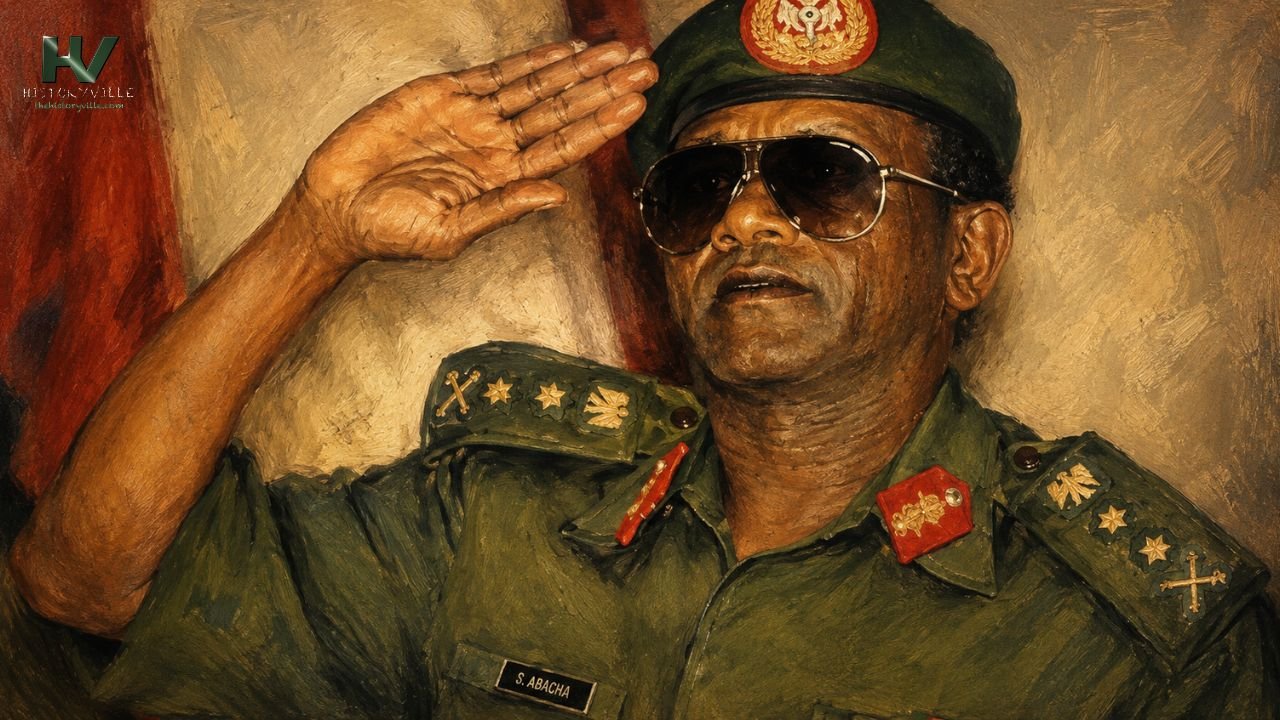

On June 8, 1998, Nigerians woke up to shocking news that would alter the course of the nation’s history. General Sani Abacha, Nigeria’s military ruler and one of the most powerful men in Africa, was dead. The announcement came suddenly, catching both his supporters and critics by surprise. Within hours, rumours began to spread across the country and beyond, raising questions about what had really happened behind the walls of the presidential villa.
Nearly 30 years later, Abacha’s death remains one of the most debated events in Nigerian history. Official accounts attributed his passing to a sudden heart attack, but alternative theories soon emerged. Some claimed he had been poisoned. Others suggested he was the victim of an assassination plot. Stories involving foreign agents, political rivals and even mysterious circumstances surrounding his final hours have continued to fuel public curiosity.
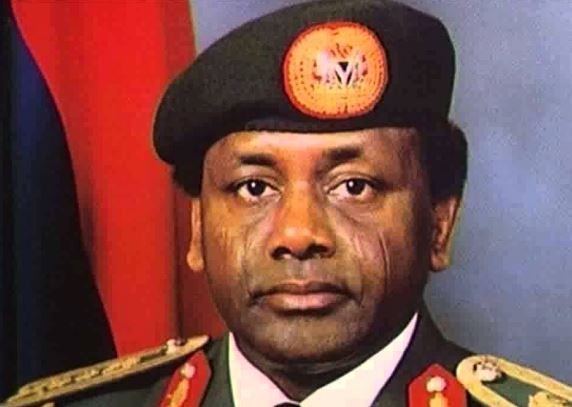
The mystery surrounding Abacha’s death has ensured that the event remains a subject of intense discussion among historians, journalists and political observers. Was his death simply the result of natural causes, or was there more to the story than the public was told? To understand one of Nigeria’s greatest political mysteries, it is necessary to examine the evidence, the rumours and the competing accounts that have shaped the legacy of his final days.
The Origin of General Sani Abacha
Born on September 20, 1943, in Kano, Northern Nigeria, Sani Abacha hailed from a Kanuri lineage originally rooted in Borno State. He received his early education in Kano before embarking on a military career that would define his life.
After completing secondary school, Abacha enrolled in the Nigerian Military Training College in Kaduna, which marked the beginning of his journey in the armed forces. He later received further military training abroad, equipping him with the skills and tactical knowledge that would elevate him through the ranks of Nigeria’s military.
Abacha first gained national prominence in 1983 when he played a crucial role in the coup that toppled President Shehu Shagari, ending Nigeria’s Second Republic. This coup ushered in the military regime of Major-General Muhammadu Buhari, under whom Abacha was appointed General Officer Commanding the 2nd Mechanised Division in Ibadan and a member of the Supreme Military Council (SMC).
However, just two years later, in August 1985, Abacha once again took to the airwaves to announce the overthrow of Buhari’s government. This paved the way for General Ibrahim Babangida to take power. Babangida, recognising Abacha’s influence and strategic abilities, promoted him within the military hierarchy, appointing him Chief of Army Staff and maintaining his seat on the SMC. By 1990, he had risen to the rank of full general, serving as Minister of Defence and Chairman of the Joint Chiefs of Staff.

On November 17, 1993, Nigeria witnessed yet another dramatic political shift when General Abacha overthrew the Interim National Government (ING) led by Chief Ernest Shonekan. By the following day, Abacha addressed the nation in his first broadcast as Head of State, firmly positioning himself as Nigeria’s new leader.
What followed was a regime marked by authoritarian rule, widespread repression, and an aggressive consolidation of power. His government tolerated no opposition, silencing critics through imprisonment, assassinations, and intimidation.
The Controversial Transition Programme
Despite ruling with an iron grip, Abacha faced mounting pressure to initiate political reforms. In response, he announced plans for a constitutional conference, which led to the formation of the National Constitutional Conference (NCC) on August 27, 1994. Delegates, both elected and government-appointed, were tasked with creating a new constitution for Nigeria. Their proposals, including the establishment of six geopolitical zones and a 13% derivation formula for oil-producing states, were submitted to the regime a year later.
However, many viewed the NCC as a mere façade designed to pave the way for Abacha’s self-succession. Suspicions intensified when, in October 1995, he unveiled a three-year transition programme that he maintained absolute control over. The programme included the drafting of a new constitution, the establishment of an electoral body, and the eventual lifting of the ban on political parties.
The National Electoral Commission of Nigeria (NECON) was formed to oversee this transition, registering only five political parties out of 15 applicants. These parties, the Congress for National Consensus (CNC), the Democratic Party of Nigeria (DPN), the Grassroots Democratic Party (GDP), the National Centre Party of Nigeria (NCPN), and the United Nigeria Congress Party (UNCP), eventually all endorsed Abacha as their sole presidential candidate. This prompted the Chief Bola Ige to famously describe them as “the five fingers of a leprous hand.”
To further legitimise his control, Abacha also established the Constitutional Conference Commission (CCC), which, after multiple deliberations, drafted the controversial 1995 Constitution. In 1996, he expanded Nigeria’s administrative structure by creating six new states, Bayelsa, Ebonyi, Ekiti, Gombe, Nasarawa, and Zamfara, alongside 138 additional local government areas.
Growing Opposition to Abacha’s Rule
While Abacha worked towards solidifying his grip on power, both domestic and international opposition intensified. The National Democratic Coalition (NADECO), formed to demand the reinstatement of Chief MKO Abiola’s annulled June 12, 1993, presidential victory, became one of the most vocal opponents of the regime. Many of its key members faced imprisonment, exile, or assassination, including Abiola’s wife, Kudirat Abiola, who was murdered on June 4, 1996.
Beyond Nigeria’s borders, prominent figures like Nobel laureate Wole Soyinka established resistance movements, such as the National Liberation Council of Nigeria (NALICON), calling for diplomatic isolation and economic sanctions against the country. Meanwhile, in June 1995, a clandestine radio station, initially known as Radio Freedom and later renamed Radio Kudirat, began broadcasting from an undisclosed location, exposing government atrocities and rallying opposition against the dictatorship. Despite relentless efforts by the regime to locate and shut it down, the station persisted until January 1999.
Abacha also faced resistance from organised labour. In 1994, the National Union of Petroleum and Gas Workers (NUPENG) and the Petroleum and Natural Gas Senior Staff Association of Nigeria (PENGASSAN) launched a joint strike to demand the reinstatement of Abiola’s stolen mandate. The strike severely impacted the economy, prompting the regime to disband the unions and imprison their leaders without trial. Similarly, the Academic Staff Union of Universities (ASUU) embarked on a prolonged strike in 1996 over poor working conditions and inadequate university funding, but their pleas were ignored.
As opposition grew, Abacha’s regime resorted to extreme measures. Political assassinations became common, with bomb blasts rocking major cities, including Lagos, Ibadan, Kaduna, Kano, Port Harcourt, Ilorin, and Zaria. The regime blamed NADECO for these attacks, further justifying its crackdown on dissent.
The press also suffered under Abacha’s rule. Journalists who dared to challenge the government faced imprisonment, torture, or exile. Freedom of expression was stifled, and Nigeria gained global notoriety as one of the worst violators of human rights.
A Corrupt Regime
Corruption has long plagued Nigerian society, with successive governments battling the scourge of embezzlement and misappropriation of funds. However, no regime has been as notoriously associated with large-scale corruption as that of General Sani Abacha.
Under Abacha’s rule, illegal financial dealings thrived. Public funds were looted with impunity, government contracts were awarded under dubious circumstances, and state assets were acquired at absurdly low prices by those in power. Corruption was so deeply entrenched that it crippled Nigeria’s economy, leading to severe economic hardships for ordinary citizens.
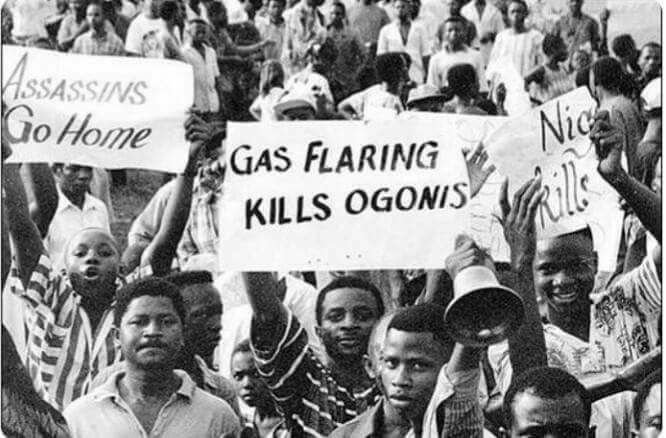
One of the most glaring manifestations of the economic mismanagement under Abacha was the crisis in the oil sector. Frequent attacks on oil facilities and workers by aggrieved host communities, coupled with rampant vandalism of pipelines, led to chronic fuel shortages. This, in turn, resulted in widespread hoarding, black-market profiteering, and a general increase in oil prices.
The domino effect saw transportation costs skyrocket, pushing businesses into financial distress. In response, the government deployed a military task force in every state to oversee fuel distribution. However, rather than alleviating the crisis, these task forces became infamous for their brutality, frequently assaulting civilians while also engaging in the illicit diversion of petroleum products.
Abacha himself was widely accused of being the chief orchestrator of Nigeria’s financial loss. While millions of Nigerians suffered under economic hardship and political repression, he and his allies allegedly siphoned billions into foreign accounts. More than two decades after his death, Nigeria continues to recover funds stolen during his regime. Transparency International estimated that Abacha embezzled approximately $5 billion, a staggering sum that cemented his legacy as one of the world’s most corrupt rulers. To this day, his name is synonymous with dictatorship, repression, and large-scale looting of public resources.
Abacha was preparing to transition to civilian rule as an elected president when he died suddenly on Monday, June 8, 1998, after ruling Nigeria for 54 months. He was 54.
The Mysterious Death of General Sani Abacha
Abacha’s sudden death sparked widespread speculation, with conflicting reports and conspiracy theories surrounding the circumstances of his demise.
One of the most widely circulated rumours suggested that Abacha was poisoned via spiked apple juice served by female sex workers, allegedly of Indian descent. These claims were fuelled by international media coverage, including a report by The New York Times on July 11, 1998, which cited U.S. intelligence analysts as claiming there was evidence that Abacha had been poisoned while in the company of three prostitutes.[1] However, the report stopped short of confirming the nationality of the women. Similarly, on July 15, 1998, The Irish Times, quoting the Nigerian government, reported that Abacha had died of a heart attack but acknowledged the persistent rumours of poisoning.[2]
Conversely, The Associated Press (AP), in its June 8, 1998, report, stated that Abacha had died of a heart attack, omitting any mention of poisoning or foul play.[3] The news agency also detailed how heavily armed soldiers swiftly sealed off the presidential villa in Abuja following his death, restricting access to only top military officials. Notably, Abacha’s family never publicly disclosed the exact cause of his death, merely announcing that, in accordance with Islamic customs, he would be buried within 24 hours.
Testimonies and Conflicting Accounts
Among the most intriguing accounts came from Abacha’s Chief Security Officer (CSO), Major Hamza Al-Mustapha, who dismissed the poisoning rumours. Instead, Al-Mustapha suggested that Abacha was assassinated by Israeli operatives working in the company of Palestinian leader Yasser Arafat. According to Al-Mustapha, Abacha’s sudden health deterioration began on June 7, 1998, immediately after he shook hands with one of Arafat’s security operatives at Nnamdi Azikiwe International Airport in Abuja.[4]
Al-Mustapha recalled that shortly after the handshake, Abacha’s demeanour changed, prompting his Aide-de-Camp, Lieutenant-Colonel Abdallah, to monitor him closely. By evening, Abacha’s personal physician, Dr Sadiq Suleiman Wali, administered an injection to stabilise him.
Now, Abacha rarely slept at night. In fact, as of the morning of his death, he was still in his work clothes.
At around 5 a.m. on June 8, 1998, Al-Mustapha received an urgent call alerting him to Abacha’s worsening condition. Rushing to his side, he found the Head of State struggling to breathe. A distressed Al-Mustapha immediately contacted Dr Wali, who was discreetly escorted into the villa via a secret passage. Upon examination, Wali detected that Abacha was foaming at the mouth and rapidly losing body temperature. Desperate, he administered two injections, one directly into the heart and another near the neck, but there was no response. The general was dead.
Dr Wali, recognising the suspicious circumstances, collected blood, urine, and hair samples for analysis. This action subtly indicated that he, too, doubted that Abacha’s death was natural. Years later, in a BBC interview aired on July 7, 2015, Wali reaffirmed Al-Mustapha’s testimony, stating that Abacha was in good health before his sudden collapse.[5] He also debunked the poisoned apple narrative, clarifying that he encountered no women at the villa when he arrived.
Given the controversial nature of Abacha’s death, Dr Wali recommended an autopsy. However, his family, adhering to Islamic customs, declined, opting for a swift burial instead. As a result, the true cause of Abacha’s demise remains shrouded in mystery. Without an official post-mortem examination, speculation continues to this day: was it a poisoned apple, a heart attack or an assassination?
The Aftermath of Sani Abacha’s Death: Transition and Uncertainty
On the same day, General Sani Abacha was laid to rest in Kano, his hometown in north-western Nigeria. Curiously, he was born on a Monday, died on a Monday, and was buried on a Monday. The 54-year-old general had ruled Nigeria for exactly 54 months.
General Sani Abacha’s death, a sudden one, left Nigeria at a crossroads. In the early hours of June 9, 1998, Major-General Abdulsalami Abubakar, the country’s Chief of Defence Staff, was swiftly sworn in as the 11th Head of State. The ceremony, which took place at precisely 1:43 a.m., marked the official end of the Abacha era and set the stage for Nigeria’s return to democratic rule.
Want to understand what really happened during Nigeria’s first military coup? Read A Carnage Before Dawn. It offers a carefully researched, vividly told account of January 15, 1966, through a storytelling style that will keep you glued to the book’s pages.
You can get the e-book here and the paperback here.
Love history? Don’t stop here.
📚 Get deeper insights by purchasing our latest history books.
📢 Join our WhatsApp Channel for exclusive updates and historical facts.
📩 Subscribe to our Newsletter and receive fascinating stories from history (World and African history) directly in your inbox.
🎥 Subscribe to our YouTube channel for engaging documentaries and short history videos.
Stay connected with us on social media for daily history content:
🔵Follow us on Facebook.
📸 Follow us on Instagram.
🐦Follow us on Twitter.
💼 Follow us on LinkedIn.
🎵 Follow us on TikTok.
❤️ Support our work by donating to HistoryVille and help us continue preserving and sharing important historical stories. 📢Advertise with HistoryVille to reach a growing audience passionate about history and culture.
References
- [1] Weiner, Tim. “U.S. Aides Say Nigeria Leader Might Have Been Poisoned.” The New York Times, July 11, 1998. https://www.nytimes.com/1998/07/11/world/us-aides-say-nigeria-leader-might-have-been-poisoned.html
- [2] Orr, David. “Diplomat Claims That Disaffected Soldiers Poisoned Sani Abacha.” The Irish Times, July 15, 1998. https://www.irishtimes.com/news/diplomat-claims-that-disaffected-soldiers-poisoned-sani-abacha-1.173403
- [3] Frank Aigbogun, “Nigerian Dictator Abacha Dies at 54,” Associated Press, June 8, 1998. https://web.archive.org/web/20220823160448/https://apnews.com/article/0b4975cea3ae110eb60c3de167555473
- [4] Opejobi, Seun. “Details of How Abacha Died in 1998 – Al-Mustapha.” Daily Post Nigeria, June 19, 2017. https://dailypost.ng/2017/06/19/details-abacha-died-1998-al-mustapha/
- [5] BBC Sounds. “The Death of General Sani Abacha.” BBC, July 7, 2015. Audio programme. https://www.bbc.co.uk/sounds/play/p02vyxqq