
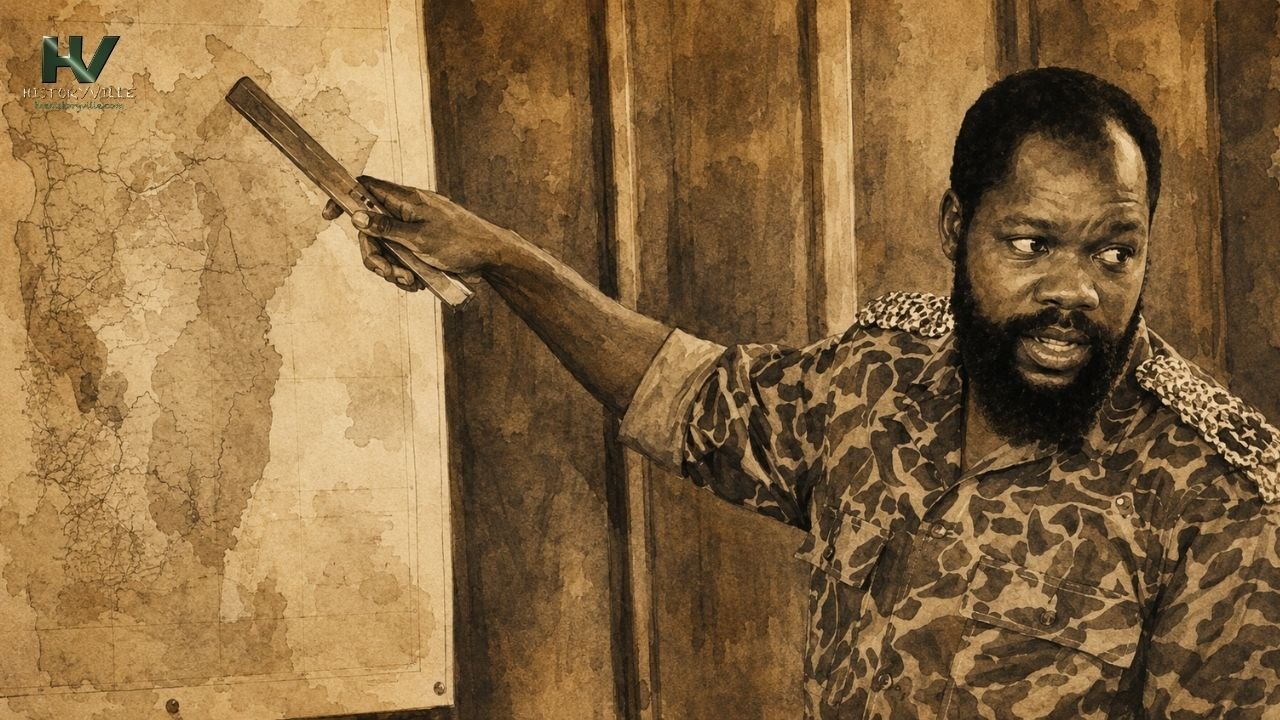

On May 30, 1967, Colonel Chukwuemeka Odumegwu Ojukwu, the military governor of the Eastern Region, declared the secession of the East from Nigeria. The new nation would be called the Republic of Biafra.
Now, Biafra did not just happen out of the blue. In fact, as of March 1967, Ojukwu had been donning the Biafran uniform and insignia long before the official secession in May. Regardless of the failed Aburi Agreement or Yakubu Gowon’s Decree 8, the emergence of Biafra was inevitable.
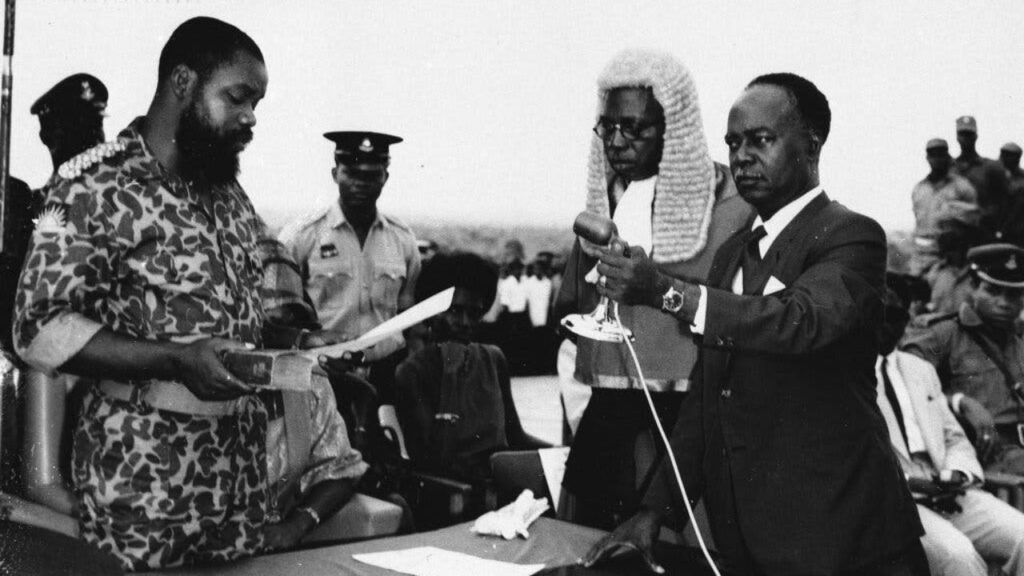
Ojukwu’s action raised a deep question – the Biafran Question – that would lead to a long historical and political crisis until January 15, 1970. Interestingly, this question still lingers. It is rooted in the Nigeria-Biafra War and the deeper tensions that shaped the formation of the present Nigerian state.
First, let us look at the foundations. How did we get here?
Colonial Foundations of the Biafran Question
The roots of the Biafran Question are often traced to British colonial rule and the creation of Nigeria in 1914 through the amalgamation of the Northern and Southern protectorates. This union brought together diverse ethnic, religious, and political communities under one administrative structure. The arrangement was designed primarily for colonial efficiency instead of national unity.

During colonial rule, the regions developed at different speeds. The South experienced earlier exposure to Western education and commercial activity, while the North retained more of its traditional political structures under indirect rule. These differences shaped unequal development patterns that later influenced political competition.
Ethnic identity remained strong throughout the colonial period. Groups such as the Igbo, Yoruba, Hausa, and Fulani maintained distinct social and political systems. These identities were not weakened by colonial rule but often reinforced through administrative separation.
By 1960, Nigeria had been politically unified but socially fragmented. These structural differences created the foundation for future tensions after independence.
Independence and the Crisis of Nationhood
Nigeria gained independence on October 1, 1960, with high expectations of national unity and development. However, the new state inherited deep regional divisions that shaped its political system. The federal structure was built around three large regions, each dominated by a major ethnic group.
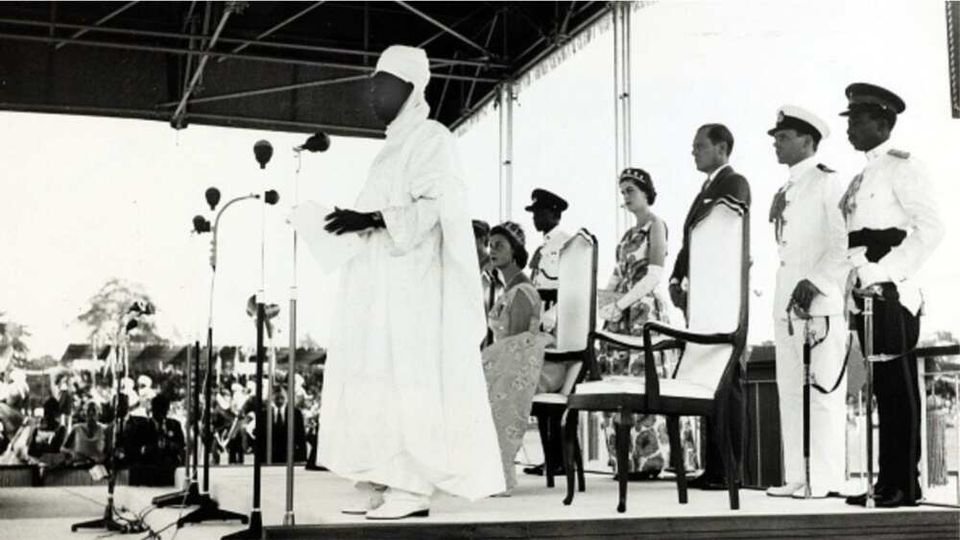
Political competition quickly became regional in nature. Parties were formed along ethnic and geographical lines, with loyalty often tied to regional identity rather than national ideology. This created a fragile political environment where trust between regions remained limited.
Election disputes and census controversies further weakened confidence in the system. Each region accused the others of manipulation in the struggle for political advantage. These disputes became symbols of mistrust in the national project.
By the mid-1960s, the idea of a unified Nigerian identity was already under pressure. Regional interests often took priority over national cohesion, setting the stage for a deeper crisis.
The January 1966 Coup and Ethnic Suspicion
The first military coup in Nigeria took place on January 15, 1966, led by a group of young army officers. The coup resulted in the assassination of several senior political leaders, particularly from the Northern and Western regions. The civilian government was overthrown, and military rule was established.
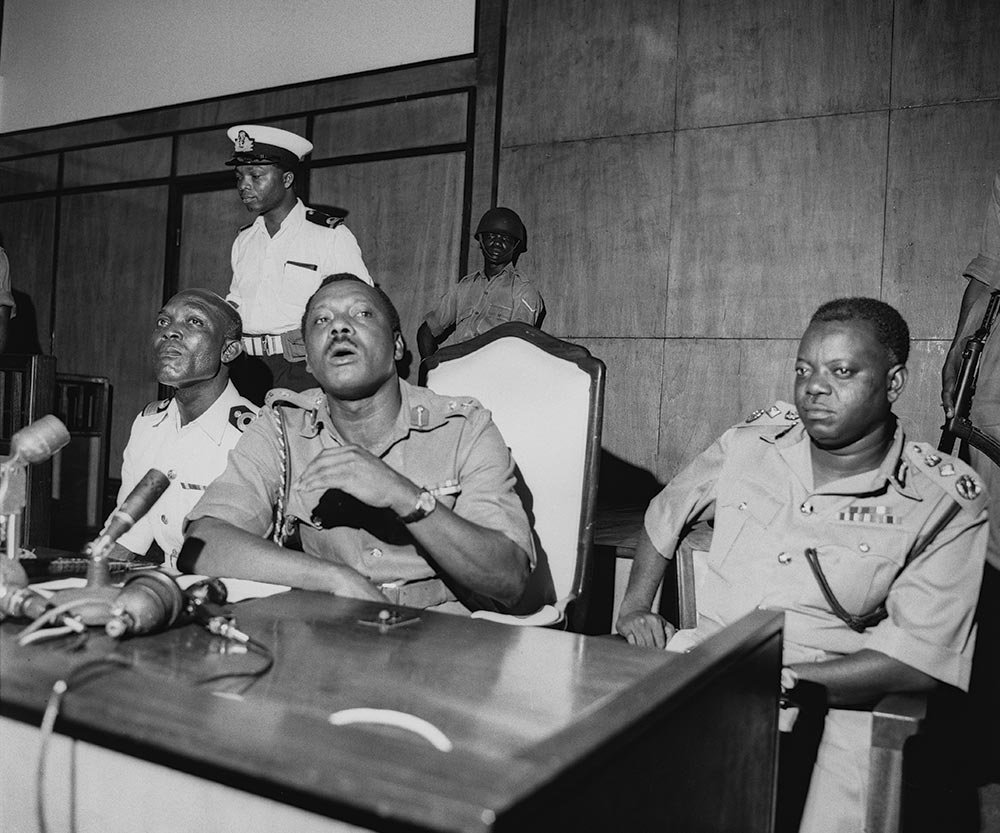
Major-General Johnson Aguiyi-Ironsi became the Head of State after the coup. His government attempted to stabilise the country and unify the administration through centralisation reforms. However, the ethnic composition of the coup plotters created suspicion in many parts of the country.
In the North, the coup was widely perceived as being directed against Northern leadership. This perception increased anger and mistrust towards the military government. The killings of prominent leaders intensified fears of political domination by one group.
These tensions contributed to a breakdown in trust within the armed forces and the wider society. The events of 1966 marked a turning point in Nigeria’s post-independence crisis.
The Counter-Coup and Anti-Igbo Violence
A counter-coup took place on July 29, 1966, led mainly by Northern military officers. The coup resulted in the killing of Major-General Johnson Aguiyi-Ironsi and other senior officers. Yakubu Gowon emerged as the new Head of State on August 1, 1966.
Following the coup, widespread violence occurred in several parts of Northern Nigeria. Many Igbo civilians were attacked, and thousands were killed or displaced. The violence created one of the largest internal refugee crises in Nigeria’s early history.
The killings deeply affected the Eastern Region and strengthened calls for self-protection and political separation. Trust in the federal structure was severely weakened. Many Easterners began to feel unsafe within the Nigerian state.
These events became a major turning point in the movement towards secession.
Ojukwu and the Declaration of Biafra
Chukwuemeka Odumegwu Ojukwu, the military governor of the Eastern Region, became the central figure in negotiations with the Gowon-led federal military government. He represented the Eastern Region during a period of intense political breakdown and insecurity.
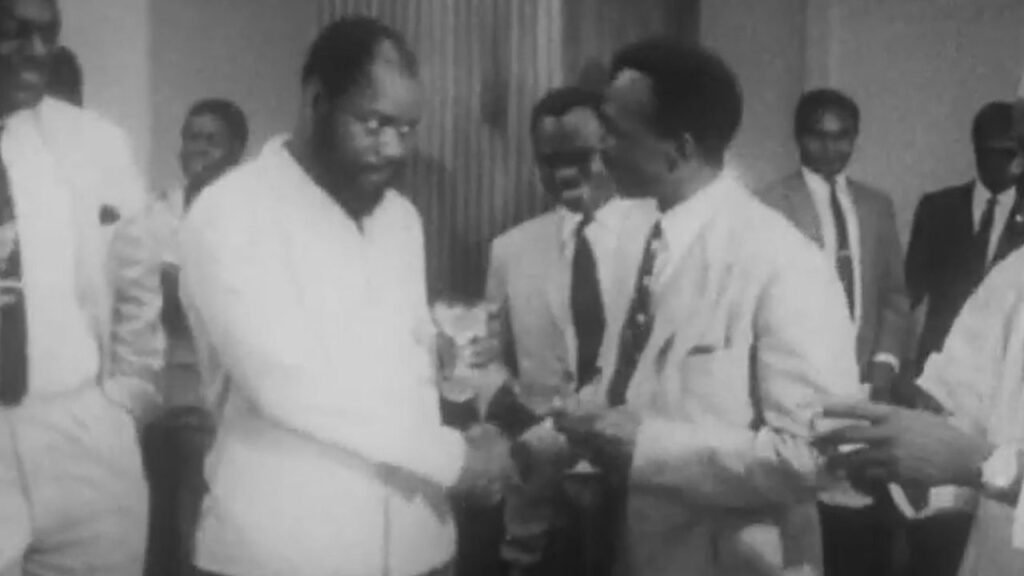
Several attempts were made to resolve the crisis through dialogue, including the Aburi meeting in Ghana in January 1967. The agreements reached there were interpreted differently by both sides, leading to further disagreement. The lack of a shared understanding of the Aburi Accord deepened mistrust.
On May 30, 1967, the Eastern Region declared independence as the Republic of Biafra. The declaration was based on claims of insecurity and political exclusion. It marked a formal break from the Nigerian federation.
The federal government rejected the declaration and viewed it as an act of rebellion. This disagreement led directly to armed conflict.
The Nigerian Civil War (1967–1970)
The first shot of the Nigeria-Biafra War was fired in the early hours of July 6, 1967, when federal forces moved against the secessionist region. The conflict spread across the Eastern Region as both sides engaged in military operations. The war lasted 30 months.
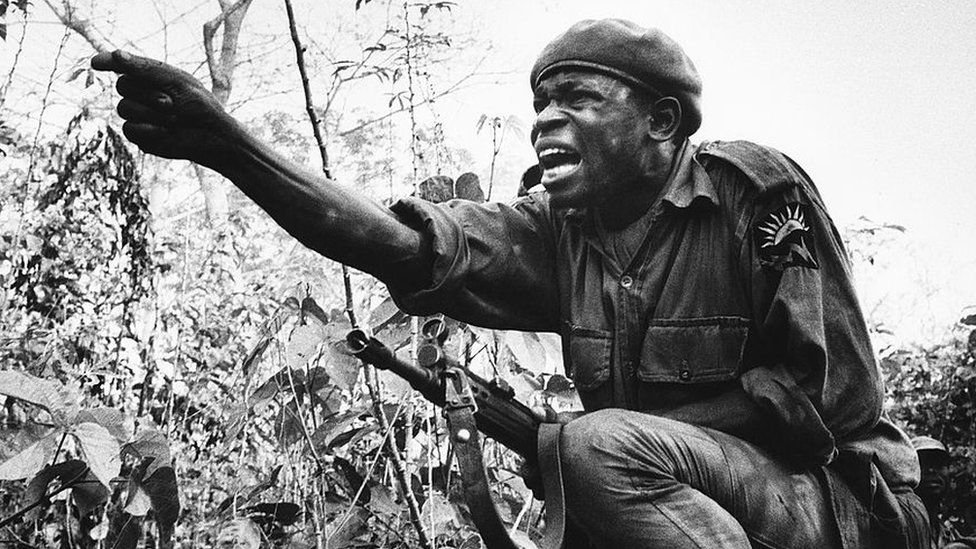
Biafra organised its own military defence under the leadership of Ojukwu. Federal forces aimed to preserve national unity through military action. The fighting took place across multiple fronts with shifting control of territories.
The federal government imposed a blockade on the Eastern Region, which restricted access to food, medicine, and essential supplies. The blockade had severe consequences for civilians.
International attention grew as the war progressed, with reports of humanitarian suffering influencing global opinion. Relief efforts attempted to respond to the crisis but faced major limitations.
The war resulted in significant loss of life among soldiers and civilians. Many deaths were caused not only by combat but also by hunger and disease. The humanitarian situation deteriorated as the conflict continued. Large populations were displaced from their homes. Families were separated, and communities were disrupted across the region. Refugee movements became widespread within and outside the conflict zone.
Children were particularly affected by malnutrition and lack of medical care. Relief images from the period showed widespread suffering. These conditions became central to international concern about the war. The impact of the conflict extended beyond the battlefield into long-term social trauma. The consequences continued after the war ended.
Gowon’s “No Victor, No Vanquished” Policy
The Nigeria-Biafra War officially ended on January 15, 1970, when Biafran forces under Major-General Philip Effiong surrendered to the federal government. The end of the conflict marked the reintegration of the Eastern Region into Nigeria.
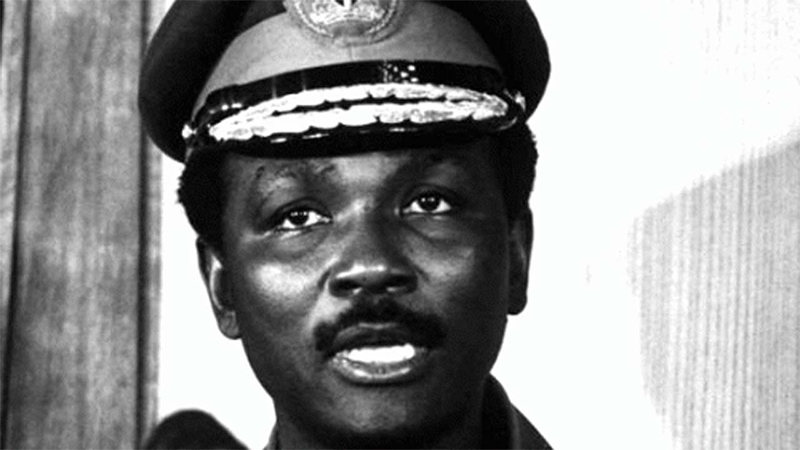
General Yakubu Gowon announced a policy of reconciliation known as “No Victor, No Vanquished.” The policy aimed to promote national healing and prevent further division. It emphasised unity and reform.
Reconstruction programmes were introduced to rebuild infrastructure and restore normal life. Government efforts focused on the rehabilitation of affected areas. Economic reintegration became a major priority. Despite these efforts, many former Biafrans faced difficulties in adjusting to post-war conditions. Issues of trust and inclusion remained present.
Marginalisation and Post-War Grievances
After the war, economic recovery was uneven across Nigeria. Some regions experienced faster development than others. This created perceptions of imbalance in national reconstruction. One of the major issues was the abandoned property policy. Many Igbo people who fled during the war did not regain their properties. This became a source of long-term grievance.
The compensation policy that followed the war was widely debated. The amount and method of payment were seen as inadequate by many affected families. These reinforced feelings of injustice.
Political participation and representation also became issues of concern. Some groups felt excluded from key national decisions in the post-war period.
The Biafran Question in Contemporary Nigeria
The Biafran Question continues to exist in modern Nigeria through political movements and public debate. It remains part of discussions about federalism, inequality, and governance.
The Indigenous People of Biafra (IPOB) has become one of the most visible groups advocating renewed attention to the issue. The organisation calls for self-determination and highlights historical grievances. Government responses have included security operations and legal actions. These responses have contributed to ongoing tensions in parts of the South-East.
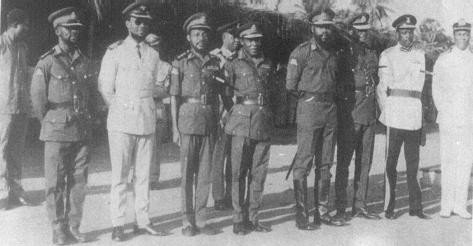
From left to right: Colonel E. Udeaja (parade commander), Wing Commander W. Ezeilo (Air Force Commander), Colonel S. Ogunewe (Military Aide to the Head of State), Major-General P. Efiong (Chief of Defence Staff), General O. Ojukwu (Head of State), Major-General A. Madiebo (Commander of the Biafran Army), Mr P. Okeke (Inspector General of Police) and Captain F. Anuku (Commander of the Biafran Navy).
Public opinion remains divided, with some supporting unity and others calling for restructuring or separation. The memory of the civil war is preserved differently across Nigeria. Each region maintains its own interpretation of the events and their meaning. These differences influence national discussions.
Formal education has often given limited coverage to the war. This has affected how younger generations understand the conflict. Much knowledge is passed through informal channels. Books, films, oral history, and public discussions continue to preserve memories of the war. These narratives shape identity and historical understanding.
The interpretation of the Biafran experience remains contested and evolving in Nigerian society.
Can Nigeria Resolve the Biafran Question?
Efforts to address the Biafran Question often focus on political reform and national inclusion. Discussions about restructuring the federal system remain central to these debates. Some propose stronger regional autonomy to reduce tensions. Others focus on improving equity in national development and representation. These approaches aim to reduce feelings of exclusion.

National dialogue is frequently suggested as a way forward. It is seen as a method for addressing unresolved grievances and building trust. The resolution of the issue depends on political will, institutional reform, and sustained national engagement.
The Biafran Question remains one of the most important historical and political issues in Nigeria. It reflects the country’s struggle with unity, diversity, and governance. It connects the events of the civil war with present-day debates about fairness and national identity. The issue continues to shape political discourse and public memory.
Understanding it requires attention to both historical events and their long-term consequences. It remains a central part of Nigeria’s national story.
The Biafran Question continues to influence how Nigeria understands itself and its future direction.
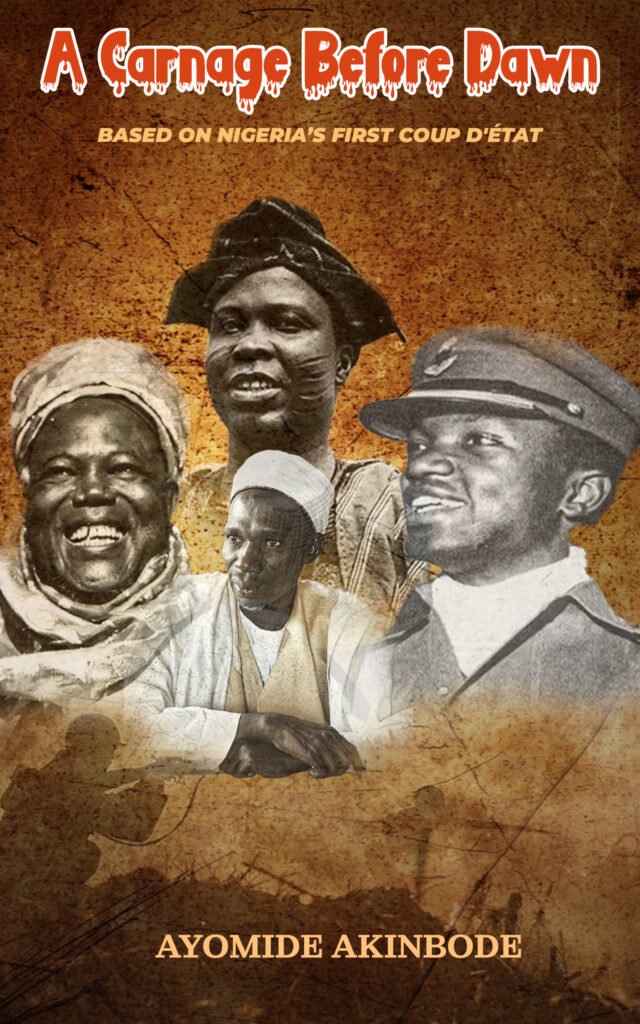
Want to understand what really happened during Nigeria’s first military coup? Read A Carnage Before Dawn. It offers a carefully researched, vividly told account of January 15, 1966, through a storytelling style that will keep you glued to the book’s pages.
You can get the e-book here and the paperback here.
Love history? Don’t stop here.
📚 Get deeper insights by purchasing our latest history books.
📢 Join our WhatsApp Channel for exclusive updates and historical facts.
📩 Subscribe to our Newsletter and receive fascinating stories from history (World and African history) directly in your inbox.
🎥 Subscribe to our YouTube channel for engaging documentaries and short history videos.
Stay connected with us on social media for daily history content:
🔵Follow us on Facebook.
📸 Follow us on Instagram.
🐦Follow us on Twitter.
💼 Follow us on LinkedIn.
🎵 Follow us on TikTok.
❤️ Support our work by donating to HistoryVille and help us continue preserving and sharing important historical stories. 📢Advertise with HistoryVille to reach a growing audience passionate about history and culture.