
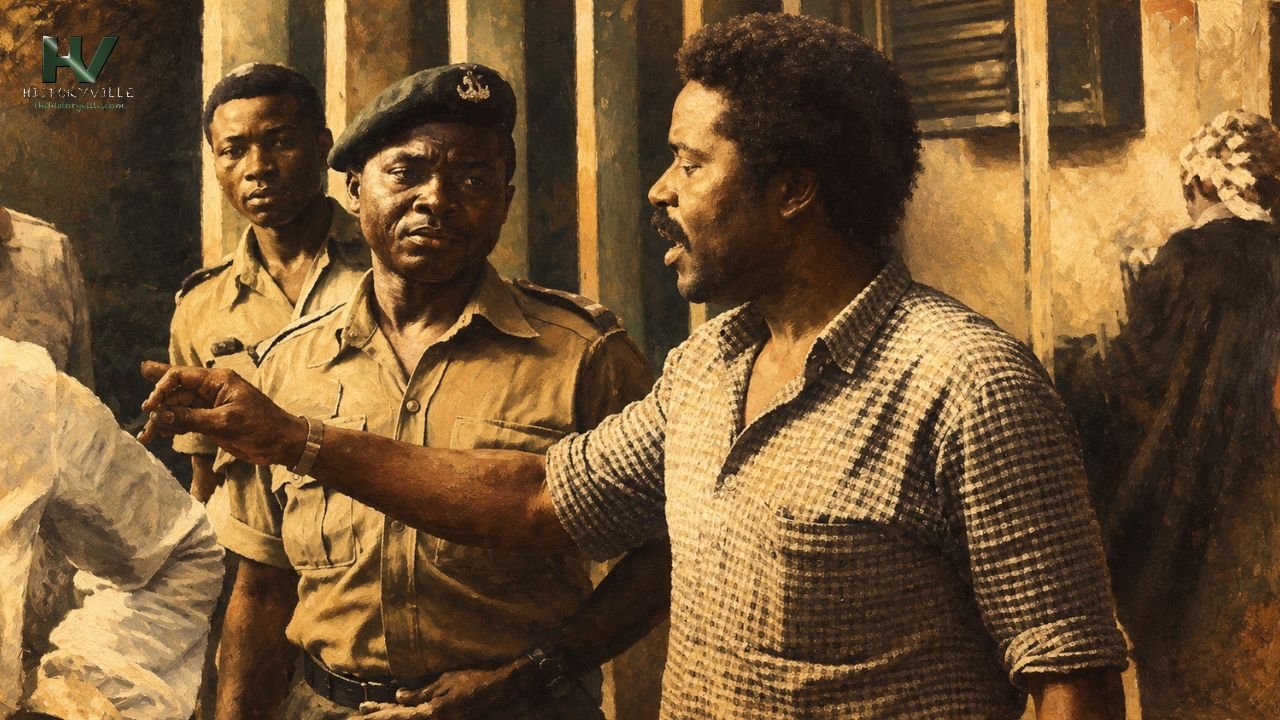

On the morning of Sunday, 19 October, 1986, Dele Giwa, one of Nigeria’s most prominent investigative journalists, was at his home in Ikeja, Lagos, when a parcel bomb exploded in his hands. The blast left him critically injured. He was rushed to hospital but died later that day. He was only 39.
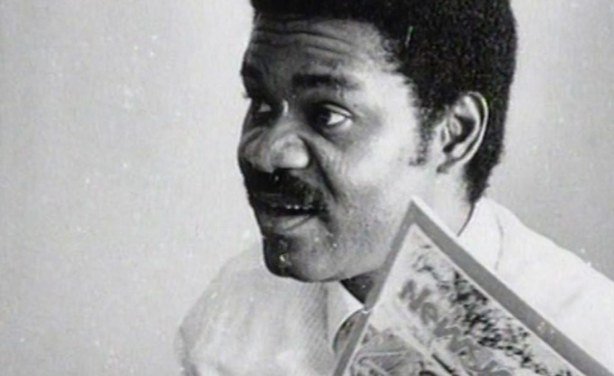
Giwa was the founding editor-in-chief of Newswatch, a magazine that had become an important voice in Nigerian journalism. Alongside Ray Ekpu, Dan Agbese and Yakubu Mohammed, he helped establish a publication committed to investigating the people and institutions that exercised power in Nigeria. At the time of his death, the country was under the military government of General Ibrahim Babangida, who had seized power in August 1985.
Forty years later, on remembering Dele Giwa’s assassination on 19 October 2026, the case remains one of the most disturbing unresolved killings in Nigeria’s contemporary history.
Who Was Dele Giwa?
Dele Giwa was born on 16 March 1947, in Ile-Ife, in present-day Osun State. His full name was Sumonu Oladele Giwa. He grew up to become one of the most recognisable figures in Nigerian journalism, known for his sharp writing, strong personality and ability to turn complicated political issues into compelling newspaper stories. His career took him through some of the country’s leading publications, including Daily Times and Sunday Concord, before he became the founding editor-in-chief of Newswatch magazine.[1]
Giwa’s journalism was not confined to reporting the statements of government officials. He understood that the public needed to know what powerful people did behind closed doors, how decisions were made and whose interests those decisions served. At Daily Times, he became known for his newspaper columns, including Parallax View, which helped establish his reputation as an incisive commentator. His work combined reporting with analysis, and he had a talent for making political stories interesting to ordinary readers.
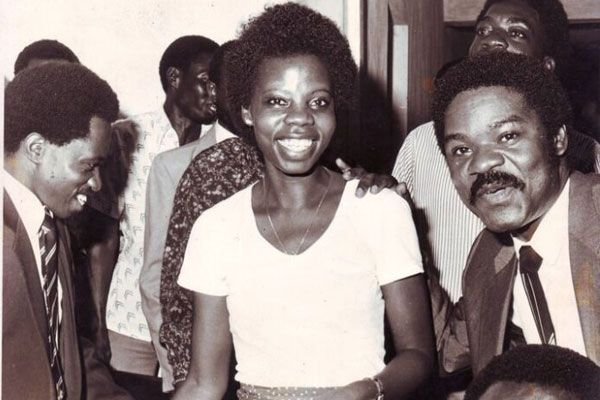
His most important professional undertaking came with the establishment of Newswatch in 1985. He founded the magazine with Ray Ekpu, Dan Agbese and Yakubu Mohammed, all experienced journalists who shared an interest in building a publication with a distinctive editorial voice. Giwa became editor-in-chief, while Ekpu served as his deputy. The magazine quickly established itself as an influential platform for investigative journalism and political reporting.[2] Its approach gave readers a closer look at the people who governed Nigeria and the controversies surrounding their decisions.
Nigeria Under Ibrahim Babangida
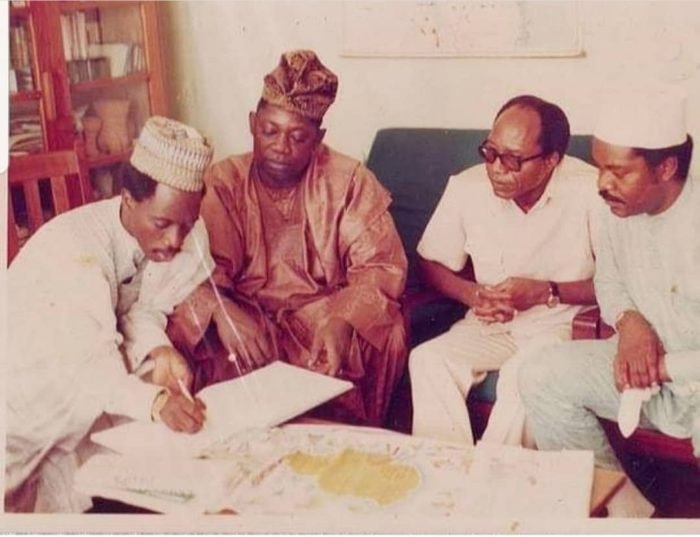
When Dele Giwa was killed in October 1986, Nigeria was governed by General Ibrahim Babangida, who had taken power in a military coup on 27 August 1985. Babangida removed Major General Muhammadu Buhari, whose government had ruled since December 1983, and promised a more consultative approach to governance. His administration presented itself as reform-minded and eventually announced a programme for returning the country to civilian rule.
The new government nevertheless remained a military dictatorship. Political authority rested with the armed forces, and the regime retained substantial influence over public institutions, national security and the media. The promise of political transition did not remove the tensions between the government and journalists who questioned official policies or investigated allegations of misconduct.

Babangida’s government operated in a difficult political environment. Nigeria faced economic pressures, disputes over the direction of national policy and disagreements about the country’s international and religious affiliations. In 1986, the controversy surrounding Nigeria’s proposed membership of the Organisation of Islamic Cooperation became a major political issue. Within the military establishment, disagreements over policy and influence also contributed to an atmosphere of uncertainty.
Journalists played an important role in reporting these controversies. Publications such as Newswatch helped readers make sense of the political arguments and personalities behind official announcements. Their reporting could embarrass the government, expose disagreements within the establishment or draw attention to matters that officials preferred to manage privately.
This environment is important when examining Dele Giwa’s assassination, but it must be handled carefully. The fact that a murder occurred during military rule does not, by itself, prove that the government ordered it. Nor does the victim’s profession establish who was responsible. A sound historical account must consider the political context alongside the available evidence.
What makes the case particularly troubling is the relationship between that context and the circumstances surrounding Giwa’s death. He had been questioned by security officials shortly before the bombing. Two senior security officers, Colonel Halilu Akilu and Lieutenant Colonel A.K. Togun, later became the subjects of murder proceedings connected with the case. Those proceedings ended without a conviction establishing their responsibility.
Babangida’s own response to the killing has remained part of the historical controversy. He has consistently denied complicity. In an account published by the Dele Giwa Journalism Research Centre in May 2026, Babangida described the murder as a possible political act intended to destabilise his administration and inflict damage on him through the death of a prominent journalist.[3] This is his interpretation of the event, not an independently established explanation of who arranged the bombing.
Giwa’s Final Days
One of the most important facts about Dele Giwa’s assassination is that he had been questioned by security officials on Friday, 17 October 1986, two days before the bombing. This detail became central to the suspicions surrounding the case because it placed Giwa in direct contact with the security establishment immediately before he was killed.
The questioning took place against the background of the magazine’s reporting and the government’s concerns about information it considered sensitive. Accounts of the period refer to allegations that officials suspected Giwa of activities that threatened national security. His colleagues also recalled the pressure that journalists faced while investigating controversial political matters.
Questions have also surrounded the stories Giwa and Newswatch were pursuing in the period before his death. One controversy that later became associated with the case concerned Gloria Okon, a woman whose reported arrest and death became the subject of persistent political rumours. Some accounts suggested that Giwa was investigating matters connected with her and that this work might have placed him in danger.
The difficulty is that the surviving accounts do not agree on the extent of Giwa’s involvement or the significance of the story. In later discussions, former Newswatch journalists offered differing recollections of how the subject had arisen and whether it had developed into a substantial investigation.
Dele Giwa’s final days also raise practical questions. Who knew Giwa’s movements? Who knew he would be at home that Sunday morning? How was the package addressed and delivered? Did the sender have access to information about his household? Were the people who delivered the package acting on their own initiative or following instructions from others?
These are the kinds of questions a thorough murder investigation should answer through witness statements, physical evidence, communications records and reliable forensic analysis. They are also questions that cannot be answered simply by repeating allegations made in newspapers or public debates.
19 October 1986: The Parcel Bomb That Changed Nigerian Journalism
Sunday, 19 October 1986, began as an ordinary morning at Dele Giwa’s residence at 25 Talabi Street, Ikeja, Lagos. Giwa was at home with Kayode Soyinka, Newswatch‘s London Bureau Chief, when a package arrived. Accounts submitted in later proceedings before the Community Court of Justice of the Economic Community of West African States describe the package being delivered through Giwa’s son, Billy, who was then 19 years old.[4] The package bore an official-looking seal associated with the President of the Federal Republic of Nigeria. Giwa reportedly remarked that it must have come from the President before attempting to open it.

The package exploded, inflicting devastating injuries on Giwa. He was rushed to hospital, but his injuries proved fatal. He died later that day. He was only 39 years old, and the magazine he had helped establish was barely two years into its publishing life.
The use of a parcel bomb made the killing particularly disturbing. An ordinary letter or package is not generally regarded as a weapon. Its appearance can create a sense of trust, especially when it carries the symbols of an official institution. A bomb concealed in such a package turns an everyday act into a method of targeted killing. It also allows the person who sends it to avoid confronting the intended victim directly.
The official-looking seal became one of the most troubling details of the case. If the package appeared to come from a government office, investigators needed to establish whether the seal was genuine, how it had been obtained and whether it had been used deliberately to mislead Giwa. They also needed to identify the people who prepared and delivered the package.
There is an important difference between knowing how a murder occurred and knowing who arranged it. The physical event was clear: a parcel bomb exploded at Giwa’s home and killed him. Establishing the chain of responsibility was a much harder task. The person who assembled the bomb might not have been the person who ordered the attack. The couriers, if acting on instructions, might not have known who had commissioned the murder. And the person who supplied information about Giwa’s whereabouts might have played a different role from the person who planned the bombing.
A successful investigation needed to establish those connections through evidence. That meant examining the device, tracing its components where possible, identifying witnesses, reconstructing the delivery and investigating the people who might have had the knowledge and resources to arrange such an attack.
The bombing immediately transformed a political and journalistic controversy into a national tragedy. Nigerians wanted to know how a prominent editor could be killed in his own home and whether those responsible would be brought to justice. Journalists were confronted with the possibility that reporting on powerful people could carry a lethal price.

Dele Giwa’s death also created a lasting burden for his colleagues. They had lost a friend, an editor and a partner in the project of building Newswatch. They were now expected to continue their work while asking whether the same forces that had killed Giwa might also threaten them.
Gani Fawehinmi’s Fight for Justice
The killing of Dele Giwa produced widespread demands for an investigation. Among those who refused to let the matter disappear was Chief Gani Fawehinmi, the lawyer and human rights campaigner who became one of the most prominent advocates for bringing those responsible to justice.
Fawehinmi believed that the circumstances surrounding the murder justified investigating senior security officials. His efforts led to legal proceedings involving Colonel Halilu Akilu, Director of Military Intelligence, and Lieutenant Colonel A.K. Togun, Deputy Director of the State Security Service. Both officers occupied important positions within the security establishment, and their alleged involvement made the case especially sensitive.
The allegations against the officers were serious. The case involved accusations of murder and conspiracy to murder, with the prosecution alleging that a letter bomb had been sent to Giwa’s home. The proceedings placed the question of responsibility before the courts, but the allegations were contested and had to be tested according to the applicable law.
On Tuesday, 23 February 1988, Judge Eniola Longe of the Lagos High Court dismissed the charges against the two officers because the evidence presented was insufficient to establish a case requiring them to defend themselves. Contemporary reporting by United Press International recorded the court’s decision and its conclusion that the fact the officers had questioned Giwa did not, by itself, connect them to the parcel bomb.[5]
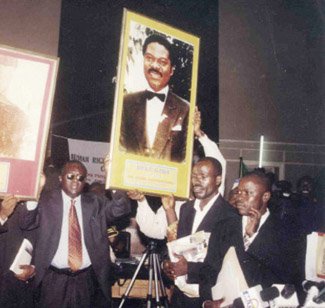
That outcome needs to be understood precisely. The dismissal did not establish who killed Giwa. It also did not amount to a judicial finding that the two officers had sent the bomb. The court concluded that the case presented did not provide a sufficient basis to proceed against them on the charges as framed.
This distinction is central to any responsible account of Dele Giwa’s assassination. The officers were accused, but an accusation is not proof. The failure to establish a case against them in those proceedings cannot be converted into evidence of their guilt. Nor does the dismissal resolve the larger question of who planned the killing.
The legal battle was complicated by disputes over whether Fawehinmi could initiate a prosecution and the role of the Attorney-General in authorising criminal proceedings. The Supreme Court’s 1989 decision in Col. Halilu Akilu v Chief Gani Fawehinmi examined legal questions arising from the dispute, including the process through which Fawehinmi sought to prosecute the officers. The judgment is an important primary source for understanding the legal history of the case.[6]
The deeper problem is that the legal proceedings did not lead to a conclusive identification of Giwa’s killers. The people who prepared the bomb, delivered it and allegedly commissioned the attack were never established through a final conviction in the case. The investigation consequently left the most important question unanswered.
For Fawehinmi, the failure to secure a prosecution did not end the matter. He continued to demand answers, and the case remained part of his wider campaign for human rights and accountability. His involvement helped ensure that Giwa’s assassination was remembered as an enduring challenge to Nigeria’s justice system.
Who Killed Dele Giwa?
Babangida has consistently denied complicity in Giwa’s death. In his account of the assassination, he portrayed it as a possible attempt to undermine his administration.[7] That claim also needs to be treated as an interpretation, not a proven explanation. Without independent evidence establishing who planned the bombing and why, neither an official denial nor an accusation can settle the matter.
Giwa’s reporting on sensitive political and security matters might have brought him into contact with information that influential individuals want kept secret. A person who believes that a forthcoming story could damage a career, expose misconduct or threaten a political arrangement might have a motive to silence its author. But the existence of such a possible motive is not enough to identify the killer. Investigators would need to establish what information Giwa possessed, who knew about it and whether there was a demonstrable connection between that information and the bombing.

The Gloria Okon affair has also featured prominently in discussions of the assassination. Stories about Okon’s reported arrest, alleged connections with powerful individuals and supposed knowledge of sensitive activities generated persistent rumours. Some accounts have linked those rumours to Giwa’s work and suggested that his death was connected to an investigation into the affair.
However, recollections by people associated with Newswatch have differed over how far the magazine had pursued the story. The available accounts do not provide a sufficiently established chain of evidence to demonstrate that the Gloria Okon affair caused Giwa’s assassination. Also, the assassination could have resulted from a political rivalry, a personal dispute or an attempt by unidentified individuals to destabilise the government.
The most defensible conclusion is also the least satisfying: Dele Giwa was murdered by a parcel bomb, the circumstances gave rise to serious suspicions, and the subsequent proceedings failed to establish conclusively who was responsible.
The Oputa Panel, Press Freedom and the Search for Answers
Nigeria’s return to civilian government in 1999 created renewed opportunities to examine abuses committed during earlier periods of military rule. Among the initiatives established during President Olusegun Obasanjo’s administration was the Human Rights Violations Investigation Commission, popularly known as the Oputa Panel, chaired by Justice Chukwudifu Oputa.
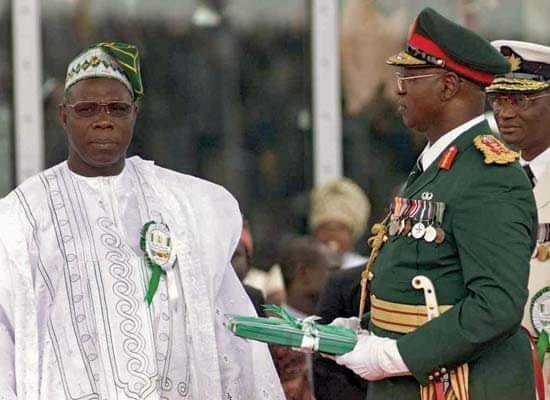
The commission examined human rights violations and abuses associated with Nigeria’s past, including matters arising under military governments. Dele Giwa’s assassination formed part of the wider search for accountability. His colleagues and supporters hoped that a public inquiry could bring new attention to the case, examine previous allegations and encourage the government to investigate outstanding questions.
Ray Ekpu, one of the founders of Newswatch, later recalled that he and his colleagues appeared before the panel in Lagos and Abuja. He said the panel considered their presentation meritorious and called for the government to investigate the matter.[8] His account reflected the continuing frustration of journalists who believed that the original investigation had not adequately resolved the murder.
The significance of the Oputa Panel was that it allowed people to revisit cases associated with military rule in a public forum. For victims and their families, public testimony offered an opportunity to place allegations on record, challenge official accounts and remind the country of injustices that had not been resolved. However, a commission of inquiry and a criminal court perform different functions. A public inquiry can gather testimony, identify patterns of abuse and recommend further action. A criminal prosecution must establish the guilt of an accused person according to the applicable legal standard. Even a finding that a case deserves further investigation cannot automatically establish who committed a murder.
The Oputa Panel did not produce the definitive criminal resolution that Giwa’s supporters had sought. The case remained unresolved, and the passage of time continued to weaken the prospects of obtaining a straightforward answer.
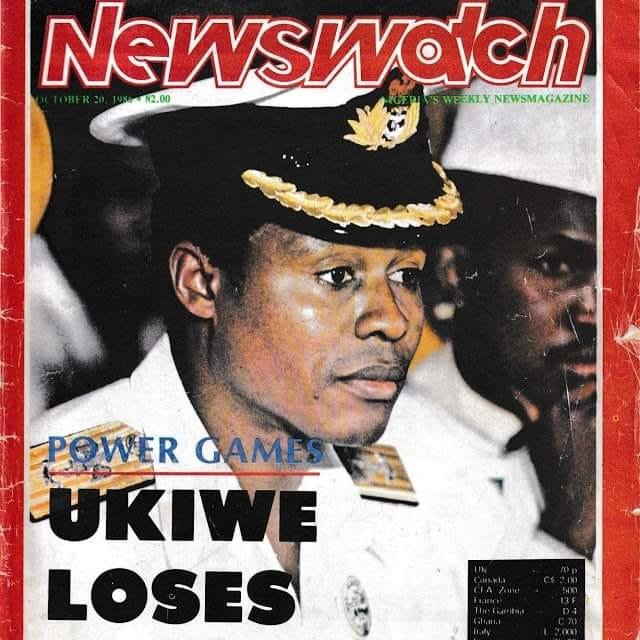
For journalists, Dele Giwa’s assassination also became a lasting symbol of the risks of reporting on powerful institutions. The killing demonstrated how vulnerable journalists could be when investigating matters involving political authority and national security.
Press freedom does not mean that journalists are exempt from the law or criticism. It means they should be able to investigate, publish and question those in authority without being subjected to unlawful threats, violence or retaliation. Where a journalist is murdered, the state has a duty to investigate the crime effectively and impartially, irrespective of the victim’s views or the interests that the investigation might affect.
The continuing uncertainty surrounding Dele Giwa’s death has consequently damaged public confidence in the country’s ability to investigate politically sensitive crimes. The Oputa Panel kept the case in public view, but the larger task of establishing criminal responsibility remained unfinished.
Dele Giwa’s Legacy
Forty years after Dele Giwa’s assassination, the country continues to confront the same fundamental questions about political violence, press freedom and accountability.
Giwa’s professional legacy began before the parcel bomb. Through his work at Daily Times, Sunday Concord and Newswatch, he helped make political reporting an important part of public life. His journalism encouraged readers to look beyond official statements and examine the people, decisions and controversies shaping the country. The magazine he co-founded became a major platform for investigative reporting, and its early success helped establish the importance of independent political journalism in Nigeria.
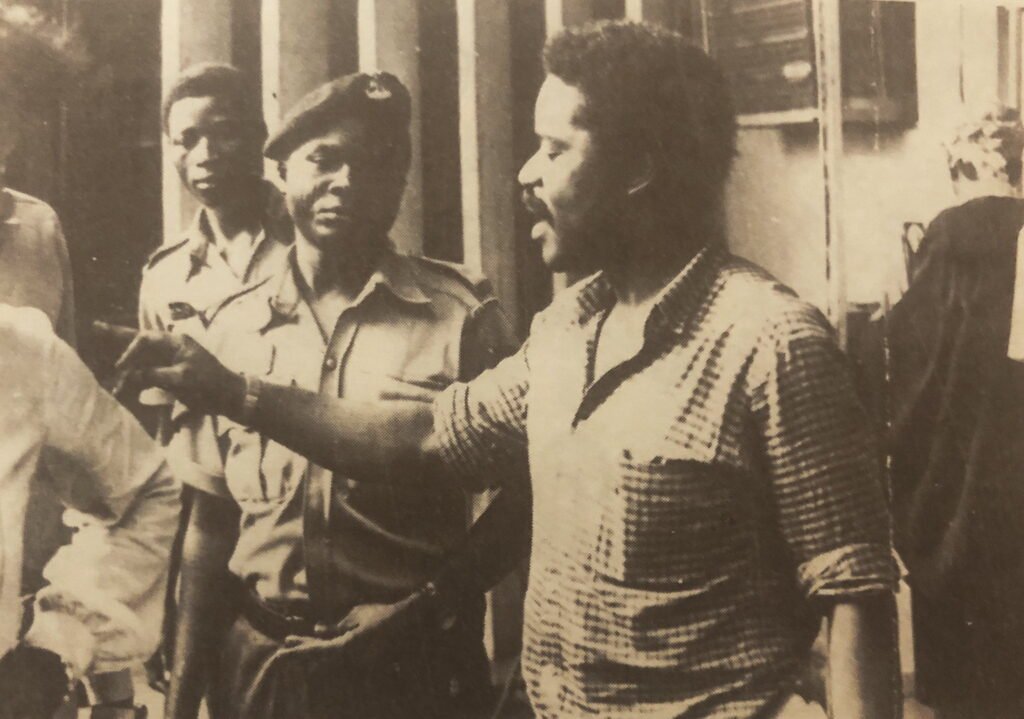
His murder threatened that tradition. Killing a journalist can have consequences beyond the immediate loss of life. It can frighten colleagues, discourage sources from speaking and persuade editors that certain subjects are too dangerous to investigate. Even when no further attacks occur, the knowledge that a journalist was murdered without a conclusive resolution can create a climate of fear.
The response to Giwa’s death also demonstrated the importance of colleagues who refuse to abandon a case. Ray Ekpu and other journalists continued to speak about the murder. Gani Fawehinmi used the courts to pursue allegations against senior security officers. Later, the Oputa Panel gave witnesses another opportunity to raise the matter. These efforts did not produce a definitive answer, but they ensured that the case remained part of Nigeria’s public record.
However, remembering Dele Giwa’s assassination every October 19 is an opportunity to preserve his writing and make it available to a new generation. The publication of Dele Giwa’s Granite Journalism[9] and the work of the Dele Giwa Journalism Research Centre are important steps towards safeguarding the material through which researchers can study his career. They can help move public memory beyond the bomb and restore attention to the journalist who lived, worked and wrote without fear before his unfortunate death.
Want to understand what really happened during Nigeria’s first military coup? Read A Carnage Before Dawn. It offers a carefully researched, vividly told account of January 15, 1966, through a storytelling style that will keep you glued to the book’s pages.
You can get the e-book here and the paperback here.
Love history? Don’t stop here.
📚 Get deeper insights by purchasing our latest history books.
📢 Join our WhatsApp Channel for exclusive updates and historical facts.
📩 Subscribe to our Newsletter and receive fascinating stories from history (World and African history) directly in your inbox.
🎥 Subscribe to our YouTube channel for engaging documentaries and short history videos.
Stay connected with us on social media for daily history content:
🔵Follow us on Facebook.
📸 Follow us on Instagram.
🐦Follow us on Twitter.
💼 Follow us on LinkedIn.
🎵 Follow us on TikTok.
❤️ Support our work by donating to HistoryVille and help us continue preserving and sharing important historical stories. 📢Advertise with HistoryVille to reach a growing audience passionate about history and culture.
References
- [1] National News Agency of Nigeria (NAN). “40 Years After, Dele Giwa Journalism Research Centre Comes Alive.” The Guardian Nigeria, 24 March 2026.
- [2] Ogunrinde, Folashade. “Newswatch to Unveil Book Honouring Dele Giwa 40 Years After Assassination.” Premium Times, 14 October 2026.
- [3] Dele Giwa Journalism Research Centre. “The Death of Dele Giwa by IBB.” 7 May 2026.
- [4] Community Court of Justice of the Economic Community of West African States. Incorporated Trustees of Media Rights Agenda v. Federal Republic of Nigeria, Application No. ECW /CCJ/ APP/70/21, Judgment No. ECW/CCJ/JUD/15/24, 30 May 2024.
- [5] Oredein, Obafemi. “Security Agents Cleared in Newsman’s Murder.” United Press International. 23 February 1988.
- [6] Supreme Court of Nigeria. Col. Halilu Akilu v. Chief Gani Fawehinmi, SC. 215/1988 and SC. 216/1988, 5 March 1989.
- [7] Babangida, Ibrahim Badamasi. A Journey in Service: An Autobiography (Ibadan: Bookcraft, 2025), 204–207.
- [8] Aikulola, Sunday. “34 Years After Murder, Dele Giwa’s Family Seeks Justice, Colleague Insists on Govt Investigation.” The Guardian Nigeria, 20 October 2020.
- [9] Babalola, Ayoola. “Newswatch Marks Giwa’s 40th Death Anniversary with Book.” The Punch, 16 October 2026.