
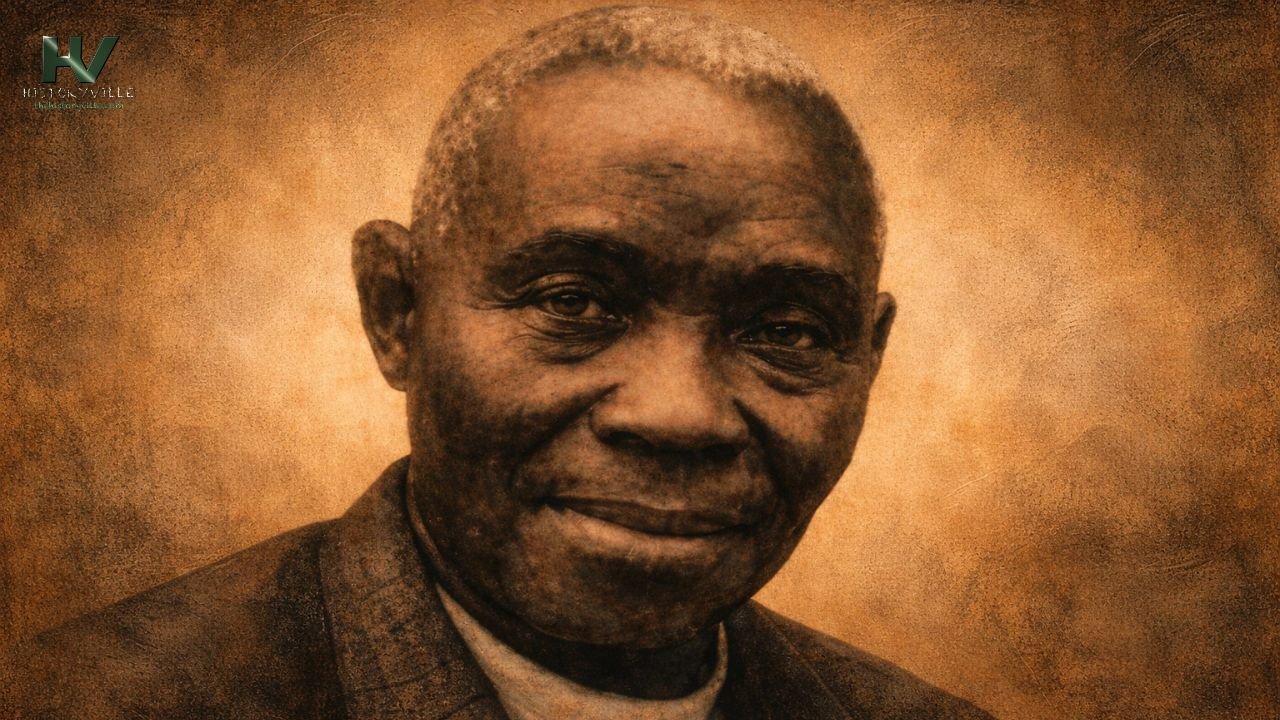

Samuel Adegboyega was born on the first day of April in 1896 at Adeyori Village into aristocracy in a royal house from Owu, Abeokuta, present-day Ogun State, South-West Nigeria.
Early Life
Samuel Adegboyega, who was born Gbadebo Adegboyega, was still in infancy when he lost his father, who was also Adegboyega. The senior Adegboyega died in 1900 when his young child was just four years old. In contrast, his mother, Madam Adekemi lived longer and was well advanced in age when she died. She was 95. Madam Adekemi Adegboyega and her older son, Adeyinka, would raise the young Samuel through adulthood.
Samuel Adegboyega was named Gbadebo after Oba Gbadebo I, the sixth Alake of Egbaland, Abeokuta, as he was from a royal house himself.[1] He was the second son as he had three brothers, Adeyinka, Awolola, and Latunde, and two sisters who were known in their adult years as Mama Sheri and Mama Ilaro.
Education, Marriage, and Career
Samuel Adegboyega attended the Methodist High School in Abeokuta. In the community, he was known as one of the most brilliant students in the learning centre. For this, his teachers and the community loved him.

After his secondary school education, Samuel Adegboyega worked for the Nigeria Railway Corporation and was promoted to the stationmaster rank, one of the most coveted positions in the Corporation at the time. He held this position honourably before becoming a full-time Christian minister.
Adegboyega married Miss Felicia Omoleye Olowe in 1920 and the marriage was blessed with three daughters and two sons.
Samuel Adegboyega was born into a family that practised the African traditional religion. After he became a Christian, he belonged to a Methodist Church until 1920 when he joined The Precious Stone Church, an offshoot of Diamond Society Ministry which was an indigenous Pentecostal movement at that time in Nigeria. This organisation was later affiliated with the Faith Tabernacle Congregation, Philadelphia, Pennsylvania in the United States of America.
The Apostolic Church, Nigeria
In 1930, a revival took place in Nigeria, which resulted in the outpouring of the Holy Spirit in the churches across the country.
The Faith Tabernacle Church could not manage such a powerful movement so a group called The Apostolic Church (TAC) from the United Kingdom decided to help out Pastor Samuel Adegboyega’s group. They adopted the church and later ordained him as one of the pastors.
However, there was a breakaway in the new organization and the secessionists became the Nigerian Apostolic Church which metamorphosed into Christ Apostolic Church.
Afterwards, Pastor Adegboyega became one of the central figures in The Apostolic Church which, later, became one of the largest Pentecostal denominations in Nigeria.
Ministerial Work and Honours
Samuel Adegboyega also championed the cause of education by establishing many primary and secondary schools across the country. It was also said that under Pastor Adegboyega’s leadership, there was tremendous growth and recognition of the independent and Pentecostal churches in Nigeria and West Africa.
Apart from his activities in evangelism and the expansion of The Apostolic Church in Nigeria, Pastor Adegboyega was also instrumental in establishing the church in countries such as Sierra Leone, Ghana, the United Kingdom, and the United States.

Adegboyega was also a pioneering member of the Christian Association of Nigeria (CAN), in 1976.
During the Independence Day Celebration in Lagos on October 1, 1960, the Federal Government of Nigeria conferred national honours on Pastor Samuel Adegboyega making him a Member of the Order of the Niger (M.O.N).
A few years later, because of his uprightness and faithfulness, the government appointed him justice of the peace (J.P.). He also served as a juror in the law courts and as an associate judge in the juvenile courts.
Death & Legacy
Immediately after the reorganization of the Apostolic Church leadership in 1979, Adegboyega began to decline in health.
On Tuesday, October 23, 1979, after his Morning Prayer time at 6:00 a.m., Pastor Samuel Gbadebo Adegboyega slept peacefully in the Lord. He was 83. He died in his official residence at the Apostolic Church convention grounds, Olorunda-Ketu, in Lagos, Nigeria.
In 1989, the church held a befitting 10th Year Remembrance Service for Adegboyega, where its Temple Choir rendered a beautiful musical composition in honour of the noble clergyman.
Want to understand what really happened during Nigeria’s first military coup? Read A Carnage Before Dawn. It offers a carefully researched, vividly told account of January 15, 1966, through a storytelling style that will keep you glued to the book’s pages.
You can get the e-book here and the paperback here.
Love history? Don’t stop here.
📚 Get deeper insights by purchasing our latest history books.
📢 Join our WhatsApp Channel for exclusive updates and historical facts.
📩 Subscribe to our Newsletter and receive fascinating stories from history (World and African history) directly in your inbox.
🎥 Subscribe to our YouTube channel for engaging documentaries and short history videos.
Stay connected with us on social media for daily history content:
🔵Follow us on Facebook.
📸 Follow us on Instagram.
🐦Follow us on Twitter.
💼 Follow us on LinkedIn.
🎵 Follow us on TikTok.
❤️ Support our work by donating to HistoryVille and help us continue preserving and sharing important historical stories.📢Advertise with HistoryVille to reach a growing audience passionate about history and culture.
Reference
- [1] Olofinjana, I. (2011). 20 Pentecostal Pioneers in Nigeria: Their Lives, Their Legacies. Pg. 35-42. Xlibris Corporation. ISBN: 978-1-4568-6682-2