
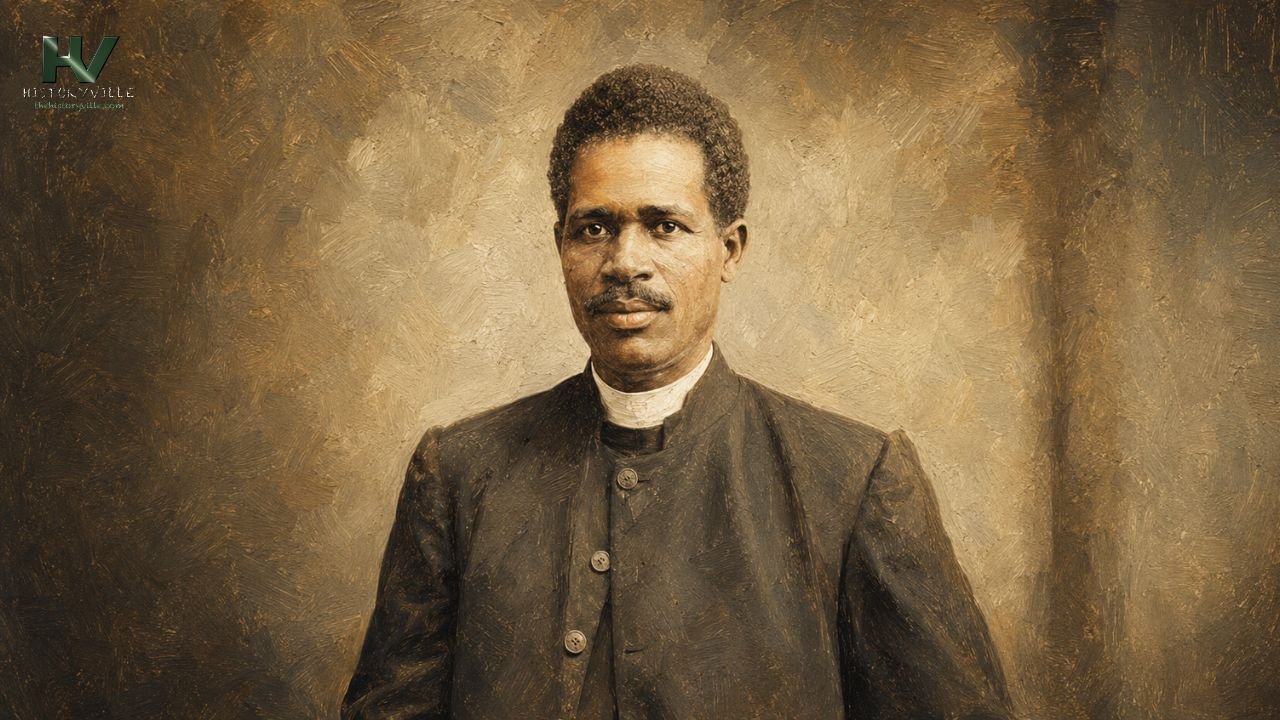

The Reverend Josiah Ransome-Kuti, who was nicknamed the Singing Minister by the British colonialists, was a progenitor of many church songs still sung today, especially in the Yoruba language. In 1922, the clergyman composed the theme song, Iṣẹ́ Olúwa kò lè bájẹ́ oo used by Channels Television today and numerous others like the Egba national anthem.
Josiah Ransome-Kuti was also the first Nigerian to release a record album after he recorded many hymns (in the Yoruba language) on a gramophone through Zonophone Records, London, in 1925. This album can still be found in the British Museum.
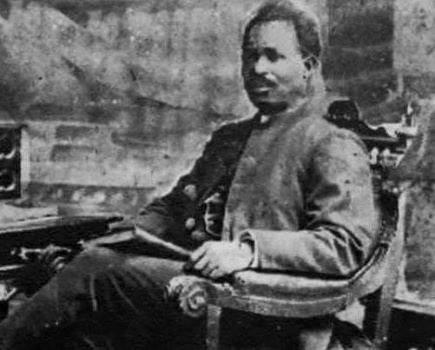
Reverend Josiah Ransome-Kuti was a father to Reverend Israel Oludotun Ransome-Kuti, the astute, long-serving principal of Abeokuta Grammar School and the first President of the Nigerian Union of Teachers (NUT), a grandfather to Afrobeat legend, Fela Kuti, and a great-grandfather to Wole Soyinka, the first and only Nigerian to win a Nobel Prize.
Early Life and Education
Josiah Ransome-Kuti was born Josiah Jesse Likoye Kuti on June 1, 1855, in Igbehin, Abeokuta, the present-day capital of Ogun State, South-West Nigeria. This was a period when Abeokuta was experiencing diverse conflicts with Dahomey, a neighbouring kingdom in the present-day Republic of Benin.
Ransome-Kuti was named Likoye after his father, but dropped it and added Ransome to his name after the European missionary who tutored him in Abeokuta. His parents were from the Egba ethnic group. His father, Likoye Kuti (c.1820-1863), was a weaver and a soldier, while his mother, Anne Ekidan Efupeyin (c.1835 – c.1905), was an early convert to Christianity, who, like Eunice in the Bible, influenced Josiah from an early age with her deep religious beliefs despite disapproval from her husband, who was averse to European culture and Christianity.[1]

Josiah Ransome-Kuti was nine years old when he began his education at the Church Missionary Society (CMS) Training Institution at Abeokuta. He performed very well in his studies and excelled especially in Music.
In 1871, at the age of 16, he transferred to Lagos, where he continued his education at the CMS Training Institute, where he completed his academics in December 1876 and subsequently became a teacher at St. Peter’s School in Ake, Abeokuta.
In 1879, Josiah Ransome-Kuti returned to Lagos to teach Music at the CMS Girls’ School. He was in this position until 1886.
Marriage and Family
On Monday, May 22, 1882, Josiah Ransome-Kuti married Bertha Erina Olubi,[2] and they would go on to have six children: four boys and two girls. In his own handwriting from the family Bible, Ransome-Kuti listed the children thus:
Josiah Oluyinka (February 27, 1883), Anne Lape Iyabode (October 20, 1885; mother to Grace Eniola Jenkins-Harrison, Wole Soyinka’s mother), Israel Oludotun (April 30, 1891; father to Dolupo, Olikoye, Olufela, and Bekolari), Joshua Oluremi (January 6, 1894), Victoria Susannah Tinuade (June 20, 1899), and Azariah Olusegun Orisale (June 29, 1902). Two children were born dead: Olufela Daniel Kuti (1887) and Susannah Olubade (1898).[3]
Ransome-Kuti was also a father-in-law to Funmilayo Ransome-Kuti, the woman who “sacked” the Alake of Abeokuta in 1949. His descendants would go on to establish the Ransome-Kuti dynasty.[4]
Career
In 1891, Josiah Ransome-Kuti was appointed a catechist at the Gbagura Church Parsonage in Abeokuta. His first responsibility was to found the Gbagura Church. At first, the church services were held in the open air. However, with the help of the locals, he was able to build a church.
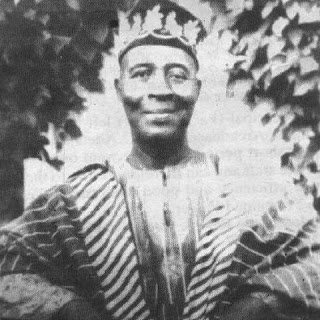
As an accomplished musician and singer, Ransome-Kuti improved the quality of the church music and was able to attract many of the Egba indigenes, some of whom were converted to Christianity. He also engaged in charity to support the church while rejecting job offers from Lagos vast commercial ventures.
In 1895, Josiah Ransome-Kuti became a deacon, and in 1896, he was transferred by the church authorities to the Sunren-Ifo district, about 50 miles from Abeokuta.[5] Initially, the locals were suspicious of the clergyman and his ideas, but he was later accepted by the people, and the Egba United Government, which had been impressed by his intelligence and leadership skills, increased his administrative responsibilities in the district.
In 1897, Ransome-Kuti was ordained a priest, and between 1902 and 1906, he was appointed a district judge. As a matter of fact, his sense of equity and justice greatly increased the people’s respect for him. In 1903, he became superintendent of the Abeokuta mission church and was also granted a mandate by the government to act as its representative in cases of emergency in the area.
By 1906, Josiah Ransome-Kuti had established 25 new churches in the Sunren-Ifo district. At first, he supervised them all himself, but as the work expanded, he later received help from an assistant. During this period, he also obtained permission from the Olu (King) of Ilaro for Christians to use umbrellas. This was significant because umbrellas had previously been a privilege reserved for the Olu alone. The decision, however, caused tension in the community, as many people saw it as a challenge to long-standing royal customs. Some members of the church even left in protest, believing that tradition was being undermined.
As resentment grew, Reverend Ransome-Kuti faced hostility during one of his visits to Ilaro. He was attacked and severely injured. When the attackers were later arrested, they claimed they had mistaken him for an armed thief. Soon after this incident, about 100 armed men from Ifo set out to avenge the attack and marched towards Ilaro. On arrival, however, Ransome-Kuti personally intervened and persuaded them to return home peacefully, preventing further violence.
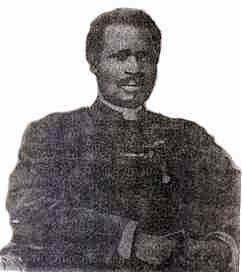
Not long afterwards, another group of about 200 armed men arrived in Ilaro under British command with a similar intention of retaliation. Once again, after careful negotiation, he succeeded in calming the situation and convincing them to stand down. His ability to prevent bloodshed through diplomacy greatly strengthened his reputation. He became highly respected both in Ilaro, where a church was later built on the very spot where he had been attacked, and across Nigeria more broadly.
After Reverend D.O Williams died in 1911, Josiah Ransome-Kuti was appointed pastor of St. Peter’s Church in Ake, while he was still an official of the government.
In 1914, the Egba United Government lost its independence with the amalgamation of Nigeria, and British rule was imposed. In the resulting conflicts, Ransome-Kuti played a major role in mediating between the various opposing sides. He was also instrumental in mediating during the 1918 Adubi War.
The Singing Minister from Abeokuta
In 1922, Josiah Ransome-Kuti travelled to London, England, to attend the Church Missionary Society Exhibition, where he recorded a total of 43 songs which were released on double-sided zonophone discs by a recording company, Zonophone Records.[6] It was his second trip to the United Kingdom. He had embarked on the first one in 1905.
These recordings, which were reportedly written and arranged by Ransome-Kuti himself, feature the clergyman singing to piano accompaniment. The majority of these songs are described as Yoruba hymns or sacred songs. In addition to these Yoruba hymns, Josiah Ransome-Kuti also recorded a funeral lament and a track described on the label as Abeokuta National Anthem, which is now famously known as the Egba anthem.
Josiah Ransome-Kuti’s Death
In 1922, after a visit to the Holy Land, Reverend Josiah Ransome-Kuti was made a canon of the Cathedral Church of Christ in Lagos. He also resumed his position as pastor of St. Peter’s Church, where he remained until his death on September 4, 1930. He was 75.
Legacy
Reverend Canon Josiah Ransome-Kuti had been deeply committed to Christianity from an early age, and through his life’s ministry, he became a prominent African missionary of his time. Although he fought tooth and nail to wipe out idolatry in Abeokuta and neighbouring towns like Ifo and Ilaro, Ransome-Kuti was deeply interested in African history and customs and used this understanding in conjunction with his musical talents in his missionary work.
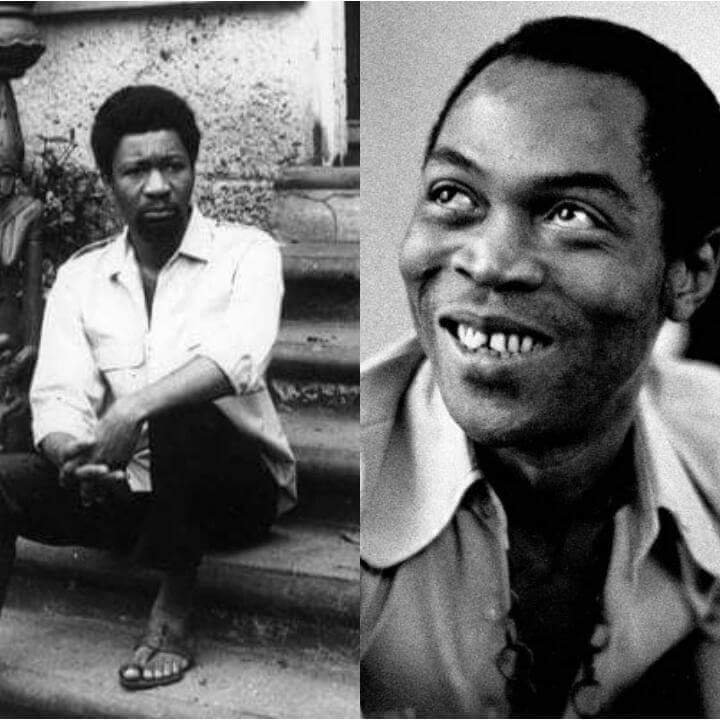
Josiah Ransome-Kuti composed and sang many indigenous songs to increase the awareness of Christian beliefs among the locals, several of which were recorded on a gramophone and compiled into hymnbooks. He also composed the popular anthem of the Egba people of Abeokuta, ‘Lórí Òkè àti Pẹ̀tẹ́lẹ̀ (Up the Hills and Down the Plains). Unfortunately, records of these songs cannot be found anywhere in Nigeria, not even in Abeokuta, his ancestral home, but far away in the United Kingdom, in a British museum.[7]
It was this legacy Ransome-Kuti inculcated in one of his sons, Israel Oludotun, who himself would go on to be a famous clergyman and educationist. You can read more about him here.
Want to understand what really happened during Nigeria’s first military coup? Read A Carnage Before Dawn. It offers a carefully researched, vividly told account of January 15, 1966, through a storytelling style that will keep you glued to the book’s pages.
You can get the e-book here and the paperback here.
Love history? Don’t stop here.
📚 Get deeper insights by purchasing our latest history books.
📢 Join our WhatsApp Channel for exclusive updates and historical facts.
📩 Subscribe to our Newsletter and receive fascinating stories from history (World and African history) directly in your inbox.
🎥 Subscribe to our YouTube channel for engaging documentaries and short history videos.
Stay connected with us on social media for daily history content:
🔵Follow us on Facebook.
📸 Follow us on Instagram.
🐦Follow us on Twitter.
💼 Follow us on LinkedIn.
🎵 Follow us on TikTok.
❤️ Support our work by donating to HistoryVille and help us continue preserving and sharing important historical stories. 📢Advertise with HistoryVille to reach a growing audience passionate about history and culture.
References
- [1] Johnson-Odim, Cheryl, and Nina Emma Mba. For Women and the Nation: Funmilayo Ransome-Kuti of Nigeria. Urbana: University of Illinois Press, 1997, pg. 31.
- [2] Ibid., pg. 32.
- [3] Ibid., pg. 35.
- [4] Fargion, Janet T. The Ransome-Kuti Dynasty. London: Oxford University Press, 1997.
- [5] Delano, Isaac O. The Singing Minister of Nigeria. London: Sheldon Press, 1942.
- [6] Brennan, Vicki L. “Rev. J. J. Ransome-Kuti and the History of Yoruba Gospel Music.” Religion@UVM (University of Vermont Blog), February 4, 2015. https://blog.uvm.edu/religion/2015/02/04/rev-j-j-ransome-kuti/
- [7] Ibid.