
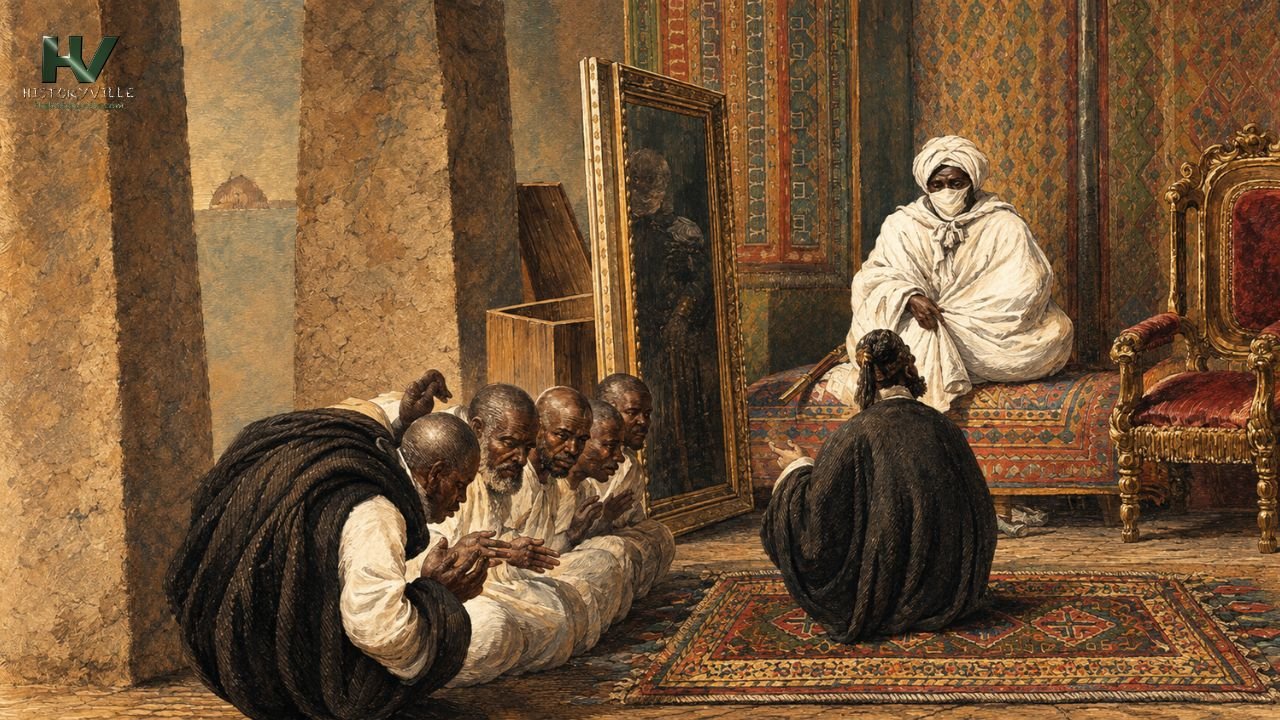

For centuries, Borno has stood as one of the most remarkable kingdoms in African history. Its story stretches back to the days of the powerful Mais of the Kanem-Borno Empire, rulers who commanded respect across the Sahara and beyond. From the shores of Lake Chad, Borno grew into a centre of trade, culture, and Islamic scholarship, linking North Africa with the heart of the Sudan. The kingdom’s survival and resilience, through war, migration, and changing rulers, make it one of the oldest continuous political traditions in sub-Saharan Africa.
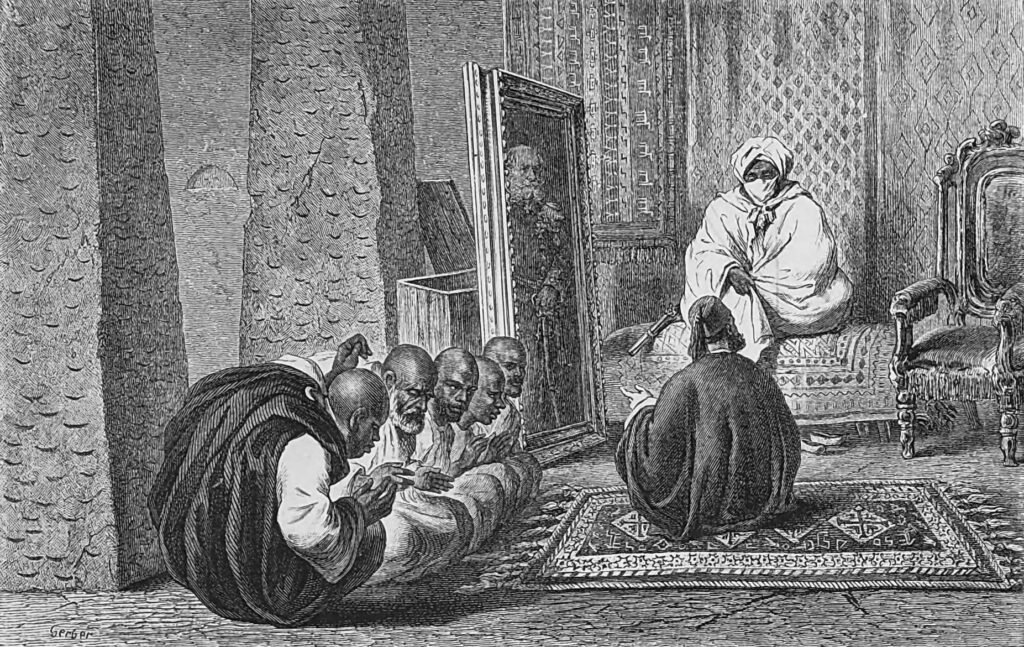
The rise of the Shehus in the early 19th century marked a new chapter in Borno’s long history. Faced with the challenges of Fulani jihadists, internal strife, and external threats, the kingdom transformed itself to preserve its power and influence.
The Shehus carried on the legacy of the Mais but adapted to a new world, blending tradition with innovation to keep Borno alive at a time when many African states were falling to foreign invasion or internal collapse.
The Relation Between Kanem-Borno and Borno
The story of Borno cannot be told without first looking at Kanem. Long before the name “Borno” became prominent, there was the Kanem Empire, which rose to power around the ninth century east of Lake Chad in present-day Chad. Ruled by the powerful Mais of the Sayfawa dynasty, Kanem was a hub of trade, diplomacy, and Islamic learning. Its influence stretched deep into the Sahara and across Central Africa. For centuries, Kanem stood as one of the great kingdoms of Africa, until internal disputes and outside attacks gradually weakened it.
By the 14th century, the Sayfawa dynasty shifted its base westwards, across Lake Chad, into the fertile lands of what is now north-eastern Nigeria. This move gave rise to Borno, the successor state to Kanem. Though it was essentially a continuation of the Kanem royal line, Borno had its own distinct identity.
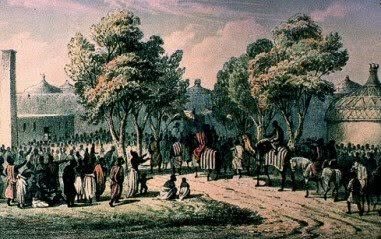
It grew into a prosperous empire, celebrated for its scholarship, its powerful cavalry, and its ability to hold its ground against rivals. The name “Kanem-Borno” is often used by historians to capture both phases of this empire, Kanem in Chad and Borno in Nigeria.
By the early 19th century, the old Sayfawa dynasty of the Mais gave way to a new line of rulers known as the Shehus, beginning with Muhammad al-Kanemi, who resisted the waves of the Fulani Jihad that swept across much of West Africa.
The Fulani Challenge
For centuries, Borno was ruled by the Mais of the Sayfawa dynasty, heirs to the ancient Kanem rulers. The most popular of these Mais was Idris Alooma, who reigned during the late 16th and early 17th centuries. These Mais presided over a vast and respected empire, combining military strength with Islamic learning and long-distance trade. But by the late 18th century, the authority of the Mais was in decline.
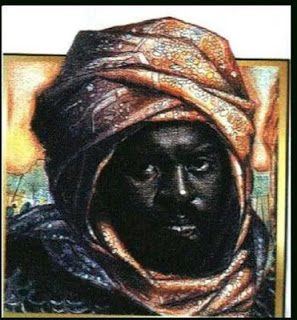
Trade routes that once brought wealth and prestige to the kingdom were disrupted by shifting political alliances and economic changes. The Mais, who had once commanded armies and judges with unquestioned authority, now found themselves increasingly dependent on local nobles and commanders. As their influence waned, the dynasty became vulnerable to external attack.
The greatest of these external threats came at the dawn of the nineteenth century. In 1804, Usman dan Fodio launched the Fulani Jihad, a religious and political movement that swept across much of Hausaland. Victorious in places like Kano, Katsina, and Zaria, the Fulani jihadists soon turned their attention to Borno.
In 1808, they captured Ngazargamu, the centuries-old capital of the Mais. The fall of the city was a devastating blow, both materially and symbolically. The reigning Mai, Ahmad, could not offer strong leadership in the face of the invasion, and for a time it seemed that Borno might suffer the same fate as many Hausa states—absorbed into the growing Sokoto Caliphate.
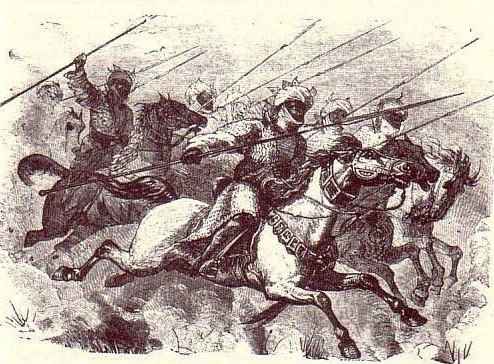
However, unlike those other states, Borno did not collapse. Its survival owed much to a remarkable figure who rose in this moment of peril. That figure was Muhammad al-Kanemi, a learned Islamic scholar, diplomat, and military leader of Shuwa Arab descent.
The Rise of Al-Kanemi
Al-Kanemi was not of royal blood, yet he combined intellectual authority with political skill in a way that made him indispensable. He rallied the remnants of Borno’s army, secured alliances with neighbouring groups, and launched campaigns that successfully pushed back the Fulani advance.
But al-Kanemi’s strength was not only military. He was also a skilled diplomat and theologian. In his correspondence with Usman dan Fodio and later with the Sokoto leadership, he argued persuasively that Borno was already an Islamic state and did not require “reform” through jihad.
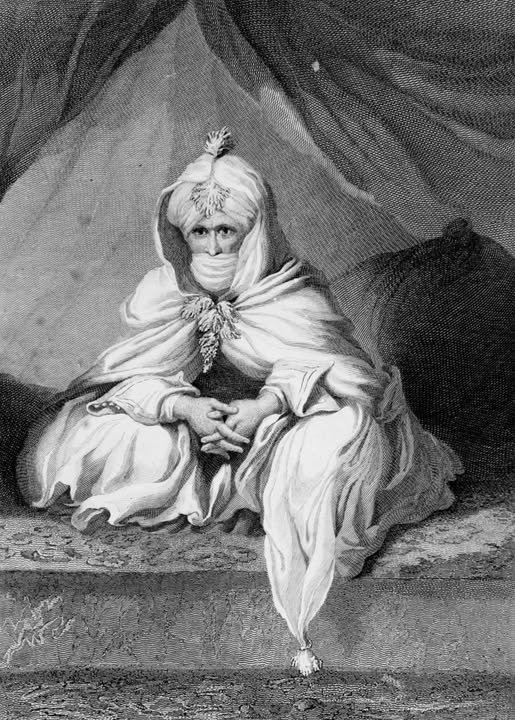
His writings reveal a keen intellect and a deep understanding of Islamic law, which gave his leadership legitimacy in the eyes of Borno’s Muslim population.
As al-Kanemi consolidated his power, the role of the Mais diminished. Though the Sayfawa kings continued to exist in name, they no longer commanded real authority. By the 1810s and 1820s, al-Kanemi was the de facto ruler of Borno.
The Birth of the Shehuate
The final break came in the 1840s. Al-Kanemi’s son, Umar ibn Muhammad al-Kanemi, formally replaced the last of the Mais and assumed full royal authority. Instead of calling himself Mai, however, he adopted the title Shehu, derived from the Arabic Shaykh, a term that emphasised both religious learning and political leadership. This new Shehuate dynasty was thus born, carrying forward Borno’s state structures but under a different house.
The Shehus maintained the Islamic character of the kingdom, reinforced Borno’s institutions, and defended its independence against Sokoto and other rivals. Though the Shehuate itself would later face challenges from internal conflict and eventually colonial partition, its establishment marked a critical moment in Borno’s history: a successful transfer of power that ensured continuity amid upheaval.
British Colonisation and Absorption into Modern Nigeria
By the late 19th century, Borno was facing a new kind of threat, one unlike the jihadists of Sokoto or the rivals it had long known. The European powers, engaged in the Scramble for Africa, were redrawing the map of the continent. Borno, weakened after decades of internal strife and external attacks, including the devastating invasion of Rabih ibn Fadlallah from Sudan in the 1890s, became caught in this struggle for imperial control.
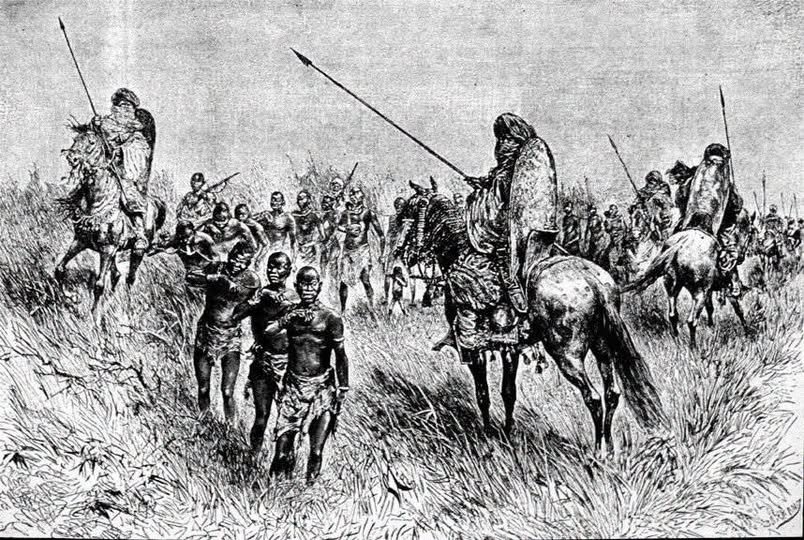
Rabih briefly conquered Borno, overthrowing the Shehu in 1893 and establishing his own rule at Dikwa. However, his reign was short-lived. In 1900, French forces defeated and killed Rabih at the Battle of Kousséri, opening the way for European powers to impose their authority over the region.
With the defeat of Rabih, Borno was partitioned between the colonial powers. The British, the French, and the Germans each laid claim to parts of the old kingdom, drawing new borders with little regard for the historical unity of Borno. The Shehuate was restored, but its sovereignty was stripped away. Under British colonial administration, the Shehu remained as a recognised traditional authority, only as part of the indirect rule system, serving as an intermediary between the colonial officials and the local population. Borno’s political independence, once defended so fiercely, was thus reduced to ceremonial and administrative functions under foreign oversight.
In 1914, with the amalgamation of Northern and Southern Nigeria into a single colonial entity, Borno was formally absorbed into what would become modern Nigeria. Though divided by colonial borders, the legacy of Kanem-Borno lived on among the people of north-eastern Nigeria, Niger, Chad, and Cameroon. Within Nigeria, the Shehu of Borno continues to hold immense cultural and religious prestige, even if stripped of sovereign power. The office remains one of the most respected traditional institutions in the country today, linking modern Nigeria with one of Africa’s greatest historical kingdoms.
Closing Chapter: From the Mais to the Shehus, and Beyond
It is of great importance to remember that the Kanem-Borno Empire was already ancient before the rise of the al-Kanemi dynasty. For almost a thousand years, the Sayfawa Mais had ruled the lands around Lake Chad, long before Al-Amin Muhammad al-Kanemi came to prominence. And even before the Sayfawa, Borno had existed as a people and a political space. How then do we understand such longevity? How did this kingdom, older than many modern nations, continue to evolve when others had vanished?
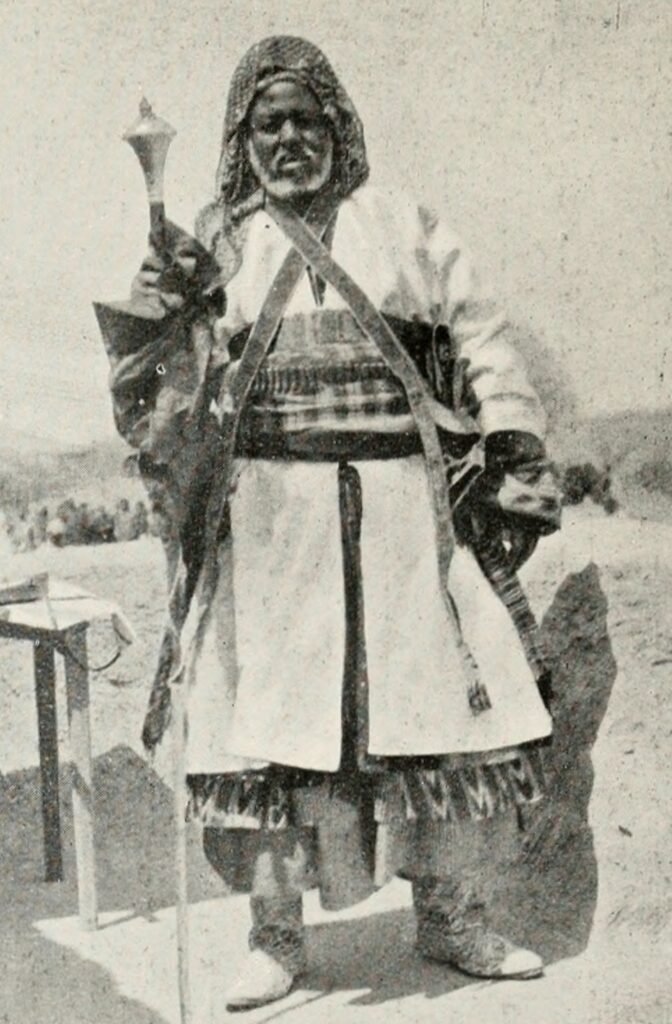
When al-Kanemi became Shehu in 1814, he founded not just a dynasty but a new tradition. His son, Shehu Umar ibn Muhammad al-Kanemi (1835–1853), carried on his father’s work, followed by Darman (1853–1880), who seized power in a palace coup. The throne passed to his descendants and brothers in turbulent succession: Bukar Zarami (1880–1884), Ibrahim ibn Umar (1884–1885), and Shehu Hashemi (1885–1893). Yet, what is leadership without security? Rabih ibn Fadlallah’s devastating invasion in 1893 brought destruction, killing three Shehus in quick succession—Hashemi, Kyari, and Sanda Wuduroma. Was this the final curtain for Borno, after centuries of survival?
It seemed so when Rabih transferred the capital to Dikwa. But history is seldom a straight line. The French defeated Rabih in 1900 and restored a Shehu, Sanda Kura, though only as a figurehead. His brother, Umar Abubakar Garbai, became Shehu in 1902 and relocated to Maiduguri, where the line of rulers continues to this day.
Even here, the scars of imperialism are clear. The treaties of the Scramble for Africa split old Borno between France, Germany, and Britain, leaving its people divided by artificial borders. Should one not ask: how does a kingdom that once straddled the Sahara find itself reduced to a province within colonial Nigeria?
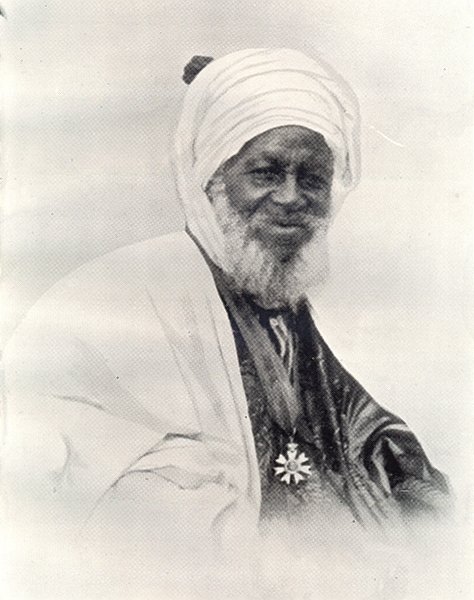
Still, the institution of the Shehu endured. Shehu Garbai (1902–1922), Sanda Kura (1922–1937), and Umar Sanda Kyarimi (1937–1968) carried the mantle of tradition under British colonial rule. Umar Garbai (1968–1974) and Shehu Mustapha Ibn Umar (1974–2009) reigned through independence, the Nigerian Civil War, and the tumultuous years that followed. Today, Shehu Abubakar Ibn Umar Garbai, enthroned in 2009, holds the title, reminding us that while dynasties may fall and empires may fragment, cultural memory and identity endure.
Want to understand what really happened during Nigeria’s first military coup? Read A Carnage Before Dawn. It offers a carefully researched, vividly told account of January 15, 1966, through a storytelling style that will keep you glued to the book’s pages.
You can get the e-book here and the paperback here.
Love history? Don’t stop here.
📚 Get deeper insights by purchasing our latest history books.
📢 Join our WhatsApp Channel for exclusive updates and historical facts.
📩 Subscribe to our Newsletter and receive fascinating stories from history (World and African history) directly in your inbox.
🎥 Subscribe to our YouTube channel for engaging documentaries and short history videos.
Stay connected with us on social media for daily history content:
🔵Follow us on Facebook.
📸 Follow us on Instagram.
🐦Follow us on Twitter.
💼 Follow us on LinkedIn.
🎵 Follow us on TikTok.
❤️ Support our work by donating to HistoryVille and help us continue preserving and sharing important historical stories. 📢Advertise with HistoryVille to reach a growing audience passionate about history and culture.