
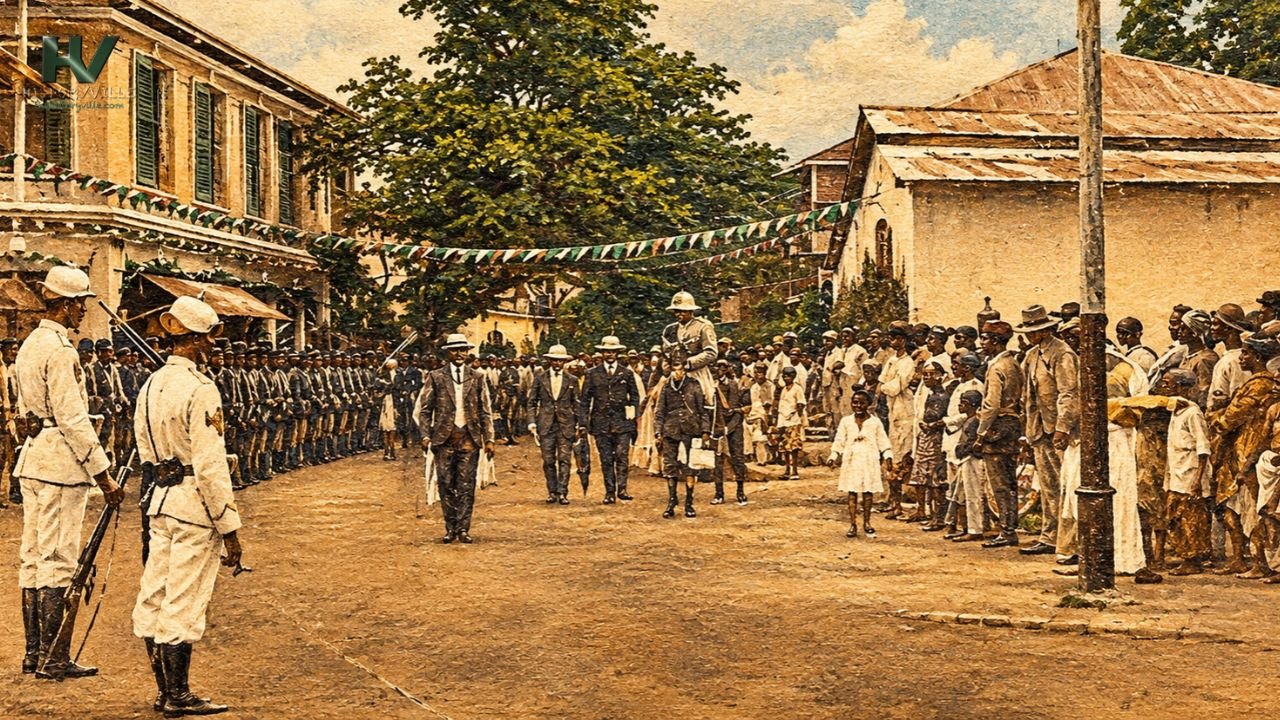

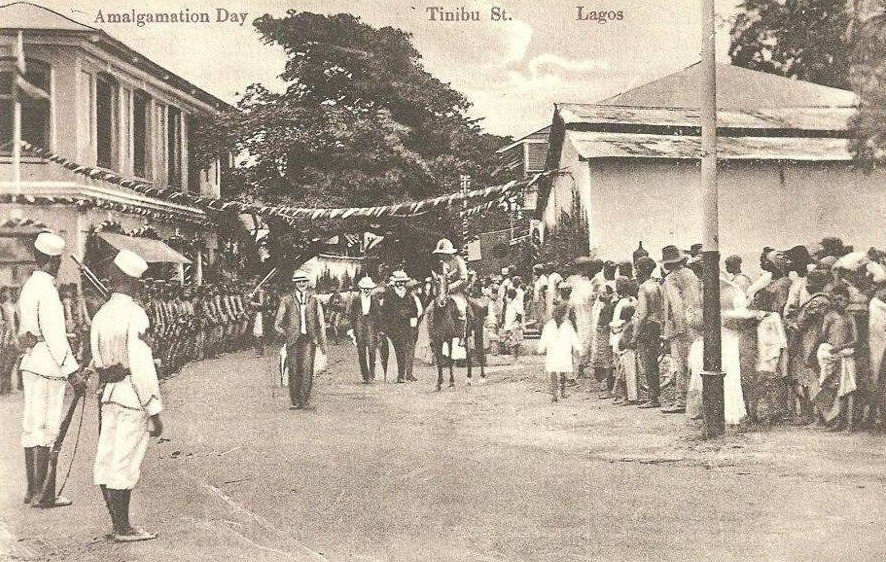
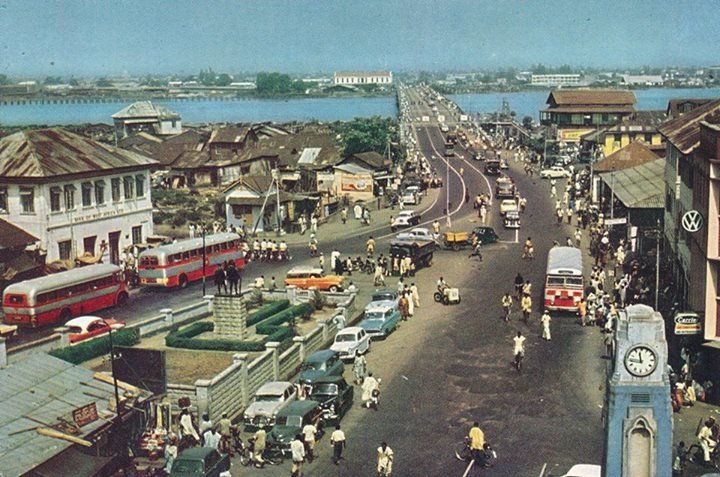
On January 1, 1914, Lagos became Nigeria’s first capital city after the amalgamation of the Southern and Northern Protectorates. The city remained the capital after Independence on October 1, 1960, until its transfer to Abuja on December 12, 1991.
Lagos was originally named Oko, then later Eko, a Bini word that means war camp. Eko refers particularly to Lagos Island, which was the original settlement and present-day centre of the city. Portuguese explorers adopted the name Lagos after they noticed the similarity between the city and another town in their country with the same name.
Created as a state on May 27, 1967, Lagos has grown to become the world’s sixth-largest megacity, the entertainment headquarters of Africa, the chief commercial, financial and maritime nerve centre of West Africa, and the economic capital and major port of Nigeria.
Although the smallest state in terms of land mass, Lagos is home to the highest number of people in the country. Its teeming population attests to the state’s vast potential, richness, vibrancy, and plethora of opportunities.
Lagos is the fastest-growing city in Africa and has attracted tons of immigrants and expatriates from Nigeria and beyond. The state, with the slogan Centre of Excellence, has 20 Local Government Areas and 37 Local Council Development Areas.
Pre-Colonial Era: The Awori Settlers
Before the bombardment of Lagos by the British in 1851, the annexation of the state in 1861, and the amalgamation of the Northern and Southern Protectorates in 1914, Lagos already had a rich history. The settlement in the land by the Awori people, the conquest of the Awori by the Benin Kingdom, and the exploration of the land by the Portuguese are all a part of the history of Lagos.
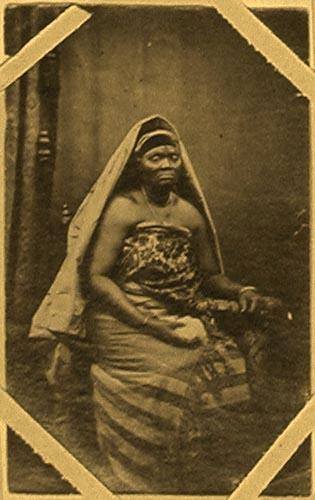
The Awori people, a Yoruba sub-group who originated from Ile-Ife, the cradle of civilisation of the Yoruba, were the first to settle in the land now known as Lagos Island. History has it that the Awori are a peaceful group of people and were not given to warfare. The group departed Ife as a result of the dangers of the warring tribes plaguing the Yoruba. The sub-group first settled at Oke Ata near Abeokuta.
However, due to the infertility of the land, they moved further south. This was after a directive given by the Ifa Priest, who set a bowl on the Ogun River and ordered that the destined settlement for the group was wherever the bowl sank. The bowl sank at Isheri, and the group, led by Olofin Ogunfunminire, settled at Isheri. Ogunfunminire, which means “the god of iron has given me success”, led the people to Iddo Island, and later proceeded beyond Ebute Metta to Lagos Island, where they sought additional agricultural land. Lagos Island would become known as Eko.
The Benin Conquest
Benin City was an unofficial wonder of ancient Africa for its outstanding craftsmanship with ivory, bronze, and mud. The city was home to the second largest man-made structure of all time, second only to the Great Wall of China. The defensive fortifications of the city were exceptional.
Under the leadership of the Oba, several trade expeditions were sent to Ghana, where spices were traded. One of the traders would report about the treatment she got from the Awori people. This would cause the Oba to send another trade expedition by sea. However, the leader of the expedition arrived in the evening. The Awori, predominantly fishermen, usually wade into the water during the evening to begin their hunt for fish. The leader declined to engage them further and returned to report to the Oba that they were attacked. This fuelled the Oba, who constituted a war expedition, and tasked Ado to lead the expedition.

However, the Awori received Ado warmly. In fact, they were so fascinated by Ado that they begged him to stay and lead them. Ado would consent to their appeal on the grounds that they accepted the leadership of the Oba of Bini and surrendered their sovereignty to him. Thus, Lagos became a vassal of the Benin kingdom, paid tribute and introduced Bini’s advisors and rites to its court.
Oba Ado, who was the first king of Lagos, changed the name from “Oko” to “Eko”, meaning “war camp.” The land area now known as Lagos Island is what was referred to as Eko in those times. It was here that the king’s palace was built.
The presence of the Bini’s had a profound effect on the evolution of traditional institutions in Lagos. To this day, the Oba of Lagos is the head of all the kings in the state, and his status is different from that of the other kings. He is the paramount monarch and Primus Inter Pares of the state’s traditional authorities.
Oba Ado and some of the Bini warriors soon established prominent residential quarters in the Northwestern part of the island. It was, and still is, known as “Isale Eko”, meaning “Lower Lagos” or “Downtown Lagos.”
Eko remains the native name for Lagos.
Bombardment Of Lagos
After the abolition of the slave trade, the British sought to promote legitimate trade, civilise the natives, and completely eradicate the slave trade institution, which other European nations still took part in. However, absolute control of Lagos and its vast resources had to be in their hands if their mission were to be accomplished. Hence, the city was bombarded in 1851.
Oba Akintoye and Prince Kosoko were engaged in a power tussle at the time. Prince Kosoko ousted Oba Akintoye from the throne, which he claimed was rightfully his, forcing Oba Akintoye to flee to Abeokuta. The British would appoint John Beecroft as British Consul in charge of the Bights of Benin and Biafra. His arrival in Lagos would, however, be in the favour of Oba Akintoye.
Prince Kosoko, labelled an opponent of legitimate trade and a hindrance to the progress of civilisation, was entreated to a friendship by the Consul Commander, and asked to sign a treaty. He refused to do either.
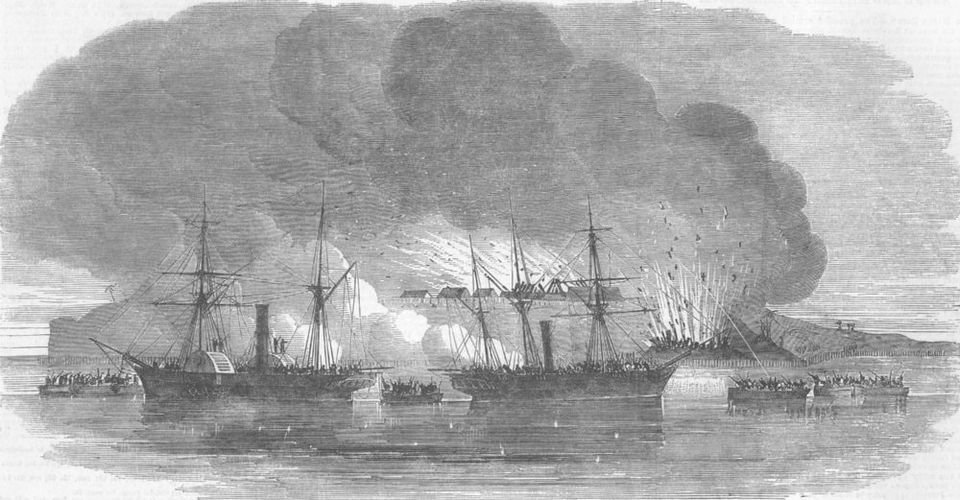
This forced the Consul Commander to concede to the use of force.
On the eve of Christmas, the year 1851, after a first failed attempt, the British naval force outmatched Kosoko’s defence, forcing him, his chiefs, and his closest supporters to flee to Epe. Oba Akintoye was reinstated as king on January 1, 1852, and a treaty was signed for the abolition of the slave trade in the land.
This would mark the beginning of the conquest of Lagos by the colonial masters.
Annexation of Lagos
Before the bombardment and occupation of Lagos by the British in 1851, the land had been important in the slave trade. The occupation of the land by the British, and the treaty signed in 1852 by Oba Akintoye, saw resistance placed on the slave trade in the land. The arrival of French gunboats in the Bights of Benin forced the British to occupy the land and further caused them to reinstate Oba Akintoye, who served as a puppet to the British.
Before his demise, Oba Akintoye secretly arranged for his son, Dosunmu, to be king.
His death, however, brought a leadership tussle in Lagos. Oba Dosunmu could neither keep nor suppress the slave trade. He would be accused of reviving the slave trade in the land.
The well-meaning but weak Dosunmu was persuaded to cede the ports and island of Lagos in return for a pension. The Oba, afraid that the British might no longer support him, hence allowing Prince Kosoko to strike, gave in to the demands of the British. On August 6, 1862, Lagos was officially converted into a protectorate, a British colony. That same year, a separate government known as the “Lagos Organisation” was created.
The British authorities put measures in place to ensure that no harm came to Oba Dosunmu. He was given a yearly pension of 1,200 bags of cowries (estimated at £1,030 annually), as long as he abided by the treaty of August 6, 1862.
The defeat and annexation of Lagos placed the British in absolute control of the land and further heightened their sense of authority.
Becoming Nigeria’s First Capital City
The British sought to expand their authority and control over the territory, today known as Nigeria. At the end of the 19th century and early 20th century, the British had subdued Lagos; had the Southern Protectorate as theirs after the 1884 Berlin Conference; and had overthrown the Sokoto Caliphate in 1903, thus having absolute control of the Northern Protectorate.
At the time, there were three different territories – the Lagos Colony, the Southern Protectorate, and the Northern Protectorate. Sir Walter Egerton, Governor of the Lagos Colony at the time, fused Lagos into the Southern Protectorate on May 1, 1906. Thus, there were two protectorates: the Southern Protectorate and the Northern Protectorate.
On January 1, 1914, Lord Frederick Lugard amalgamated both protectorates into one geographical entity, today known as Nigeria. Lagos was declared Nigeria’s first capital city. The land, Lagos, was also declared a first-class Township in 1917.
Post-Colonial Era
After the country gained independence in 1960, Lagos retained its position as the federal capital city and remained so until 1991.
On May 27, 1967, Lagos was created as a state by virtue of States [Creation and Transitional Provisions] Decree 14 of 1967, which restructured Nigeria’s Federation into 12 states. This decree was promulgated by the Yakubu Gowon regime.
Lagos functioned as the federal capital city and also as the state capital city. However, the state capital city was later moved to Ikeja in 1976, and the federal capital city was moved to Abuja on December 12, 1991.
As of 2015, the metropolitan population of Lagos is believed to be 20 million people.
Want to understand what really happened during Nigeria’s first military coup? Read A Carnage Before Dawn. It offers a carefully researched, vividly told account of January 15, 1966, through a storytelling style that will keep you glued to the book’s pages.
You can get the e-book here and the paperback here.
Love history? Don’t stop here.
📚 Get deeper insights by purchasing our latest history books.
📢 Join our WhatsApp Channel for exclusive updates and historical facts.
📩 Subscribe to our Newsletter and receive fascinating stories from history (World and African history) directly in your inbox.
🎥 Subscribe to our YouTube channel for engaging documentaries and short history videos.
Stay connected with us on social media for daily history content:
🔵Follow us on Facebook.
📸 Follow us on Instagram.
🐦Follow us on Twitter.
💼 Follow us on LinkedIn.
🎵 Follow us on TikTok.
❤️ Support our work by donating to HistoryVille and help us continue preserving and sharing important historical stories. 📢Advertise with HistoryVille to reach a growing audience passionate about history and culture.