
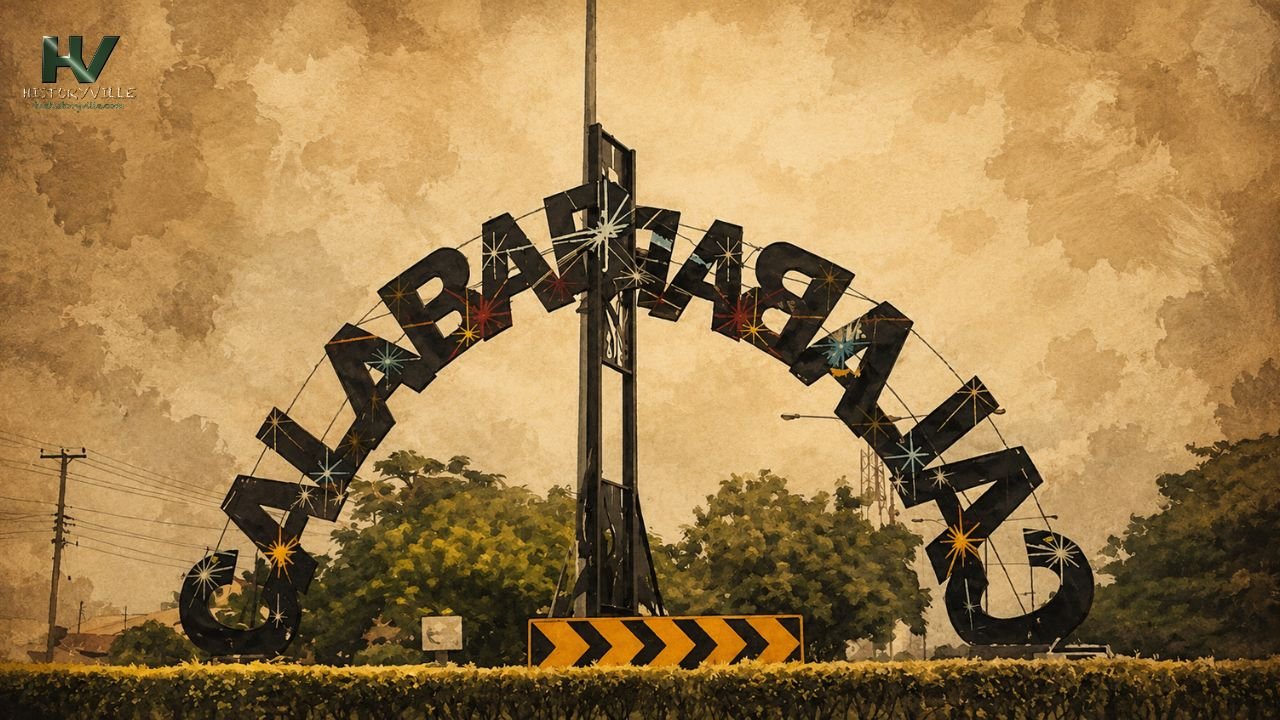

Calabar was an important city in British Nigeria. Its location on the Cross River and its long-standing importance in foreign trade and administration made it one of the most significant cities in the colony.
Thus, in 1906, Calabar was made the headquarters of the new Southern Nigeria Protectorate, making the city the seat of the colonial government of Southern Nigeria.
Amalgamation of Nigeria
On Amalgamation Day, January 1, 1914, Lord Lugard announced the unification of the Northern and Southern Provinces of Nigeria (with Calabar and Kaduna as capitals), adding that the Colony and Protectorate of Nigeria would be placed under the control of a single officer, known as the Governor-General. Lugard himself…
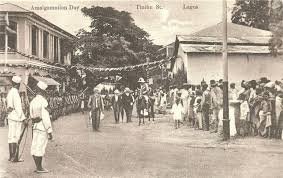
Lugard established several central institutions to anchor the evolving unified nation. The Nigerian Council (later the Legislative Council) was founded to provide a forum for representatives drawn from the provinces.
Certain services were integrated across the Northern and Southern Provinces because of their national significance: military, treasury, audit, posts and telegraphs, railways, survey, medical services, judicial and legal departments.
Now that the country had been unified, there would need to be a central headquarters to govern the nation’s affairs.
However, before the amalgamation of 1914, where were the headquarters of Southern and Northern Nigeria?
Southern Nigeria
From its foundation, Southern Nigeria had always been administered by a high commissioner with most administrative duties in Calabar. The first high commissioner was Ralph Moor. When Lagos was amalgamated with the rest of southern Nigeria in 1906, the then High Commissioner, Walter Egerton, was made Governor of the territory.

Egerton became Governor of Lagos Colony, covering most of the Yoruba lands in the southwest of Nigeria in 1903. The Colonial Office wanted to unify the Lagos Colony with the Protectorate of Southern Nigeria (with Calabar as its capital), and in August 1904, Egerton was appointed as both the Governor of Lagos Colony and the High Commissioner for the Protectorate of Southern Nigeria.
Although Calabar was the capital of this new Protectorate of Southern Nigeria, most of the colonial, diplomatic activities and high-level official business were carried out in Lagos. Note that it had been carried out in Calabar before 1906.
Northern Nigeria
Northern Nigeria was a British protectorate that lasted from 1900 until 1914.
The first High Commissioner of the Protectorate was Frederick Lugard, who actively suppressed revolutions and created a system of administration built around native authorities, now known as local governments.
On January 1, 1900, the Royal Niger Company’s charter was revoked, and the British took control. The Royal Niger Company was paid £865,000, that is, ₦53 billion at today’s exchange rate, and was given the rights to half of all mining revenue in a large part of the areas for 99 years in exchange for ceding the territory to the British government. Lugard was then appointed the High Commissioner of the newly created Northern Protectorate of Nigeria.
Zungeru: The Forgotten Capital of Northern Nigeria
Lugard first settled in Lokoja as the regional capital to continue with the colonial conquest of the region. Two years later, in 1902, he moved the capital from Lokoja, further upstream of the River Niger, to Jebba.
However, Jebba remained the headquarters for only a few months. Towards the end of the year, he moved even further upstream to Zungeru, present-day Niger State, intending to make it the permanent capital of the North. Zungeru became the headquarters for the protectorate in 1902 because it was the most northerly city accessible by river transport.
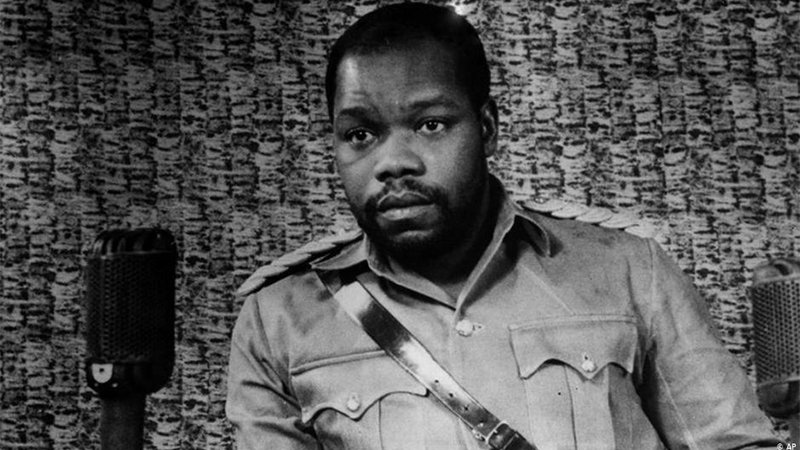
Most Nigerians will remember Zungeru, a major railway town, as the birthplace of Nigeria’s foremost nationalist and first president, Dr Benjamin Nnamdi Azikiwe. His father had worked there as a railway staff member. It was also the birthplace of the Biafran general, Chukwuemeka Ojukwu, and former Senate President, David Mark.
For a while, it seemed Zungeru had succeeded where Lokoja and Jebba had failed; it remained the regional capital for 12 years. However, with time, Lugard began a search for a more central and more accessible location than Zungeru.
His search finally ended at a location on the Zaria plains, in Kaduna, roughly in the middle of the Northern region. Not only was Kaduna centrally located and much more accessible than Zungeru, but the Zaria plains in which it was located were well served by two major tributaries of the River Niger—the River Kaduna, which gave the settlement its name, and the River Gurara.
How Lagos Became a Capital of Nigeria
No sooner had Lord Lugard settled down in Kaduna as regional capital in 1912 than he began to plan for it as Nigeria’s capital, ahead of the amalgamation of the Northern and Southern Protectorates in 1914.
This followed his promotion that same year as the Governor-General of an amalgamated Nigeria, and in his January 1, 1914, speech, according to the recommendation of the Colonial Office, Lugard announced Lagos (not Calabar) as the capital of Nigeria.
“For the present, the Central Headquarters will remain at Lagos, and the Governor-General will divide his time between the Headquarters Stations of the Northern and Southern Provinces,” Lugard said.
However, Lugard did not hide his dislike towards Lagos and recommended that the capital be moved to Kaduna as quickly as possible.
“Government House, Lagos,” he wrote in one of his papers, “would make an excellent hotel if the transfer to Kaduna was achieved.”
However, the transfer was never achieved.
First, the Colonial Office in London thought Kaduna was too far inland for quick and effective communication between England and Nigeria.
Second, in 1919, Lugard was succeeded as Governor-General by Lord Clifford, who did not share Lugard’s hatred for Lagos. In any case, such a transfer was considered too expensive an exercise by the British.
How was Calabar the Capital of Nigeria?
Nevertheless, Lagos maintained its status as the capital when Nigeria obtained its independence from the British in 1960.
Thus, we can deduce that Lagos, not Calabar, was the capital city of Nigeria from 1914 until 1991, when it was replaced as the Federal Capital Territory with the planned city of Abuja, built specifically for such a purpose.
So, as Calabar was the capital of the Southern Protectorate of Nigeria, Zungeru and Kaduna were capitals of the Northern Protectorate, while Lagos became the capital of a united Nigeria in 1914.
So, it would be a historical fallacy to acknowledge Calabar as the first capital of Nigeria.
Like Abeokuta, Kano, Asaba, and Ilorin, Calabar is a capital IN Nigeria, but not at any time a capital OF Nigeria.
In summary, we can affirm that Lagos was the first capital of Nigeria from January 1, 1914, when the amalgamation took place, to October 1, 1963, when Nigeria cut off all ties with Britain to become a Republic and a Sovereign State. It stopped being the capital when the Federal Capital Territory was moved to Abuja on December 12, 1991.
Want to understand what really happened during Nigeria’s first military coup? Read A Carnage Before Dawn. It offers a carefully researched, vividly told account of January 15, 1966, through a storytelling style that will keep you glued to the book’s pages.
You can get the e-book here and the paperback here.
Love history? Don’t stop here.
📚 Get deeper insights by purchasing our latest history books.
📢 Join our WhatsApp Channel for exclusive updates and historical facts.
📩 Subscribe to our Newsletter and receive fascinating stories from history (World and African history) directly in your inbox.
🎥 Subscribe to our YouTube channel for engaging documentaries and short history videos.
Stay connected with us on social media for daily history content:
🔵Follow us on Facebook.
📸 Follow us on Instagram.
🐦Follow us on Twitter.
💼 Follow us on LinkedIn.
🎵 Follow us on TikTok.
❤️ Support our work by donating to HistoryVille and help us continue preserving and sharing important historical stories. 📢Advertise with HistoryVille to reach a growing audience passionate about history and culture.