
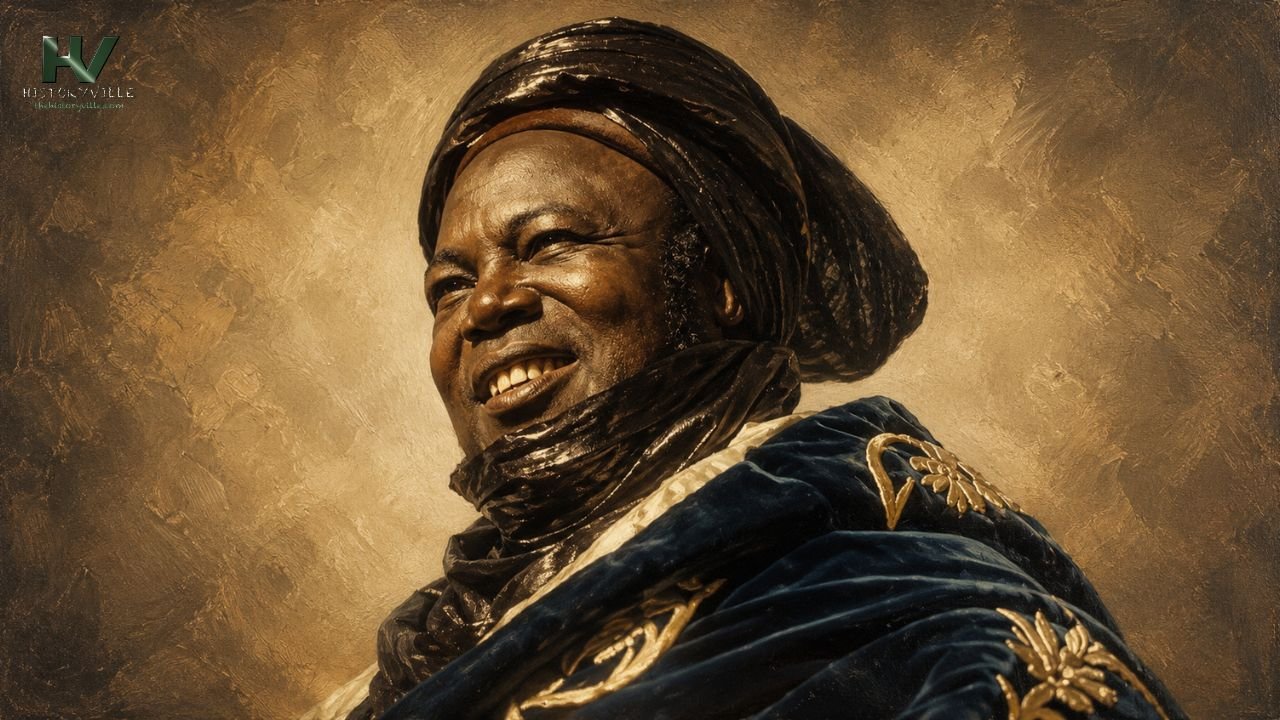

Sir Ahmadu Bello is still venerated by millions of Nigerians, especially the northerners. In fact, the first university established in Northern Nigeria is named after him, while his portrait is featured on the ₦200 note.
Did you know that Bello was once jailed on charges of corruption in 1943? Why was he jailed? Oh, did you also know he was born on June 12? What were his achievements? Why do his people love him so much? Why has he generated so much hatred in the minds of some others?
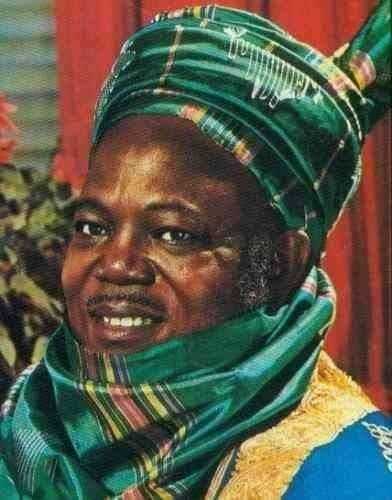
In a jiffy, let us open your eyes to 50 interesting facts you may not know about Sir Ahmadu Bello, the Sardauna of Sokoto and Premier of Northern Nigeria.
Ahmadu Bello’s Quotes
Firstly, let us share with you some of his quotes:
“The ‘mistake of 1914′ has come to light.”– In a reaction to Anthony Enahoro’s motion for independence, 1953.
“I would rather have a non-Nigerian do a job than give it to a non-Northerner.”
“The Igbos are more or less a type of people whose desire is mainly to dominate everybody. If they go to a village or town, they want to monopolise everything in that area. If you put them in a labour camp as a labourer, within a year, they will try to emerge as the headman of that camp.”– BBC interview, 1964.
“Here in Northern Nigeria, we have people of many different races, tribes, and religions who are knit together to common history, common interest and common ideas; the things that unite us are stronger than the things that divide us. I always remind people of our firmly rooted policy of religious tolerance.
“We have no intention of favouring one religion at the expense of another. Subject to the overriding need to preserve law and order, it is our determination that everyone should have absolute liberty to practice his belief according to the dictates of his conscience.”
“I have been accused of many things, but the views of others have never made me deviate from the path which I am certain is the one which will benefit my people and country. I have always based my actions on my inward convictions, on my conscience and on the dictates of my religion.”
“No, let us understand our differences. I am a Muslim and a Northerner. You are a Christian, an Easterner. By understanding our differences, we can build unity in our country.”- Reacting to Nnamdi Azikiwe, the Owelle of Onitsha and the Premier of the Eastern Region of Nigeria in the wake of the 1959 federal elections.
Now, the INTERESTING FACTS!!!
Ahmadu Bello: Early Life
1. Ahmadu Bello was born on June 12, 1909, in Rabbah, present-day Sokoto State.
2. He was the son of a concubine.
3. His father died when he was six (6) years old.
4. He was the only surviving son of his father and mother, Mariyamu.
5. He was a great-grandson of Shehu Usman dan Fodio, the great Fulani jihadist.
Education
6. Bello got his Islamic and Arabic education as a teenager from Mallam Garba, who was the Imam of Rabbah village.
7. He finished at the age of 16, top of his class.
8. He attended the Teacher’s Training College, Katsina (later Barewa College), where he was a School Prefect and Class Captain.
9. Thereafter, he graduated as a Teacher in 1931 with a credit equivalent Grade III result.
Career
10. Bello was appointed by the Sultan of Sokoto to work as a teacher at the Sokoto Middle School.
11. He was once a student at the Middle School and taught from 1931 to 1934.
12. He was appointed a rural administrator (District Head) at the age of 25 in 1934.
13. Ahmadu Bello became a candidate for the succession to the throne of the Sultan of Sokoto at the age of 29.
14. He made attempts to become the Sultan of Sokoto but was not successful, losing to Sir Siddiq Abubakar III, who reigned for 50 years until his death in 1988.

15. The new Sultan immediately made Sir Ahmadu Bello the Sardauna (Warlord) of Sokoto, an honorary title and promoted him to the Sokoto Native Authority Council; these titles automatically made him the Chief Political Adviser to the Sultan.
Political Journey
16. Later, he was put in charge of the Sokoto Province to oversee 47 districts.
17. In 1943, a drama played out when he was thrown before the Sultan’s court for misappropriating jangali (cattle) tax for the Gusau region, where he was the Councillor.
18. He was sentenced to one (1) year in prison, but spent three (3) months in jail.

19. By 1944, he was back at the Sultan’s Palace to work as the Chief Secretary of the State Native Administration.
20. In 1949, at the age of 40, he was nominated for a seat in the Regional House of Assembly.
21. Bello spoke impeccable English and respected many European values.
22. Sir Ahmadu Bello keenly encouraged female education.
Premier of Northern Nigeria
23. In 1954, Sir Ahmadu Bello became the first Premier of Northern Nigeria.
24. Bello was said to be scrupulous and prudent with public finance but generous with his own money.
25. In 1955, he made his first pilgrimage to Mecca, Saudi Arabia.
26. The “Work and Worship” motto on the Northern Nigerian crest was adopted by him.
27. Bello chose to remain the Premier of Northern Nigeria and gave the position of Prime Minister to his hand-picked candidate, the late Sir Abubakar Tafawa Balewa, who was then the Deputy President of the NPC.
28. Sir Ahmadu Bello never sought the leadership of Nigeria.
29. He once stated that he would rather be the Sultan of Sokoto than be the leader of Nigeria.
30. At various times, Ahmadu Bello made inflammatory statements about the Igbos, as he once referred to them as the “Jews of Nigeria” whose sole purpose is to dominate wherever they find themselves.
Achievements, Honour and Awards
31. In 1959, Queen Elizabeth II (b.1926) made him a Knight of the British Empire (KBE), and that explains the ‘Sir’ in his title.
32. In 1962, he became Pioneer Chancellor, Ahmadu Bello University, ABU, Zaria.
33. Bello founded the Bank of the North (now Unity Bank).
34. He also founded the Northern Nigerian Development Company.
35. He established the 16,000-seater Ahmadu Bello Stadium in Kaduna.
36. In 1953, Sir Ahmadu Bello referred to Nigeria as the “mistake of 1914.” Interestingly, the country’s Democracy Day is now celebrated on his birthday.

37. He established the University of Northern Nigeria, which stretched from Samaru, present-day Kaduna State, to Funtua, present-day Katsina State, on October 4, 1962, now known as Ahmadu Bello University (ABU), Zaria.
38. By the beginning of 1966, it was quite clear that the Sardauna was one of the most powerful figures in the country, and many believed that he was actually the most powerful, even much more powerful than the Prime Minister, Sir Abubakar Tafawa Balewa.
39. His party, the Northern People Congress (NPC), held sway over 29 million out of 55 million Nigerians.
The Assassination of Ahmadu Bello
40. On his way to the Umrah (the Muslim lesser pilgrimage), he received a letter with threats to kill him.
41. The letter was said to have stated: “We have arranged to kill you and the Prime Minister (Alhaji Tafawa Balewa).”
42. As a devout Muslim, the Sardauna believed that giving his life in the service of Northern Nigeria was worth the sacrifice and that death was a certain end.
43. He later said of the threat: “Don’t worry, continue to get useful information. I know what to do.”
44. On the morning of January 15, 1966, armed soldiers, led by Major Patrick Chukwuma Kaduna Nzeogwu, arrived at his residence at the Lugard House, Kaduna, with the message of death.
45. He told his family to stay away for safety, but they would have none of that. They all trooped behind him as he came out of the family quarters, and in a matter of seconds, he was surrounded by the soldiers led by Nzeogwu, who fired at his babanriga. And immediately, blood sputtered from the point of impact through the beard on his face.
46. At that point, his first and eldest wife, Hafsatu, threw herself at him in a final embrace. They were both shot to death.
47. He was believed to have been killed instantly when a bullet penetrated his spinal cord.
48. Brave till the very end, Bello was reported to have faced the soldiers and introduced himself as the Sardauna of Sokoto and Premier of the Northern Region.
49. Bello died, leaving £10 in his bank account.
50. He gave birth to a daughter after his death (posthumously).
Want to understand what really happened during Nigeria’s first military coup? Read A Carnage Before Dawn. It offers a carefully researched, vividly told account of January 15, 1966, through a storytelling style that will keep you glued to the book’s pages.
You can get the e-book here and the paperback here.
Love history? Don’t stop here.
📚 Get deeper insights by purchasing our latest history books.
📢 Join our WhatsApp Channel for exclusive updates and historical facts.
📩 Subscribe to our Newsletter and receive fascinating stories from history (World and African history) directly in your inbox.
🎥 Subscribe to our YouTube channel for engaging documentaries and short history videos.
Stay connected with us on social media for daily history content:
🔵Follow us on Facebook.
📸 Follow us on Instagram.
🐦Follow us on Twitter.
💼 Follow us on LinkedIn.
🎵 Follow us on TikTok.
❤️ Support our work by donating to HistoryVille and help us continue preserving and sharing important historical stories. 📢Advertise with HistoryVille to reach a growing audience passionate about history and culture.