
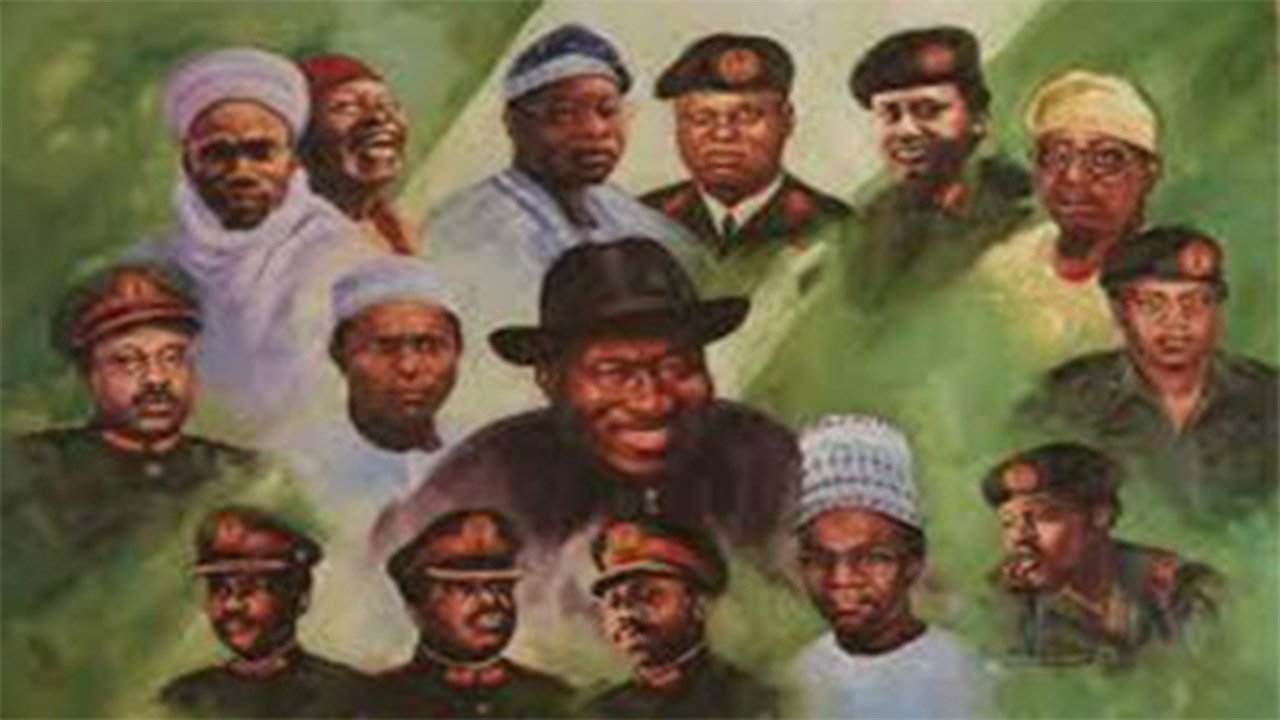

Nigeria has been led by a remarkable succession of presidents, prime ministers, military rulers and political leaders, each leaving a distinct mark on the country’s history. Some governed during moments of great optimism, while others took power amid coups, civil war, economic crises and political upheaval. Together, their stories reflect many of the triumphs, contradictions and turning points that have shaped modern Nigeria.
Behind the official titles and familiar portraits are fascinating details that are often overlooked. Some Nigerian leaders had unusual careers before entering politics, others experienced dramatic changes in fortune, and several played roles in events that continue to influence the country decades later. Their personal histories can reveal a different side of Nigeria’s political past.
From Nigeria’s first Prime Minister, Abubakar Tafawa Balewa, to the military rulers who dominated the country for much of its early post-independence history and the civilian presidents of the Fourth Republic, these 33 facts offer a glimpse into the lives and times of Nigeria’s most consequential leaders. Some are surprising, some little known, and others provide useful context for understanding how Nigeria became the country it is today.
Nigerian Leaders
1. As of today, no President/Head of State has been born in or after October 1, 1960, the year Nigeria got her independence from the British.
2. Queen Elizabeth II was Nigeria’s first Head of State and was officially titled the Queen of Nigeria from 1960 to 1963, when the monarchy was abolished. The Queen met with every Nigerian Head of State from Nnamdi Azikiwe to Muhammadu Buhari until her death on September 8, 2022.
3. Chief Olusegun Obasanjo remains the only elected President whose exact year of birth is unknown. He was shoeless when he wooed his first wife, Remi, and is the only president to lose his wife, the First Lady, Stella Obasanjo, while in office.
4. Obasanjo and Goodluck Jonathan were the only deputies to succeed immediately to the Presidency on the occasion of their principal’s death. Obasanjo on February 14, 1976, after the assassination of Murtala Muhammed and Jonathan on May 6, 2010, after the death of Umaru Musa Yar’Adua after a long battle with illness. Jonathan was also the first sitting President to be defeated in an election in 2015.

5. In 1949, when Nigeria’s Governor-General, Sir John Macpherson, called for regional and all-Nigeria conferences on the Macpherson Constitution, only ONE WOMAN was present: Funmilayo Ransome-Kuti, the Lioness of Lisabi.
6. The two Presidents who succeeded Obasanjo, first as Head of State in 1979, Shehu Shagari and as President in 2007 (Umaru Musa Yar’Adua), did not complete their tenures. The two Presidents were from the North-West. They were both Fulanis. They were both Muslims. Interestingly, they were both chain smokers.
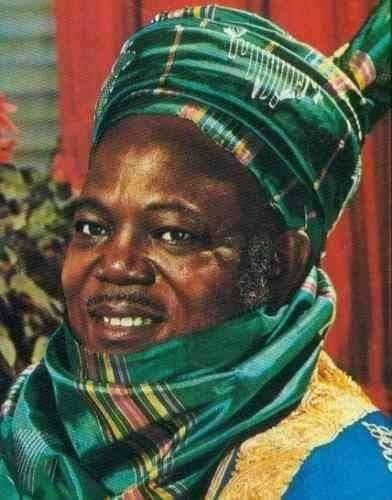
7. The two Presidents were from the North-West of Nigeria; Shagari was from Sokoto State while Yar’Adua was from Katsina State. The two Nigerian leaders were Fulani. They were both Muslims. They were both teachers.
8. The Peugeot 504 was the official car of General Olusegun Obasanjo as Nigeria’s Head of State in 1979. It was the same car that drove President Shehu Shagari from his inauguration on October 1, 1979, but he later dumped it for a Mercedes-Benz.
More…
9. While soldiers were dying at the battlefront during the Civil War, General Yakubu Gowon was getting married in Lagos to his sweetheart, Victoria Zakaria. He remains the only bachelor to become Head-of-State and the youngest at 31 years, 288 days, and also the first to get married while in power. Gowon also ruled the longest (uninterrupted) for 9 years.
10. Sir Ahmadu Bello was killed with his wife in 1966 by Major Kaduna Nzeogwu. His great-grandfather was the great jihadist from Sokoto, Usman Dan Fodio. The largest university in West Africa and the second-largest in Africa, the Ahmadu Bello University in Zaria, is named after him.
11. Of Nigeria’s four major founding fathers at Independence, Chief Jeremiah Obafemi Awolowo was the only founding father who had one wife. He described her as a jewel of inestimable value. Hannah Idowu Dideolu (H.I.D) Awolowo lived to the age of 98.
12. The man on the ten naira note, Alvan Ikoku and his son, Samuel Goomsu Ikoku, were political rivals. Samuel won an election against his father in the Eastern Regional Assembly elections on March 15, 1957.
13. Sir Abubakar Tafawa Balewa was not supposed to be Prime Minister in 1959, but Ahmadu Bello, as the leader of the Northern People’s Congress (NPC). Bello bequeathed Balewa the position and referred to him as my lieutenant in Lagos.
Don’t fall off…
14. The man on the one naira note, Herbert Heelas Samuel Olayinka Badmus Macaulay, was the first Nigerian civil engineer and the first to found a political party in Nigeria, the Nigerian National Democratic Party, NNDP, in 1923. His mother, Abigail, was the daughter of Bishop Samuel Ajayi Crowther, and his father, Thomas Babington Macaulay, founded Nigeria’s first secondary school. Macaulay was also a direct ancestor of Stella Ameyoh Adadevoh, the woman who stopped the Ebola plague.
15. Generals Murtala Mohammed and Sani Abacha were the only Nigerian leaders who were both born and buried in Kano. As Head of State, Murtala Muhammed had no convoy or escorts and lived like a civilian in his private residence in Ikoyi rather than the more fortified Dodan Barracks. Muhammed remains the youngest Nigerian Head of State to die in office at the age of 37 years and the only one to die before the age of 40.
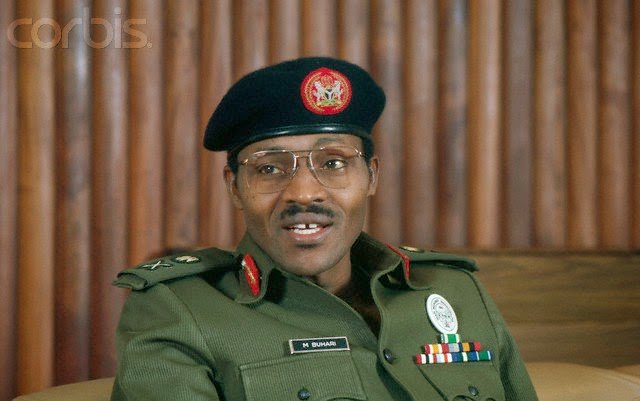
Photo Credit/Corbis
16. General Sani Abacha had nine children, and the last child, a boy, Mustapha, was born in Aso Villa in 1994. The only child of a Nigerian Head of State to be born in the presidential villa. General Abacha and his wife, Maryam, were 50 and 47 at the time of his birth.
17. Sani Abacha spent 54 months in office as Head of State. He also died at the age of 54. Abacha was born on a Monday. He died on a Monday and was buried on a Monday.
18. Sani Abacha was the first Nigerian soldier and only Head of State to be a full General without skipping a rank. Abacha also participated in most successful coups in Nigeria’s history. Interestingly, Abacha reversed a coup d’état in Sierra Leone and re-installed the overthrown democratically elected President Ahmad Tejan Kabbah in March 1998.
19. President Umar Musa Yar’Adua was the first elected President to die while in office on May 5, 2010. He was 58. Yar’Adua was also the second Head of State to die in the presidential villa after General Sani Abacha.
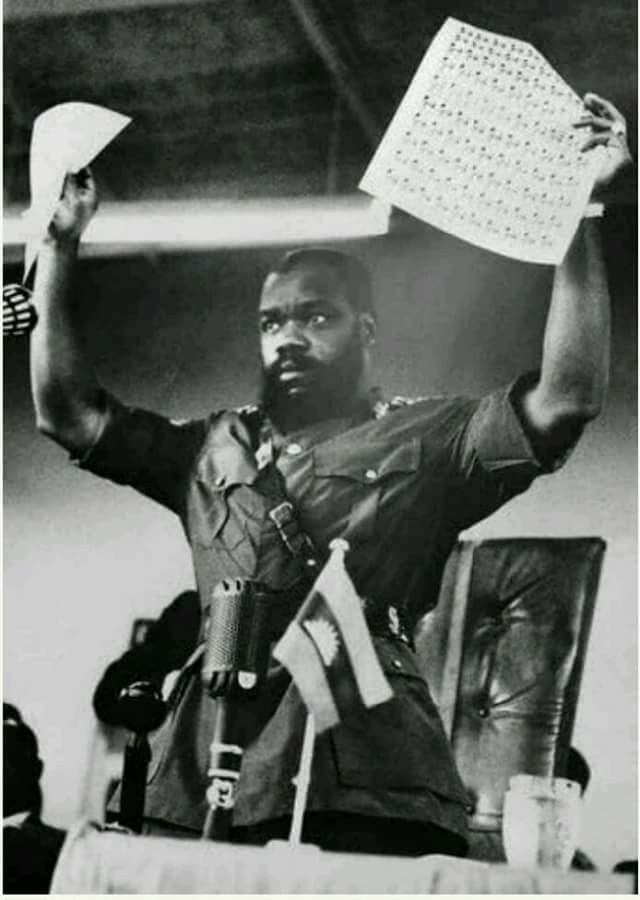
20. Emeka Ojukwu could speak Igbo, Hausa, Yoruba, English, French and Latin fluently. Interestingly, during the civil war, he always slept with his boots on.
21. Emeka Ojukwu taught Murtala Mohammed and Benjamin Adekunle at Regular Officers Special Training School in Ghana. Both “fought” their teacher during the Nigerian Civil War.
22. Major-General Johnson Thomas Umunakwe Aguiyi-Ironsi was Nigeria’s first military Head of State. He joined the army when he was only 18 years old. Ironsi was fond of leaving the State House without warning to sleep on a Boat along the Marina, which, on occasion, would set sail in case there was a coup. He was eventually killed in a coup on July 29, 1966.
Both Aguiyi-Ironsi and his military Governor in the West, Lieutenant-Colonel Adekunle Fajuyi, were buried three times after they had been killed in Nigeria’s bloodiest coup. First, in a shallow grave where they were killed in Lalupon, not far from Iwo. Then at a cemetery in Ibadan and, finally, in their hometowns of Umuahia and Ado-Ekiti in January 1967.
It’s getting intense
23. As Federal Minister of Finance, Chief Festus Okotie-Eboh was instrumental in the founding of the Central Bank of Nigeria in 1958 (which began operations on July 1, 1959). He was also instrumental in bringing Julius Berger to Nigeria. Okotie-Eboh was the only minister who was killed in the bloody military coup of January 15, 1966.
24. Chief Samuel Ladoke Akintola (1910-1966) was the first man to import a bullet-proof car into Nigeria in 1964; an £8000 Mercedes-Benz. Of all who lost their lives in the January 15, 1966 coup, only Akintola, who was the 13th Aare Ona Kakanfo, Field Marshal General, of Yorubaland, died fighting back. Akintola was killed brutally by Captain Emmanuel Nwobosi during the coup, and the Aare Ona Kakanfo’s curse continued when his successor, Chief MKO Abiola, also died under mysterious circumstances in July 1998.
25. In Fact 6, as president, Shehu Shagari was a chain smoker. However, he never smoked in public places, and he respected the Office of the President so much that he stepped outside the office whenever he wanted to smoke.
26. As of May 28, 2023, the only Yoruba men to ever rule Nigeria are from Abeokuta, the capital of Ogun State – Olusegun Obasanjo and Ernest Shonekan. Shonekan was the only civilian Head of State without a political party to rule Nigeria. He was also the only unelected leader and the only one to resign from office on November 17, 1993.
Ernest Shonekan ruled Nigeria the shortest for 82 days, while Olusegun Obasanjo ruled the longest (both military and civilian) for 11 years, seven months and 18 days. However, General Yakubu Gowon ruled Nigeria for the longest in a stretch: eight years and 362 days until he was overthrown in a bloodless coup on July 29, 1975.
Interestingly…
27. Every Nigerian military Head of State with an Ogun State indigene as his deputy, whether removed or sustained, died in office.
Aguiyi-Ironsi and Ogundipe (1966): Major-General Johnson Umunnakwe Aguiyi-Ironsi was killed on Friday, July 29, 1966, in a Northern counter-coup. His deputy, Brigadier Babafemi Ogundipe, was from Ago-Iwoye, Ogun State.
Murtala Muhammed and Olusegun Obasanjo (1976): Muhammed was only 200 days in office when he was assassinated in an abortive coup on Friday, February 13, 1976. His deputy, Olusegun Obasanjo, was from Abeokuta, Ogun State.
Sani Abacha and Oladipo Diya (1998). Although Diya had been removed from office as Abacha’s deputy and Chief of General Staff in December 1997, Abacha had no one to replace him as of the time of his death from a heart attack on June 8, 1998. Diya was from Odogbolu, Ogun State.
28. All civilian presidents were once teachers, except Olusegun Obasanjo, Muhammadu Buhari, and Bola Tinubu. Obasanjo and Buhari were the only two men who have ruled Nigeria both as a soldier and as a civilian. They were also the only Heads of State to have divorced their wives.
29. Niger, Katsina, Kano and Ogun States are the only states to have produced two leaders who had ruled the country.
30. Nigeria once had no Head of State for three days, from July 29 to August 1, 1966, until Lieutenant-Colonel Yakubu Gowon became Head of State and Supreme Commander of the Nigerian Army.
31. The only president who had no executive power at all was Benjamin Nnamdi Azikiwe. Azikiwe was born on November 16. Became Nigeria’s first indigenous Governor-General on November 16 and was buried on November 16, 1996, on what would have been his 92nd birthday.
32. Of all military Heads of State of Northern extraction, Murtala Muhammed was the only one who could speak the Yoruba language fluently. As a matter of fact, his wife, Ajoke, was a Yoruba woman. Muhammed remains the only military man to feature on a naira note – the ₦20 note.
Finally…
33. The only President/Head-of-State who could speak Nigeria’s three major languages (Hausa, Igbo, Yoruba) were Igbos: President Nnamdi Azikiwe and Major-General Johnson Thomas Aguiyi-Ironsi.
Are there other interesting facts about Nigerian Leaders you know of? Kindly let us know in the comment section.
Want to understand what really happened during Nigeria’s first military coup? Read A Carnage Before Dawn. It offers a carefully researched, vividly told account of January 15, 1966, through a storytelling style that will keep you glued to the book’s pages.
You can get the e-book here and the paperback here.
Love history? Don’t stop here.
📚 Get deeper insights by purchasing our latest history books.
📢 Join our WhatsApp Channel for exclusive updates and historical facts.
📩 Subscribe to our Newsletter and receive fascinating stories from history (World and African history) directly in your inbox.
🎥 Subscribe to our YouTube channel for engaging documentaries and short history videos.
Stay connected with us on social media for daily history content:
🔵Follow us on Facebook.
📸 Follow us on Instagram.
🐦Follow us on Twitter.
💼 Follow us on LinkedIn.
🎵 Follow us on TikTok.
❤️ Support our work by donating to HistoryVille and help us continue preserving and sharing important historical stories. 📢Advertise with HistoryVille to reach a growing audience passionate about history and culture.